

Galley fires and bottled gas
1The lesson in plain words
LPG is heavier than air and collects in the bilge, where one spark can explode it. Pan fires are smothered, never doused with water.
LPG sinks
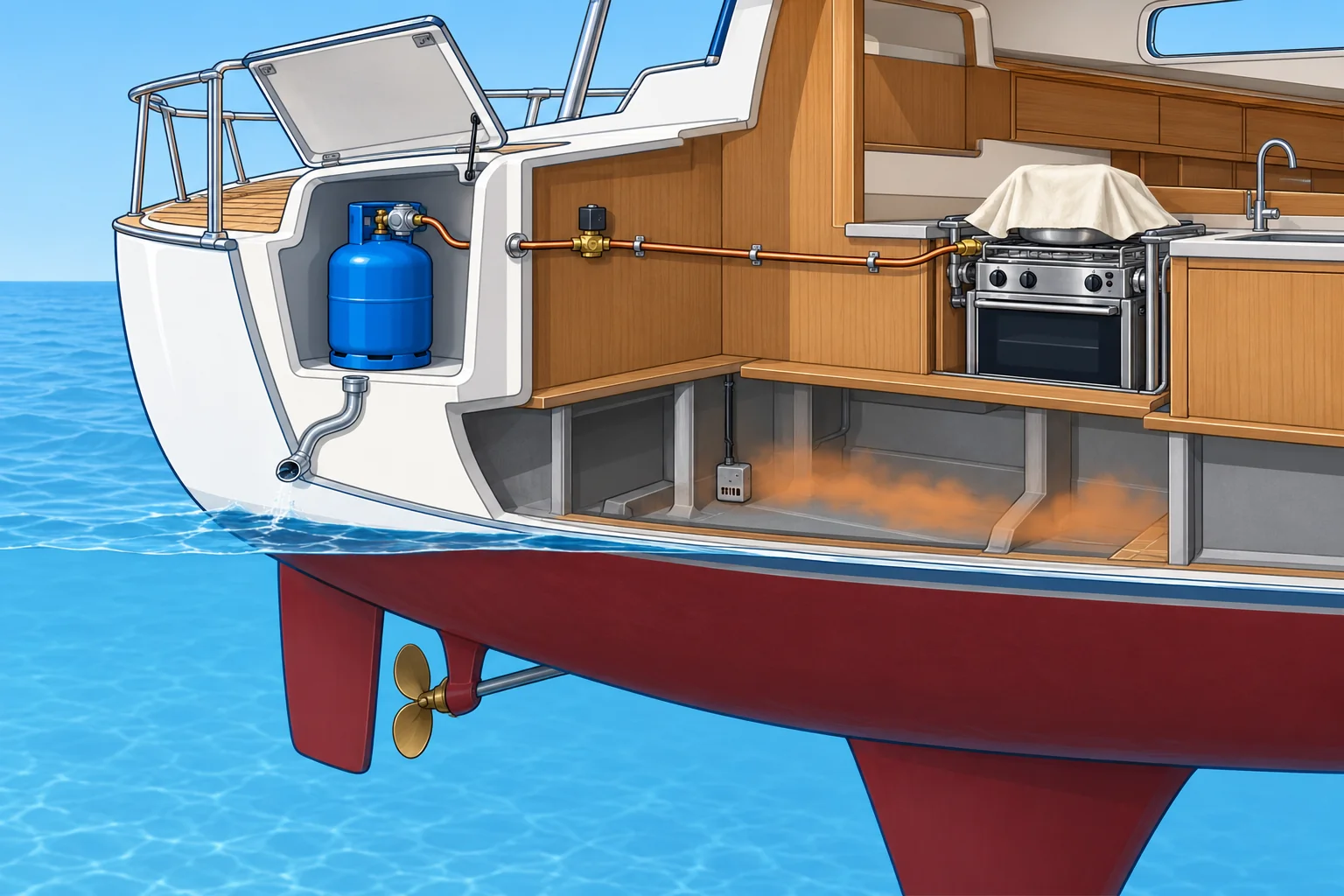
Boats cook on LPG (liquefied petroleum gas: butane or propane). It is heavier than air, so a leak flows down into the bilge, the lowest space inside the hull, and stays there. A boat hull holds it like a bowl. A spark from a switch, pump or engine can then cause an explosion that destroys the boat. Do not rely on cockpit drains or ordinary lockers to clear gas trapped inside the hull.
Safe installation
Keep the cylinder in a dedicated gas locker that opens to the outside, is gas-tight to the boat’s interior and drains directly overboard above the waterline. Use approved pipe, few joints and a flame-failure device on every burner, which shuts the gas if the flame goes out. A solenoid valve with a switch near the cooker lets you shut gas at the cylinder from below. Fit a gas alarm sensor low down, clear of bilge water, as its maker directs.
Daily routine
Turn gas on at the cylinder only for cooking. After cooking, close the cylinder valve, let the flame go out, then close the burner control. This reduces residual gas; it does not prove the pipe is gas-free. Test joints with soapy water or a leak detector, never a flame. Never leave a cooker unattended at sea. Use the cooker’s retaining rails, called fiddles, and pan clamps.
If you smell gas
Get everyone on deck. Do not operate switches, plugs, pumps or the starter. Shut the cylinder only if safely accessible. Open hatches from deck for natural ventilation, without electrical equipment. Do not go below to bail or investigate. Opening hatches or manual pumping may leave gas in low pockets. Keep people out until the atmosphere is confirmed safe; if you cannot establish this, withdraw and get help. Have the leak repaired and the system leak-tested before reuse.
Pan fires
Burning oil is a Class F fire. Turn off the heat if you can reach it safely, cover the pan with a fire blanket or a close-fitting lid, and leave it for at least 30 minutes, until it is cool. Never throw water on it, and never carry a burning pan: at sea it spills.
2Step by step
If you smell gas
- 1
Do not operate any switch, pump, starter or radio button near the gas.
A spark from electrical equipment can ignite it.
- 2
Get everyone on deck. Shut the cylinder and extinguish flames or cigarettes only if safe.
Keep people clear and stop more gas escaping without entering danger.
- 3
Open hatches from deck for natural ventilation. Do not go below to bail or investigate.
Fresh air helps dilute gas but may not clear low pockets.
- 4
Keep people out until the atmosphere is confirmed safe. If you cannot establish this, withdraw and get help.
Opening hatches or manual pumping does not prove the bilge is gas-free.
- 5
Have the leak repaired and the system leak-tested before reuse.
A competent person must confirm safe conditions before gas or electrical equipment is used again.
3Key points
- 1
LPG is heavier than air and collects in the bilge.
- 2
Gas locker drains overboard; flame-failure devices and a solenoid.
- 3
After cooking: cylinder valve off, let the flame go out, then close the burner control.
- 4
Smell gas: no switches, get clear, shut cylinder if safe, ventilate from deck; keep out until confirmed gas-free.
- 5
Pan fire: heat off, fire blanket or lid, never water.
4Frequent mistakes
Wrong: Run the electric bilge pump to clear a gas leak fast.
Right: Its motor or switch can spark. Get clear and ventilate from deck. Hatches or manual pumping may leave gas; keep out until confirmed safe, or withdraw and get help.
Wrong: Check gas joints with a lighter flame.
Right: Use soapy water or a leak-detection spray. Bubbles show the leak.
Wrong: Lift the fire blanket after a minute to see if it worked.
Right: Air can re-ignite the oil. Leave it at least 30 minutes, until cool.
5Practice case & exam keys
On a calm evening at anchor a crew member says they smell gas in the saloon (main cabin). The cabin lights and the fridge are on. What do you do?
Show the answer
Move everyone onto deck. Do not operate switches, pumps, plugs or the starter. Shut the cylinder if safely accessible. Open hatches from deck for natural ventilation; do not go below to bail or investigate. Do not restart or operate electrical equipment until a competent person has repaired the leak, leak-tested the system and confirmed the space is gas-free. If safety cannot be confirmed, withdraw and get help.
Exam keys
- LPG (butane, propane) is heavier than air and collects low in the bilge.
- Gas locker drains overboard above the waterline; flame-failure devices; solenoid; low gas alarm.
- Gas leak: no switches; evacuate; shut cylinder if safe; ventilate from deck. Keep out until confirmed gas-free, or withdraw and get help. Repair and leak-test before reuse.
- Pan fire (Class F): heat off, fire blanket or lid, leave until cool, never water.
Finish this unit
When you've read it, answer three questions. Get all three right to finish the unit; opening the page alone doesn't count.
My notes for this unit
No notes