

Lithium-ion battery fires and prevention
1The lesson in plain words
A failing lithium battery heats itself, vents toxic, flammable gas and can re-ignite for hours. Prevention and early escape matter more than extinguishers.
Thermal runaway
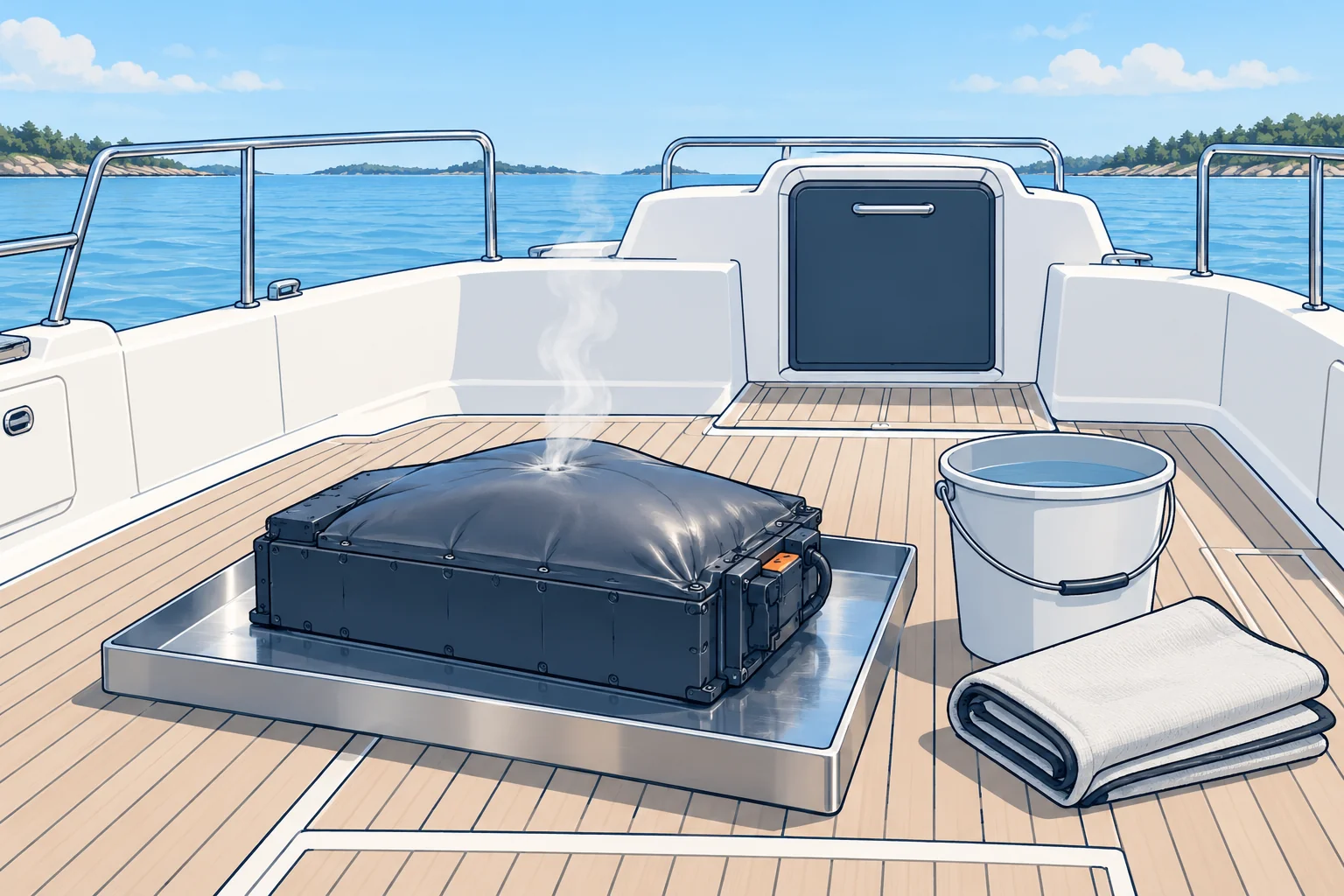
Lithium-ion batteries power phones, laptops, e-bikes, e-foils, outboards and house banks, the boat’s service batteries. Damage, overcharging, poor chargers, water ingress or a fault can start thermal runaway: a cell heats itself, vents gas and sets off its neighbours. The gas is toxic and flammable and can explode in a closed space. Smothering or CO₂ may suppress flames but cannot reliably cool cells enough to stop thermal runaway.
Warning signs
Watch for swelling, heat, hissing, popping, a sweet or chemical smell, or white or grey vapour. Vapour can come before any flame. Get everyone away from the vapour first. Isolate charging only at a safe remote point outside the affected space; do not touch the battery or operate nearby plugs or switches.
Fighting it
For a small device, attempt cooling only with charging power safely isolated and without entering smoke or vapour. Use plenty of water from a distance and keep cooling: re-ignition can last hours. Do not handle the battery. A specialist extinguisher must be rated for the battery’s size and may not prevent re-ignition. For an e-bike, e-foil or house-bank pack, withdraw, close the space only if safe, call for help and prepare to abandon.
Prevention
Use reputable batteries. Charge portable devices with the maker’s charger on a hard, non-flammable surface while awake and present, never on bunks. Charge large portable batteries ashore where possible; stow them dry and secured away from exits. A battery management system (BMS) monitors cells and can disconnect charging or loads when limits are exceeded; it cannot prevent every failure. Installed banks need correct fuses, lithium-compatible chargers and installation to a marine standard such as ABYC E-13.
Other prevention
Most boat fires start in the engine, the electrics or the galley. Check fuel and exhaust hoses, keep wiring tidy with correct fuses, never leave a cooker or heater unattended, store oily rags in a closed metal tin and keep smoke and carbon monoxide (CO) alarms working.
2Key points
- 1
Thermal runaway: cells heat themselves and vent toxic, flammable gas.
- 2
Small device: isolate charging safely before cooling. Water cools; smothering and CO₂ cannot reliably stop runaway.
- 3
Large packs: do not fight; get clear, call for help, prepare to abandon.
- 4
Charge portable devices on a non-flammable surface, while awake and present, with the right charger.
- 5
Installed lithium needs a BMS, fuses and lithium charging profiles; a BMS cannot prevent every failure.
3Frequent mistakes
Wrong: A fire blanket over a burning e-bike battery will put it out.
Right: The battery makes its own heat and gas. A blanket does not stop runaway; get clear and call for help.
Wrong: Charging phones and e-bikes on your bunk overnight is fine.
Right: Charge while awake, on a hard non-flammable surface, with the maker’s charger.
4Practice case & exam keys
At anchor, an e-foil battery charging in the saloon (main cabin) starts to hiss and give off white vapour. There is no flame yet. What do you do?
Show the answer
Get everyone on deck, away from vapour. Isolate charging only at a safe remote point outside the affected space. Do not touch the battery or operate nearby plugs or switches. Close the space if safe. Send Mayday for grave and imminent danger, including toxic vapour or explosion risk; use Pan-Pan only if urgent without that danger. Do not wait for flames. Prepare to abandon; never carry the pack.
Exam keys
- Thermal runaway: self-heating, toxic flammable vapour, re-ignition for hours.
- Small device: isolate charging safely; water cools; specialist units have battery-size limits; never handle a hot battery.
- Large pack: evacuate; isolate charging only remotely outside the affected space if safe; call for help, do not fight it.
- Portable devices: maker’s charger, non-flammable surface, awake and present. Installed banks: BMS, fuses, lithium-compatible chargers and marine installation standards such as ABYC E-13.
Finish this unit
When you've read it, answer three questions. Get all three right to finish the unit; opening the page alone doesn't count.
My notes for this unit
No notes