

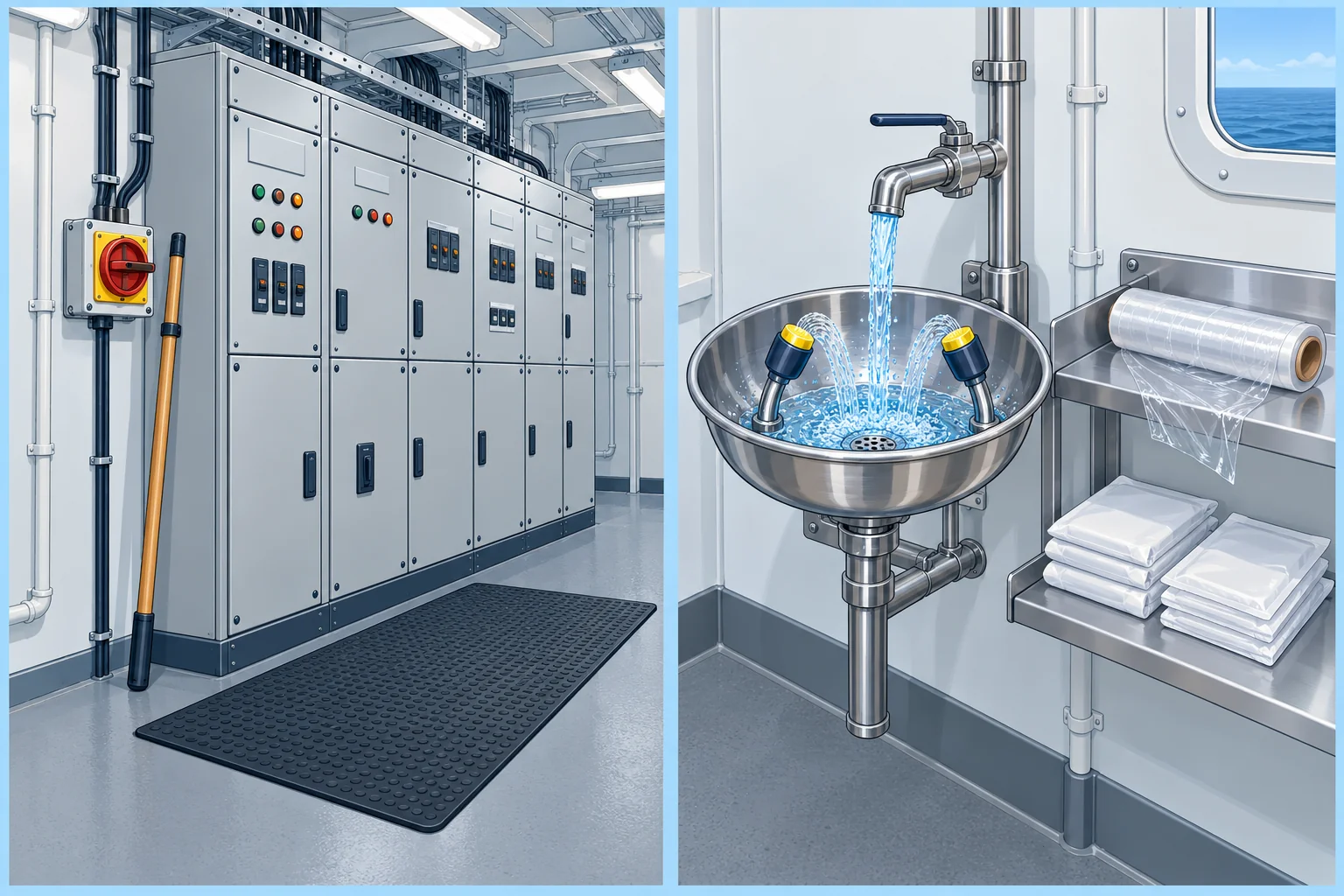
Electric shock and burns at ship scale
1The lesson in plain words
Ships may have 440 V supplies, high voltage, steam and chemicals. Isolate first, cool heat burns for 20 minutes and flush chemicals for a long time.
Electric shock
Current through the body can stop the heart or breathing, cause deep burns and throw someone off a ladder. A 440 V shipboard supply is classed as low voltage but can kill; wet steel decks conduct well. Do not touch the casualty or live equipment. Raise the alarm and keep others clear. For low voltage, operate a readily accessible switch only if safe, or call the engineer. If you cannot isolate safely, keep clear and call the engineer.
High voltage
High voltage can arc across a gap and kill a rescuer who only comes close. Do not approach. Stay outside the high-voltage switchboard room or enclosure until an authorised engineer confirms it is safe.
After an electric shock
Once the current is off, check response and breathing. If the casualty is unresponsive and not breathing normally, start CPR and use the AED (see First aid and resuscitation). Even if they seem well, report it and get radio medical advice: the heart rhythm can be disturbed later and the burns are often deeper than they look. Cover entry and exit burns with clean dressings. Stay with them and keep checking response and breathing until help takes over.
Heat burns and steam
On ships, burns come from steam leaks, hot oil, exhausts, galley equipment and fires. High-pressure steam may be invisible near the leak and can cut and scald deeply: never put your hand out to find it. Cool the burn with cool running water for 20 minutes as soon as possible. Remove rings and loose clothing but leave anything stuck. Lay cling film over the burn, never around a limb or over the face. Keep the casualty warm.
Chemical burns
Battery acid, caustic soda and other shipboard chemicals burn skin and eyes. Use suitable gloves and goggles. A safety data sheet (SDS) gives product-specific precautions. For skin, gently brush dry powder off skin only and remove soaked clothing, following SDS precautions. Flush with running water for at least 20 minutes, longer if directed. Start eye flushing immediately; never brush or rub an eye. Hold the lids open and rinse from the inner corner outward. Never neutralise a chemical with another.
2Step by step
Electric shock: the first steps
- 1
Do not touch the casualty while they may be in contact with the current.
The current can pass into you.
- 2
Operate an accessible low-voltage switch only if safe; otherwise keep clear and call the engineer.
Removing the current is the only safe way to free them.
- 3
For high voltage, keep away until an authorised engineer says it is safe.
High voltage can arc across a gap.
- 4
Once safe, follow First aid and resuscitation if unresponsive or not breathing normally.
Electric shock can stop the heart.
- 5
Cover burns, keep them warm, monitor response and breathing, and get radio medical advice.
Internal damage and heart problems can appear later.
3Key data
- Low voltage
- Use an accessible switch only if safe, or call the engineer
- High voltage
- Keep away until an authorised engineer confirms safety
- Heat burns
- Cool running water for 20 min, as soon as possible
- Chemical burns
- Flush at least 20 min; longer if the SDS says
- Stuck clothing
- Leave it; cut around it
4Key points
- 1
Never touch someone in contact with electricity: isolate first.
- 2
High voltage: stay away until an authorised engineer says it is safe.
- 3
After any electric shock: follow resuscitation guidance if needed, monitor and get medical advice.
- 4
Heat burns: cool 20 min, leave stuck clothing, keep warm; film laid over, never wrapped; not on the face.
- 5
Chemical burns: protect yourself, then flush for at least 20 minutes.
5Frequent mistakes
Wrong: Pull the casualty off the cable with your hands.
Right: Do not touch the casualty or cable. Isolate the supply from a safe position; if the voltage or conditions are uncertain, keep clear and call the engineer.
Wrong: A casualty who walks away from an electric shock is fine.
Right: Heart rhythm problems and deep burns can appear later. Report it and get medical advice.
Wrong: Peel off a melted boiler suit to see the burn.
Right: Leave anything stuck to the skin. Cool the burn and cut clothing around it.
6Practice case & exam keys
An engine-room crew member tops up a battery bank and acid splashes into his eye and onto his forearm. He is shouting in pain and rubbing his eye. The eyewash station is 5 m away.
Show the answer
Put on gloves, then lead him straight to the eyewash station. Hold his eyelid open and flush the eye from the inner corner outward, keeping the good eye above the injured one. Remove soaked clothing from his arm and flush it under running water too. Keep flushing for at least 20 minutes, and longer if the SDS says so. Call the bridge so the person in charge of medical care can get radio medical advice.
Exam keys
- Electric shock: isolate first; high voltage only after an authorised engineer says safe.
- After a shock: follow resuscitation guidance if needed; monitor response and breathing; get medical advice.
- Heat burns: cool water 20 min; leave stuck clothing; keep warm; film laid over, never wrapped; not on the face.
- Chemical burns: protect yourself; decontaminate skin per SDS. Flush eyes immediately; skin and eyes at least 20 min.
Finish this unit
When you've read it, answer three questions. Get all three right to finish the unit; opening the page alone doesn't count.
My notes for this unit
No notes