

Toxic gases and chemicals: the first steps
1The lesson in plain words
Shipboard gases can kill crew and rescuers. Keep clear of exposure, raise the alarm and use chemical safety information and the officer’s medical guide.
Do not become a casualty
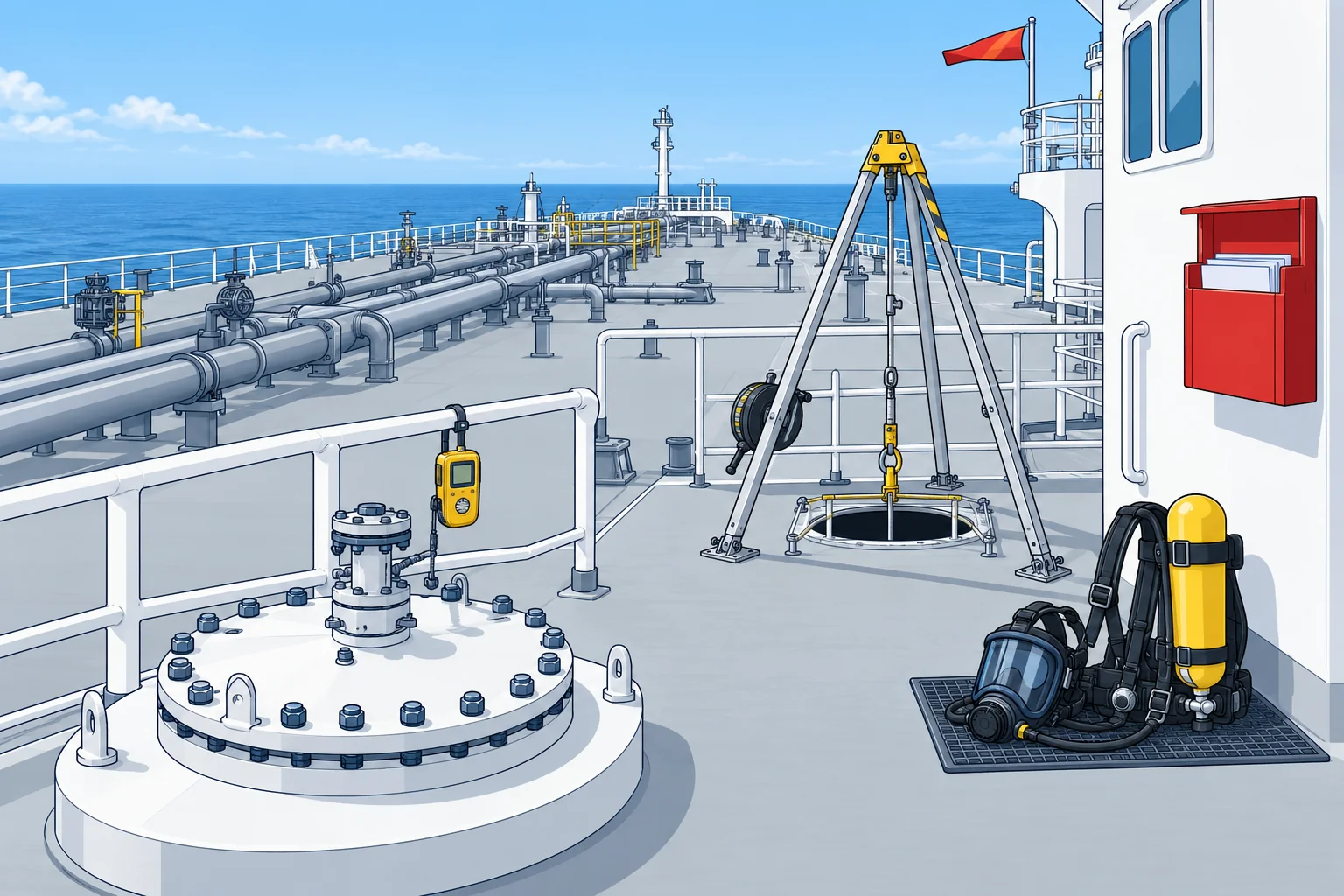
Toxic gases and missing oxygen give little or no warning, and many deaths on ships are of people who went in to help. If someone collapses in a tank, hold, pump room or store, raise the alarm and do not enter. A rescue team in breathing apparatus brings them out. For a chemical spill, keep upwind and use the protective equipment the safety data sheet lists.
Hydrogen sulphide
Hydrogen sulphide (H₂S) comes from oil containing sulphur compounds, sewage tanks, bilges and rotting cargo such as fish. It may smell of rotten eggs at low levels, but high levels deaden your sense of smell. High concentrations can cause sudden collapse and death. Effects depend on concentration and exposure time. Never trust your nose to decide whether an area is safe.
Carbon monoxide and missing oxygen
Carbon monoxide (CO) comes from fire smoke, engine and boiler exhausts, and some cargoes such as coal and wood pellets. It has no smell; it causes headache, dizziness, nausea and confusion, then collapse. Oxygen deficiency happens in closed spaces where steel rusts, cargoes such as logs, grain or fruit use oxygen, or inert gas or nitrogen has been used. Collapse can come without warning. First aid: fresh air, oxygen if trained, CPR if needed.
Skin and eyes
Protect yourself with gloves and eye protection specified by the safety data sheet. For skin, gently brush dry powder off skin only and remove contaminated clothing, following chemical-specific SDS precautions. Start eye flushing immediately; never brush or rub an eye. Hold the lids open and rinse from the inner corner outward. Flush skin or eyes with running water for at least 20 minutes, longer if directed. Get urgent medical advice; provide the chemical’s label or safety data sheet for handover.
The SDS and the MFAG
A safety data sheet (SDS) comes with every hazardous chemical on board: its dangers, first aid and the protection to wear. Oil cargoes and fuel oils have one too (SOLAS VI/5-1). The MFAG, IMO's Medical First Aid Guide for Use in Accidents Involving Dangerous Goods, is the officer's tool: it gives treatment tables for chemical exposures and is used with radio medical advice. Know where the SDS file is kept.
2Key data
- H₂S danger
- High levels can cause sudden collapse; smell is unreliable
- Carbon monoxide
- No smell; headache, dizziness, confusion, collapse
- Chemical on skin or eyes
- Flush at least 20 min, longer if the SDS directs
- SDS
- Hazards, first aid and protection for each chemical
- MFAG
- IMO guide for dangerous-goods exposures; officer's tool
3Key points
- 1
Raise the alarm and keep clear of exposure; rescue is for the trained team with breathing apparatus.
- 2
H₂S: smell is unreliable; high concentrations can cause sudden collapse.
- 3
CO has no smell; headache, dizziness or confusion may occur. Oxygen deficiency can cause collapse without warning.
- 4
Follow SDS precautions; remove soaked clothing, brush powder off skin only. Flush eyes at once; irrigate for at least 20 min.
- 5
Bring the label or SDS to the person in charge of medical care; MFAG supports their decisions.
4Frequent mistakes
Wrong: If the rotten-egg smell has gone, the H₂S has cleared.
Right: High levels deaden your sense of smell. A fading smell does not mean the area is safe; keep clear and raise the alarm.
Wrong: Hold your breath and dash in to pull the casualty out.
Right: You may collapse before you can help. Raise the alarm and wait for the trained rescue team with breathing apparatus.
Wrong: Remove chemical-soaked clothing with your bare hands.
Right: Protect yourself with the gloves and eye protection specified by the SDS before handling contaminated clothing.
5Practice case & exam keys
Your ship carries oil that can release H₂S. A shipmate staggers beside an open cargo sampling point. You noticed a rotten-egg smell earlier, but now you smell nothing.
Show the answer
Suspect H₂S. Raise the alarm and move upwind away from the opening. From a safe position, tell him to move upwind if he can. Do not approach the gas plume; a trained rescue team with breathing apparatus must recover him if he cannot escape. Once he is safely in fresh air, check response and breathing. Give oxygen only if trained; start CPR if unresponsive and not breathing normally. Get urgent medical advice.
Exam keys
- Keep clear of exposure and raise the alarm; recovery is for the trained rescue team with breathing apparatus.
- H₂S: smell is unreliable; high concentrations can cause sudden collapse.
- CO is odourless and may cause headache or confusion; oxygen deficiency can cause sudden collapse. Fresh air; trained help.
- Flush skin and eyes at least 20 min; SDS for each chemical; MFAG is the officer's tool.
Finish this unit
When you've read it, answer three questions. Get all three right to finish the unit; opening the page alone doesn't count.
My notes for this unit
No notes