

Shock: types, signs and first aid
1The lesson in plain words
Shock means the organs lack blood flow. If responsive, lay the casualty flat unless breathless; keep them warm, monitor and get urgent help.
What shock is
In first aid, shock is not fright. It means the circulation cannot deliver enough oxygen-rich blood to the organs. Without help the brain, heart and kidneys fail, and the casualty can die. Shock can develop within seconds or worsen over hours. Watch for it after any serious injury or illness.
Types of shock
Shock has several causes. Loss of blood or fluid: heavy bleeding outside or inside, large burns, severe vomiting or diarrhoea. The heart failing as a pump, for example in a heart attack. Blood vessels widening so the blood pressure falls: a severe allergic reaction (anaphylaxis), severe infection (sepsis) or a spinal cord injury. A blockage of circulation, such as pressure building inside the chest after an injury and preventing the heart filling properly. Recognise shock and get urgent help.
Signs
Signs vary with the cause. Look for a fast pulse, rapid breathing, anxiety, thirst or nausea. Skin is often pale, cold and clammy. Severe infection, anaphylaxis or spinal injury may instead cause warm skin; spinal injury may slow the pulse. Worsening shock may cause a weak pulse, confusion, drowsiness and unconsciousness. Becoming quieter is not necessarily improvement. Anaphylaxis may also cause an itchy rash, face or throat swelling, wheezing and breathing difficulty.
First aid
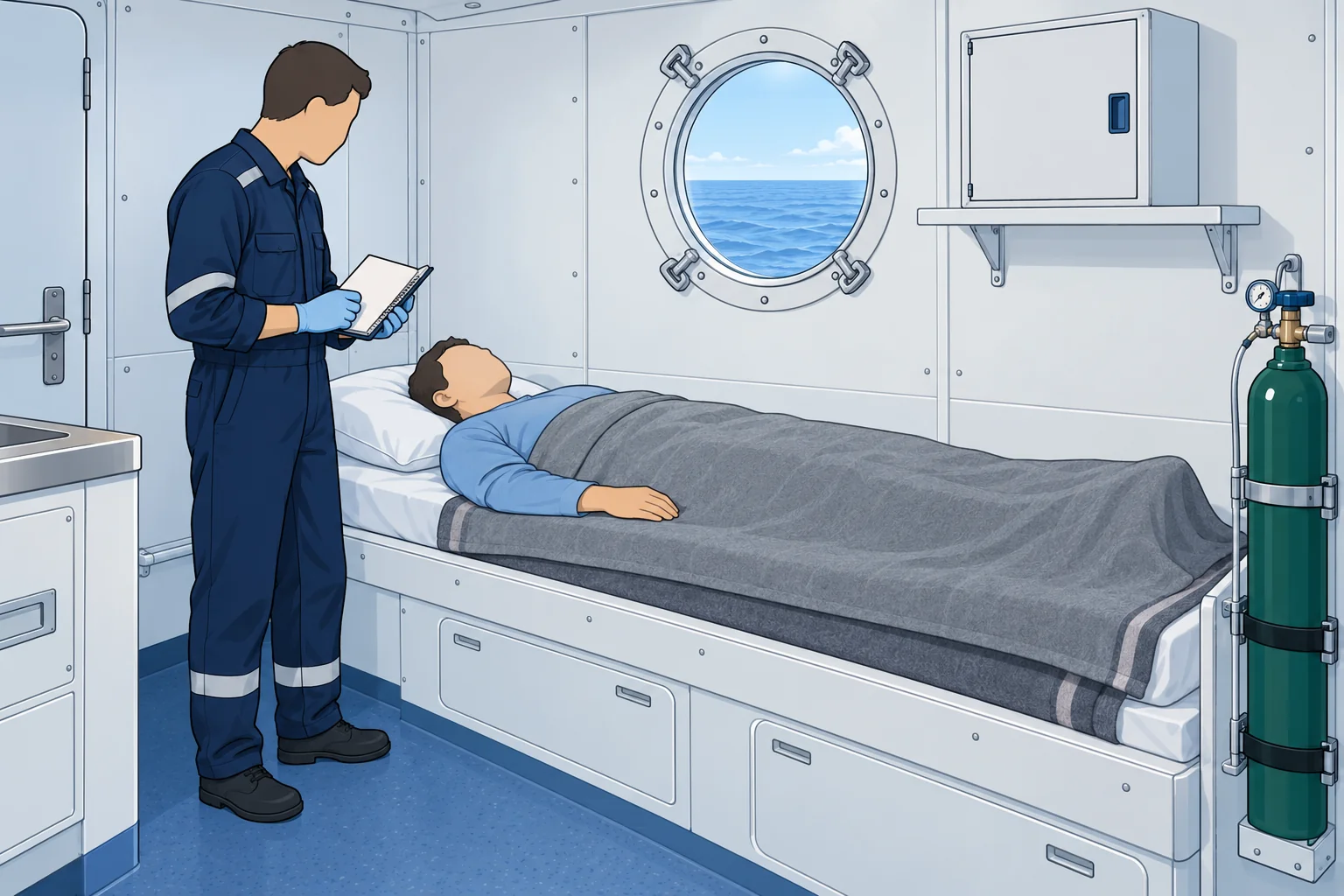
Control bleeding first. If responsive, lay the casualty flat on their back; raising the legs is not routine. If breathing is difficult, let them sit with legs extended. Never let someone with suspected anaphylaxis stand or walk. Keep them warm, including insulation underneath, and give no food or drink. Monitor breathing and response, record changes and get urgent medical advice through the officer. If unresponsive, follow First aid and resuscitation.
Anaphylaxis
Help the casualty use their adrenaline auto-injector in the outer thigh, following its label, and call urgent help; see Medicine chest.
2Key data
- Shock
- Circulation fails to supply the organs with oxygen
- Main causes
- Blood/fluid loss, heart failure, wide vessels, blockage
- Common signs
- Fast pulse and breathing; skin often pale, cold and clammy
- Position (ERC 2025)
- If responsive: flat on the back; leg raising not routine
- Food and drink
- None; moisten the lips only
- Anaphylaxis
- Adrenaline auto-injector into the outer thigh
3Key points
- 1
Shock means the organs are short of oxygen-rich blood; it can kill.
- 2
Causes: blood or fluid loss, heart failure, wide vessels, blocked circulation.
- 3
Signs: fast pulse and breathing, confusion; skin often pale, cold and clammy.
- 4
Control bleeding; if responsive, lay flat unless breathless; keep warm, nothing by mouth, monitor and get help.
- 5
Anaphylaxis: help with their auto-injector and call urgent help.
4Frequent mistakes
Wrong: Shock is the fright people feel after an accident.
Right: In first aid, shock means the circulation is failing. It is life-threatening.
Wrong: Give a cup of sweet tea to settle the casualty.
Right: Nothing to eat or drink: they may need surgery, and may vomit. Moisten the lips.
Wrong: A casualty who has gone quiet is recovering.
Right: Drowsiness and confusion can mean worsening shock. Keep checking and report it.
5Practice case & exam keys
After a crush injury to his leg, a deckhand is lying on the steel deck. Ten minutes later he is pale, sweating, breathing fast and asking for water. His pulse is fast and weak.
Show the answer
These are signs of shock, probably from bleeding inside the leg. Report to the bridge so the person in charge of medical care comes and radio medical advice is sought. Keep him lying flat on his back and put a blanket under and over him. Give no water; moisten his lips. Support the injured leg as found. Talk to him, check his breathing and response every few minutes and note the times.
Exam keys
- Shock: circulation fails to supply the organs; it can kill.
- Types: fluid loss, heart failure, widened vessels (anaphylaxis, sepsis, spinal), blockage.
- Signs: fast weak pulse, fast breathing, thirst, confusion; skin often pale, cold and clammy.
- Control bleeding; if responsive, lay flat unless breathless; warm, nothing by mouth, monitor, urgent advice.
Finish this unit
When you've read it, answer three questions. Get all three right to finish the unit; opening the page alone doesn't count.
My notes for this unit
No notes