

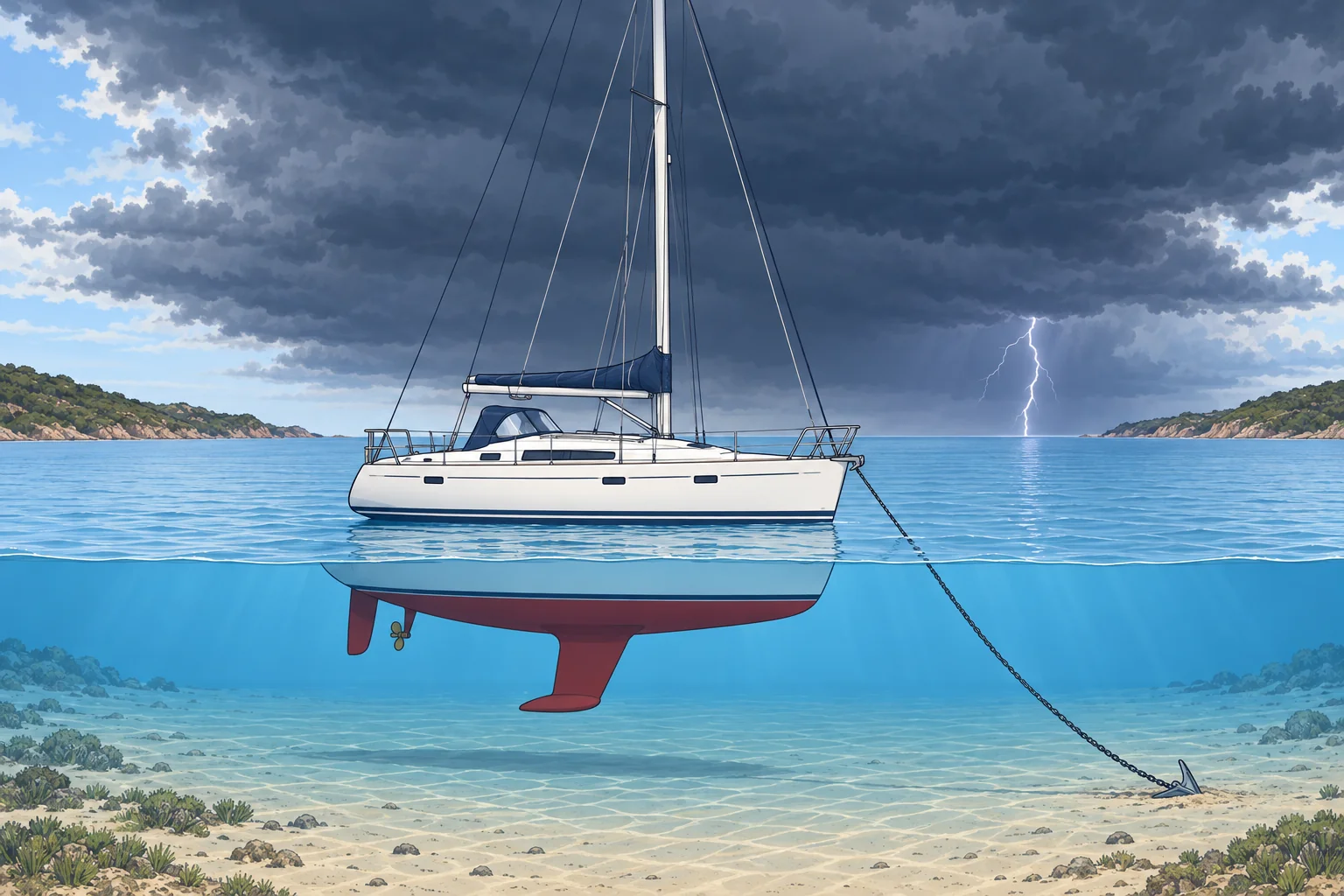
Lightning safety on a yacht and checks after a strike
1The lesson in plain words
No place on a boat is truly safe from lightning. Reduce the risk to people, protect what you can, and check the boat thoroughly after a strike.
The risk
BoatUS insurance data show about 4 lightning claims per 1,000 monohull sailing yachts a year, about twice that for multihulls. Rates are higher in thunderstorm areas such as Florida. These are insurance claims, not a count of every strike. A lightning protection system can lead the current to the water and reduce damage, but it cannot guarantee safety.
Before the storm
When thunderstorms threaten, stay in port or return before they arrive. If caught out, keep non-essential crew below, away from the mast, shrouds (mast-supporting wires), chainplates (their hull attachments) and other metal. Do not touch two metal parts at once. Those needed for navigation or urgent boat handling should keep low and avoid metal where safe. Keep a safe watch. Wait 30 minutes after the last thunder before resuming non-essential deck activity, whether or not the boat was struck.
Electronics
Lightning can destroy electronics even without a direct hit. Before the storm is close, switch off and disconnect non-essential equipment if safe. During nearby lightning, stay clear of cables and connectors. Keep a handheld VHF and GPS for emergencies. Some sailors put them in the oven or microwave as a makeshift Faraday cage, a metal box that shields its contents; it may help but gives no guarantee.
If someone is struck
A struck person carries no electric charge. If they are unresponsive and not breathing normally, start CPR and call for help; see First aid.
After a strike
Check people, then look for fire and leaks at through-hulls (pipe fittings through the hull), transducers (sensors fitted through the hull) and the keel. Check engine and steering. Have the compass checked for changed deviation (magnetic error caused by the boat). GPS course over ground is not heading. Expect electronics to fail. Have the hull lifted out and surveyed, even if it seems fine.
2Key data
- BoatUS claims (US)
- About 4 per 1,000 monohull sailing yachts a year
- Multihulls
- About twice as likely as monohulls to claim
- Aboard in a storm
- Below, away from mast, shrouds, chainplates, metal
- Struck person
- No charge remains; CPR if unresponsive and not breathing normally
- After a strike
- Fire, leaks, engine, steering, compass, electronics, haul out
- Non-essential deck activity
- Wait 30 minutes after the last thunder
3Key points
- 1
No place on a yacht is fully safe; the best plan is not to be out.
- 2
Keep non-essential crew below, away from the mast, shrouds, chainplates and other metal; essential duties continue.
- 3
A struck person carries no charge. If unresponsive and not breathing normally, start CPR.
- 4
After a strike check for fire, leaks, steering and compass deviation.
- 5
Lift the boat out for a hull survey even if no damage shows.
4Frequent mistakes
Wrong: Our lightning protection system makes the boat safe.
Right: It reduces the risk of damage but cannot guarantee safety. Still stay below and away from metal.
Wrong: Do not touch a person struck by lightning: they are still charged.
Right: A struck person carries no charge. Help at once; start CPR if they are unresponsive and not breathing normally.
Wrong: The boat floats and the engine runs, so the strike did no harm.
Right: Damage to through-hulls, hull, rigging and electronics can show later. Haul out and survey.
5Practice case & exam keys
After a thunderstorm at anchor, you hear a bang and see a flash on the masthead. The VHF and plotter are dead. Nobody is hurt and there is no smoke. What do you check, and in what order?
Show the answer
Check people first, then look for fire, smoke and leaks at through-hulls, transducers, the keel joint and bilge. Check engine and steering. Have the compass checked for changed deviation; GPS course over ground is not heading. Use the handheld VHF for help if needed. Arrange a haul-out and survey, and tell your insurer.
Exam keys
- No truly safe place aboard: non-essential crew below, away from metal; essential watch and urgent boat handling continue.
- Disconnect non-essential equipment before lightning is close; handheld VHF/GPS in oven may help, no guarantee.
- Struck person: no charge; CPR if unresponsive and not breathing normally.
- After a strike: fire, leaks at through-hulls, steering, compass deviation, electronics, haul-out.
Finish this unit
When you've read it, match the terms, then answer three questions. Get them all right to finish the unit; opening the page alone doesn't count.
My notes for this unit
No notes