

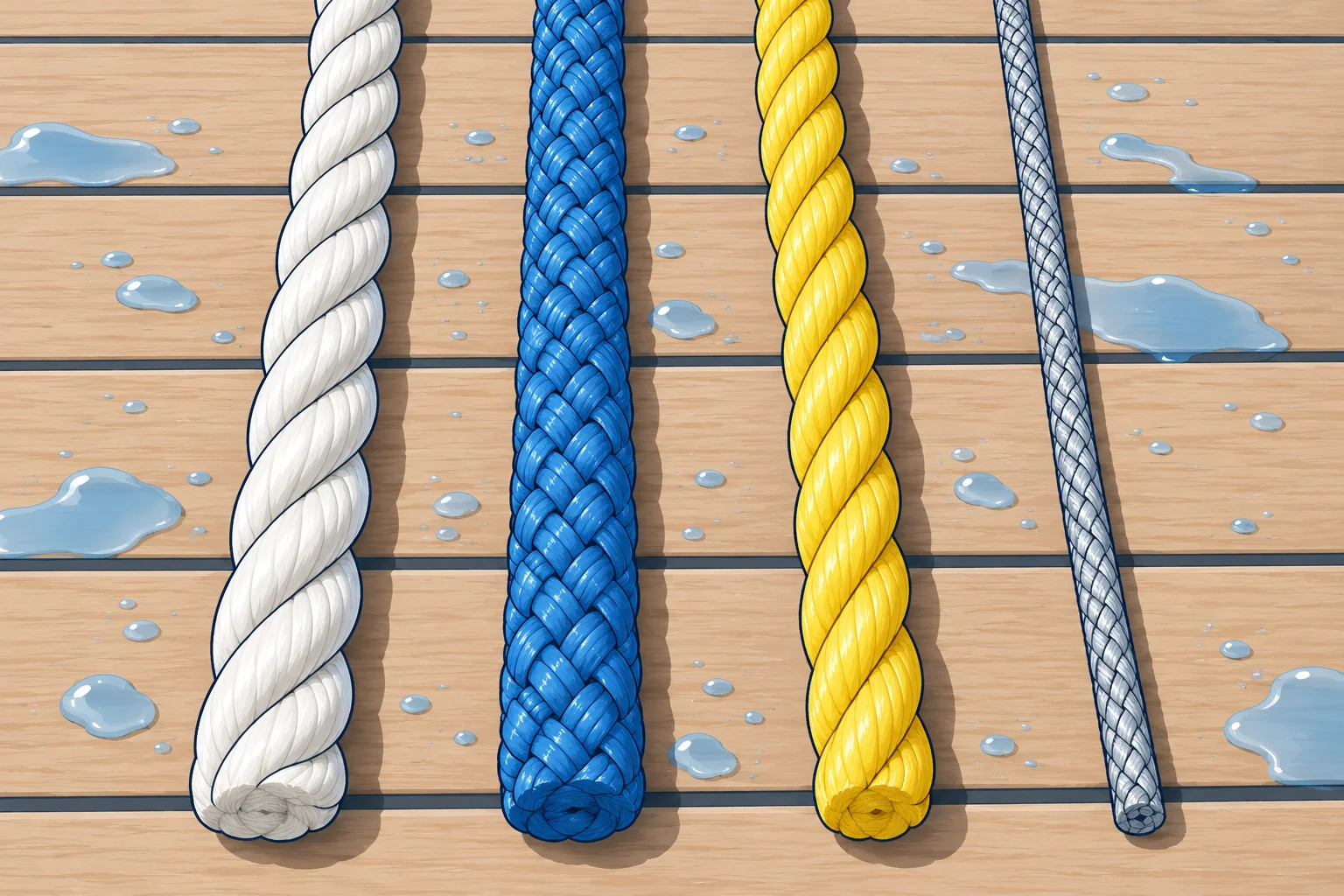
Rope fibres: nylon, polyester, polypropylene and HMPE
1The lesson in plain words
The fibre decides how a rope stretches, floats and ages. Choose stretch to cushion sudden loads, and low stretch to control sails.
Nylon
Nylon (polyamide) is strong and stretches considerably under load. That stretch absorbs shock, so nylon suits rope anchor rodes (lines connecting boat and anchor), mooring lines and tow lines. It loses some strength when wet and is harmed by long sun exposure. It sinks.
Polyester
Polyester is nearly as strong as nylon but stretches less, keeps its strength wet and resists sunlight well. It is the general-purpose yacht rope: sheets (sail-control lines), halyards (sail-hoisting lines) on cruising boats, control lines and also mooring lines. It sinks.
Polypropylene
Polypropylene is light, cheap and floats, so it is used for rescue lines, dinghy painters and pick-up lines. It is weaker, melts at a low temperature and breaks down quickly in sunlight. Never trust an old, faded polypropylene line with a load.
HMPE
HMPE (high-modulus polyethylene, sold as Dyneema or Spectra) is very strong for its weight and hardly stretches. It suits halyards and other sail-control lines where low stretch matters. Limits: it creeps (slowly lengthens under steady load), melts at a low temperature from friction and is slippery, so many knots hold it badly. It floats.
Others
Aramid fibres, such as Kevlar and Technora, have very low stretch but need protection from sunlight and repeated tight bending. LCP (liquid-crystal polymer) fibres, such as Vectran, have low stretch and little creep. PBO (polyphenylene benzobisoxazole), sold as Zylon, is strong but especially vulnerable to sunlight and moisture. These specialist fibres are expensive. Natural fibres, such as manila and hemp, can rot when stored wet.
2Key data
- Nylon
- High stretch: anchor, mooring, towing; sinks
- Polyester
- Low stretch, UV-resistant: sheets, halyards, general
- Polypropylene
- Floats; weak, poor in sunlight: rescue lines
- HMPE (Dyneema)
- Very strong, very low stretch; creeps, slippery
3Key points
- 1
Nylon stretches most: use it where shock loads must be absorbed.
- 2
Polyester is the all-round yacht rope: low stretch, good in sunlight.
- 3
Polypropylene floats but is weak and decays in sunlight.
- 4
HMPE is very strong and barely stretches; creep and friction heat limit its use.
4Frequent mistakes
Wrong: Use low-stretch HMPE for an anchor snubber.
Right: A snubber is a short stretchy line that cushions sudden loads on the anchor chain. Use nylon.
Wrong: Polypropylene is fine for mooring because it floats.
Right: Floating alone does not make a mooring line suitable. Check its rated strength, stretch, resistance to chafe (wear from rubbing) and protection from UV (sunlight).
5Practice case & exam keys
You are buying new lines for a 10 m cruising yacht: two mooring lines, an anchor snubber, a mainsheet and a line for the rescue throw bag. Which fibre for each?
Show the answer
Mooring lines: nylon for stretch in surge, or polyester for less stretch in a quiet marina. Snubber: nylon, for its stretch. Mainsheet: polyester, for low stretch and good handling. Throw bag: polypropylene, because it floats and stays on the surface where the casualty can reach it.
Exam keys
- Nylon: most stretch; anchor and mooring lines.
- Polyester: low stretch, UV-resistant; sheets and halyards.
- Polypropylene: floats; rescue lines; weak in sunlight.
- HMPE: very low stretch, creeps, low melting point.
Finish this unit
When you've read it, match the terms, then answer three questions. Get them all right to finish the unit; opening the page alone doesn't count.
My notes for this unit
No notes