

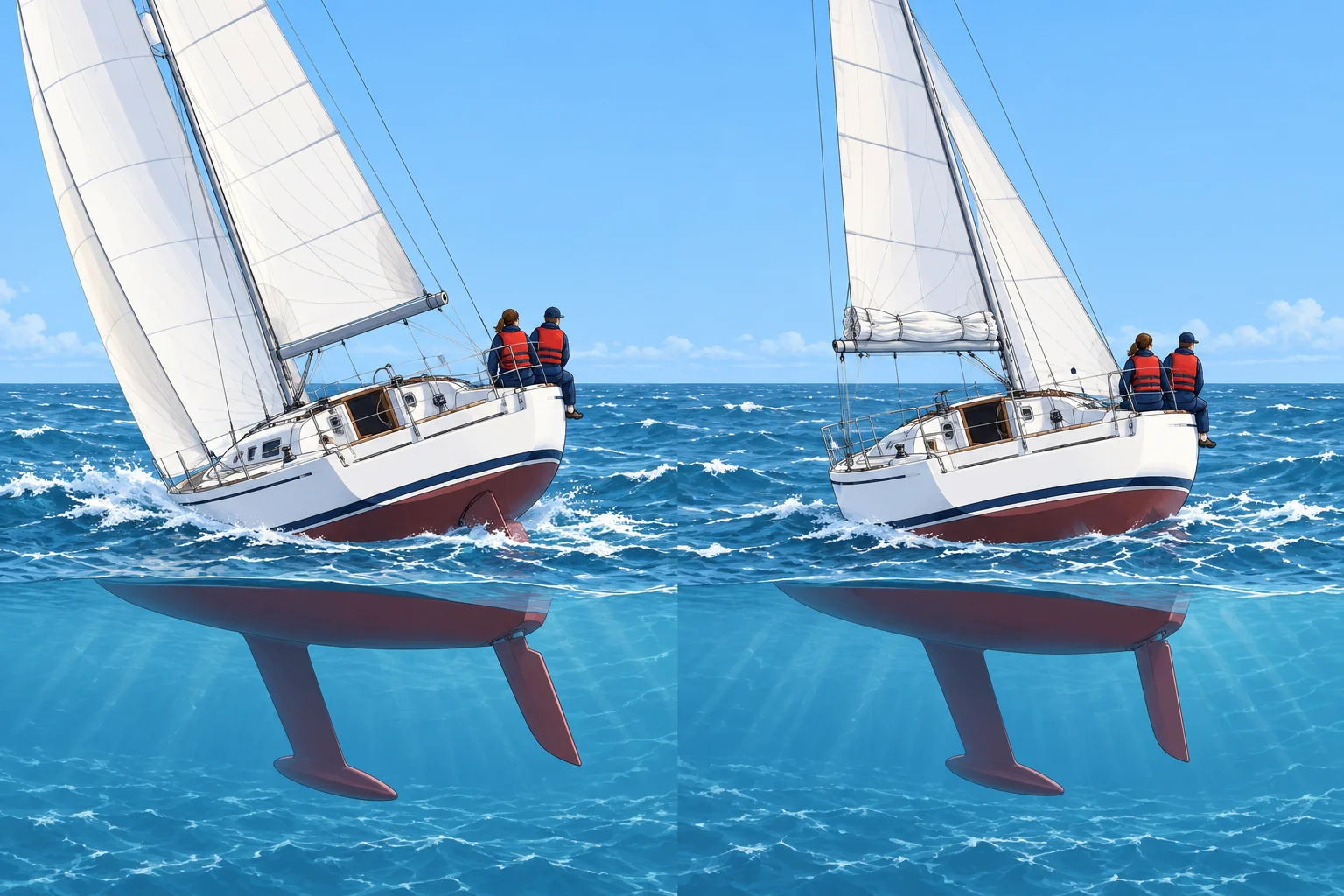
Heeling force and how the boat stands up to it
1The lesson in plain words
The sideways sail force tips the boat over. Ballast and crew weight push back. Too much heel makes the boat slow, wet and hard to steer.
Heeling and righting
The heeling force acts high up on the sails, while the keel's grip acts low under water. Together they form a turning effect that tips the boat over: the heeling moment. The boat's shape, its ballast (heavy weight low in the keel) and the crew's weight on the windward side make a righting moment that pushes her back upright. She settles at the heel where the two balance.
Keelboat and dinghy
A keelboat has a ballasted keel: the further she heels, the more the ballast resists, up to a large angle. A dinghy has no ballast and relies on hull shape and crew leaning out to windward. A gust can capsize a dinghy. Upwind, a keelboat may turn towards the wind and spill air, but a strong gust can still knock her flat. The Stability module explains these limits.
Why heel slows you
Some heel is normal. Too much heel hurts. The heeled rig’s sideways force tilts partly downwards. The keel and rudder work at an angle and grip less, so leeway grows. The hull shape becomes lopsided under water. The boat tends to turn towards the wind by herself, weather helm, and the rudder must fight her, acting as a brake.
Reducing heel
When sailing upwind, ease (let out) the mainsheet, the rope controlling the mainsail, in a gust to spill wind, then pull it in again as the gust passes. Move the crew to windward. You can also luff up slightly: turn towards the wind briefly to reduce power. If you stay overpowered, reef (reduce sail area); see the Reefing unit. A common sign is a cruising yacht regularly heeling past about 20–25° with strong steering effort.
2Key data
- Heeling moment
- Sail heeling force × height above the keel's grip
- Righting moment
- From hull shape, ballast and crew weight
- Overpowered (typical cruiser)
- Regular heel past about 20–25°, heavy weather helm
- Gust response upwind
- Ease the mainsheet; luff up slightly
3Key points
- 1
Sail force acting high and keel grip acting low create a heeling moment.
- 2
Ballast, hull shape and crew weight create the righting moment.
- 3
Too much heel adds leeway, drag and weather helm; it does not add speed.
- 4
Upwind in a gust, ease the mainsheet and luff up slightly; move crew to windward. Pull the sheet in as the gust passes.
- 5
Overpowered most of the time? Reef.
4Frequent mistakes
Wrong: More heel means more speed; keep the rail in the water.
Right: Beyond moderate heel, the boat makes more leeway and drag. Keep her nearer upright and she goes faster.
Wrong: A keelboat cannot be knocked flat, so gusts do not matter.
Right: Strong gusts and breaking waves can knock a keelboat flat. Reduce sail early and keep a reserve.
Wrong: Fight weather helm with more rudder.
Right: Heavy rudder slows you like a brake. Reduce heel first: ease the main, move crew, or reef.
5Practice case & exam keys
Close-hauled in 18 knots, your yacht heels to 30° in each gust. It keeps trying to turn into the wind, and you need a large rudder angle to hold course. The crew are still sitting to leeward.
Show the answer
She is overpowered. Move the crew to the windward side to add righting moment. Ease the mainsheet in gusts, then pull it in as they pass. If she stays overpowered, reduce sail; see the Reefing unit. She will sail more upright, with less leeway and a lighter helm, and probably faster.
Exam keys
- Heeling moment: sail force high, keel grip low. Righting moment: ballast, hull shape, crew.
- Excess heel causes leeway, drag and weather helm.
- Upwind gust: ease mainsheet, luff up slightly, crew to windward.
- Constantly overpowered: reef.
Finish this unit
When you've read it, answer three questions. Get all three right to finish the unit; opening the page alone doesn't count.
My notes for this unit
No notes