

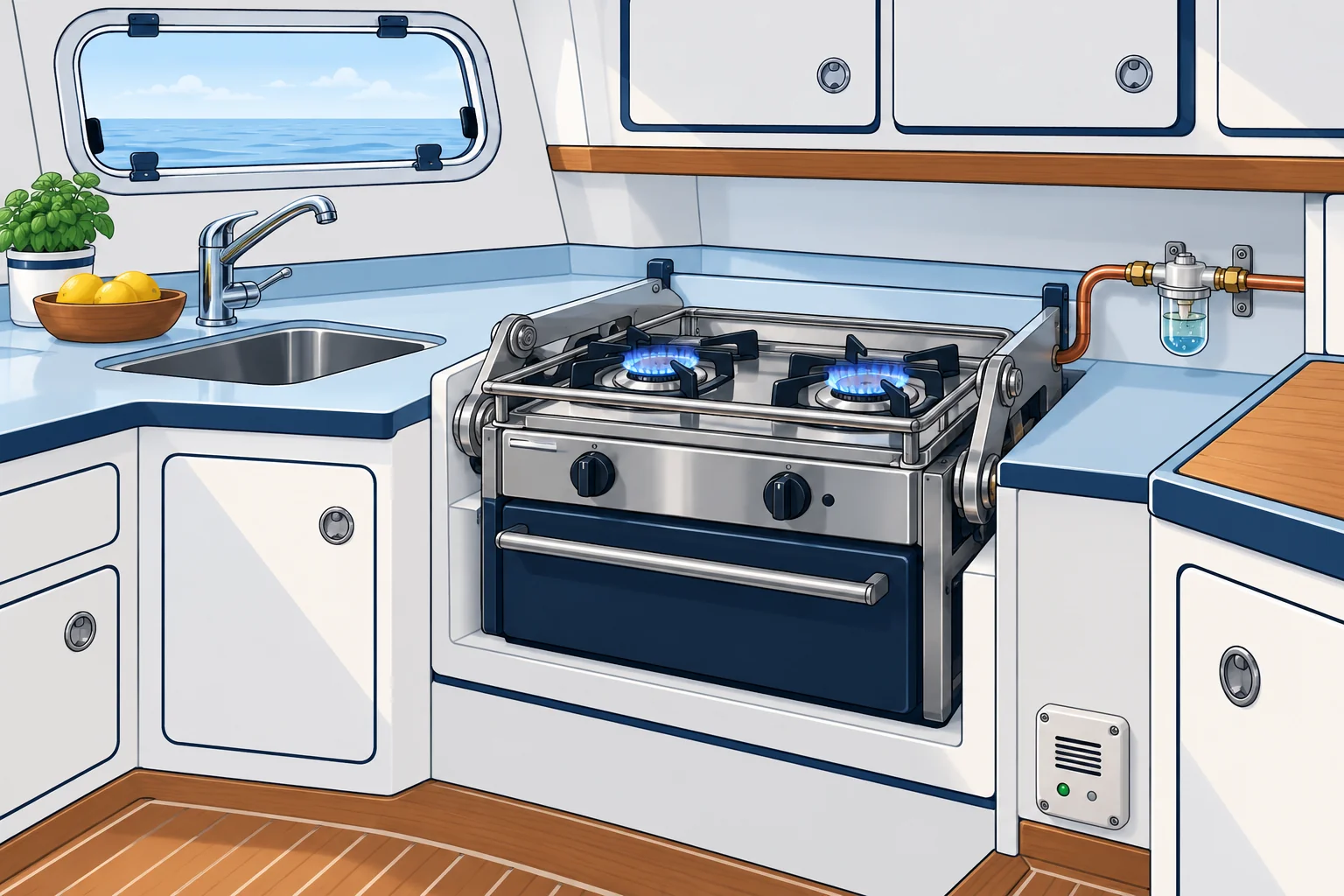
Using gas safely, and what to do on a gas smell
1The lesson in plain words
Turn gas off after cooking; close the cylinder valve at night or when leaving. Gas smell or alarm: no sparks, everyone out, gas off if safe, ventilate, get help.
Before cooking
Open the cylinder valve and solenoid. With all burners off, follow the bubble tester’s instructions, including settling and observation times. Bubbles continuing during the prescribed test indicate a leak downstream of the tester. Close the cylinder valve and do not use gas until repaired.
After cooking
Switch off the solenoid or cylinder valve first and let the flame burn the gas left in the pipe; then turn off the burner. At night and when leaving the boat, close the cylinder valve.
Gas alarm
Fit LPG sensors low down in the positions the maker specifies, clear of bilge water. Test the alarm as instructed. Treat an alarm or gas smell as a leak; follow the no-sparks procedure.
Finding leaks
Test joints with leak-detection spray or soapy water, never with a flame. Do not use the stove to heat the cabin: it uses oxygen, makes carbon monoxide and lots of condensation. Never leave a lit burner unattended.
2Step by step
On a gas alarm or gas smell aboard
- 1
Get everyone onto deck. No flames or smoking. Leave electrical switches alone, including lights, pumps and fans.
Operating a switch may cause a spark and ignite gas.
- 2
Close the cylinder valve at the locker if you can reach it safely.
This stops more gas entering without exposing you to it.
- 3
Open hatches from outside to ventilate naturally. Stay out of the cabin.
Fresh air dilutes gas, but some may remain trapped low down.
- 4
Have trapped gas cleared safely and the bilge checked by a competent person.
Bailing water or using a bilge pump cannot establish that the space is safe.
- 5
Keep engines and electrical equipment off until a competent person has repaired and checked the system and confirmed affected spaces gas-free.
Clearing gas does not repair the leak.
3Key points
- 1
Bubble test with burners off: follow the maker’s full test; continuing bubbles mean a downstream leak.
- 2
Turn off at the solenoid or cylinder first, burner last.
- 3
Gas alarm sensors low down; test them.
- 4
Alarm or gas smell: no sparks, everyone out, gas off if safe, ventilate, get help; confirm gas-free before use.
4Frequent mistakes
Wrong: Switch on the electric bilge pump to clear the gas.
Right: Do not operate electrical switches. Get everyone out and ventilate without switching equipment on. Have trapped gas cleared safely by a competent person.
Wrong: Check for a leak with a lighter.
Right: Use leak-detection spray or soapy water. A flame can ignite the leak.
5Practice case & exam keys
Coming aboard in the morning, you smell gas in the saloon. The gas alarm is silent. A crew member reaches for the light switch to look in the bilge.
Show the answer
Stop the crew member: no switches or flames. Get everyone on deck. Close the cylinder valve if safe and open hatches from outside. Stay out of the cabin. Have trapped gas cleared safely and the bilge checked by a competent person. Keep the system shut off. Have the leak repaired and spaces confirmed gas-free before operating equipment. Have the alarm checked too.
Exam keys
- Bubble test: burners off, maker’s settling and test times; continuing bubbles mean a leak after the tester.
- Shut off at solenoid/cylinder, burn off pipe gas, then close burner.
- Alarm or gas smell: no sparks, everyone out, gas off if safe, ventilate, get help; repair leak and confirm gas-free.
- Leak test with soapy water, never a flame.
Finish this unit
When you've read it, answer three questions. Get all three right to finish the unit; opening the page alone doesn't count.
My notes for this unit
No notes