

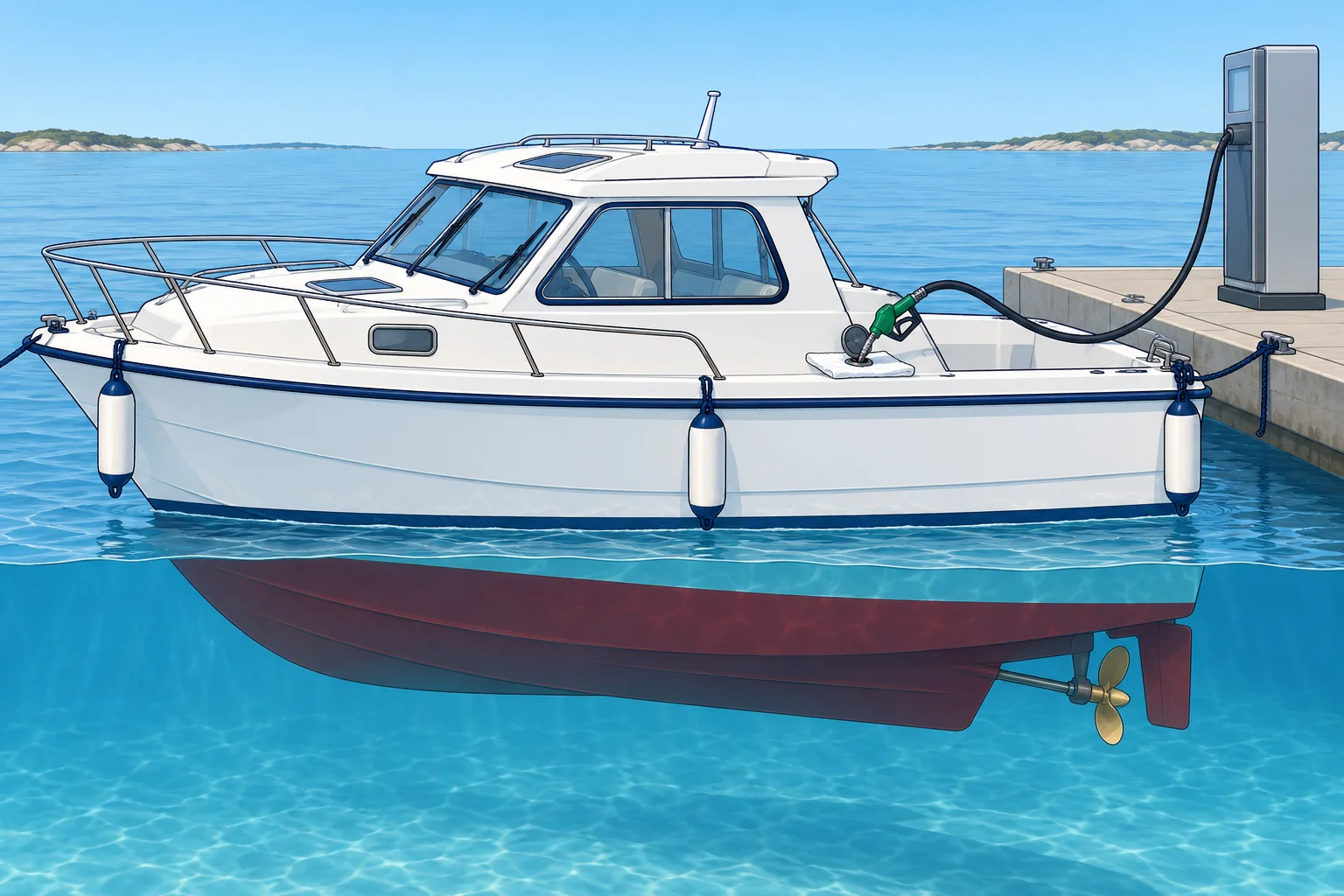
Refuelling step by step
1The lesson in plain words
At the fuel berth: engines off, check the filler, avoid overfilling, then ventilate and check for petrol vapour before starting.
Before you start
Moor securely. Stop engines and generator; cooker, heaters and nonessential electrics off. No smoking. For petrol, stop the engine-space blower before filling, close cabin openings and get passengers ashore.
At the filler
Check the deck filler: DIESEL, PETROL or GASOLINE, not WATER or WASTE. Put the pump nozzle into the filler and keep it touching the metal to prevent static sparks. Keep an absorbent pad round the filler.
Do not overfill
Fuel expands as it warms. Stop before the tank is completely full. Listen at the vent and slow down near the end. If fuel spills, stop filling and alert fuel-berth staff for assistance. Use suitable fuel-absorbent pads where safe. Do not use detergent: it disperses fuel rather than removing it.
After filling
Cap the filler and deal safely with spills. For petrol, open hatches and inspect the engine space and bilge. If you find petrol or smell vapour, do not start or operate switches; have the cause corrected. Otherwise run the blower for its labelled time, then check again before starting. If fuel or vapour is still present, do not start.
2Step by step
Refuelling
- 1
Moor securely. Stop engines and generator; cooker, heaters and nonessential electrics off. No smoking.
Removes ignition sources.
- 2
For petrol, stop the engine-space blower before filling. Close hatches, portholes and doors; passengers ashore.
Keeps heavy vapour out of the boat.
- 3
Check the filler label; nozzle in contact with the filler; pad around it.
Checks the right tank, reduces static risk and catches small drips.
- 4
Fill slowly towards the end and stop short of full.
Fuel expands when it warms and spills from the vent.
- 5
Cap the filler, wipe up spills, take pads ashore.
Spilt fuel is a fire and pollution hazard.
- 6
Ventilate. For petrol, inspect the engine space and bilge. If you find fuel or smell vapour, do not start or operate switches; have the cause corrected. Otherwise run the blower for its labelled time and check again. Do not start if fuel or vapour remains.
Blower time alone cannot make an active leak safe.
3Key points
- 1
Engines, cooker and heaters off; no smoking.
- 2
Check the filler label before the nozzle goes in.
- 3
Keep the nozzle in contact with the filler.
- 4
Do not overfill: fuel expands.
- 5
Petrol: inspect, blower, check again. Fuel or vapour found: do not start; have the cause corrected.
4Frequent mistakes
Wrong: Fill until fuel appears at the vent so the tank is really full.
Right: Fuel at the vent goes into the sea and the tank has no room to expand. Stop short of full.
Wrong: Use washing-up liquid on a small diesel spill so it disappears.
Right: Detergent disperses fuel rather than removing it. Use suitable fuel-absorbent pads where safe. Alert fuel-berth staff for assistance.
5Practice case & exam keys
At the petrol berth, the nozzle has clicked off. Your friend wants to squeeze in more until fuel appears at the vent, then start immediately.
Show the answer
Do not top up: leave room for expansion. Cap the filler and deal safely with spills. Open up and inspect the engine space and bilge. If petrol or vapour is present, leave switches alone and have the cause corrected. Otherwise run the blower for its labelled time and check again before starting.
Exam keys
- Refuel: engines, generator, cooker off; no smoking; petrol: close openings.
- Check filler label; nozzle touching filler; don’t overfill.
- Wipe spills; pads ashore; no detergent.
- Petrol: inspect, blower for labelled time, check again; fuel or vapour found: do not start; correct the cause.
Finish this unit
When you've read it, answer three questions. Get all three right to finish the unit; opening the page alone doesn't count.
My notes for this unit
No notes