

Carbon monoxide: the silent danger
1The lesson in plain words
CO has no smell or colour and kills in minutes. Engines, generators, heaters and cookers make it. Fit CO alarms and know the signs.
What it is
Carbon monoxide (CO) is a poisonous gas from incomplete burning of fuel: engines, generators, cookers, heaters and barbecues. It has no colour, smell or taste. It stops the blood carrying oxygen. Effects add up with exposure.
How it gets aboard
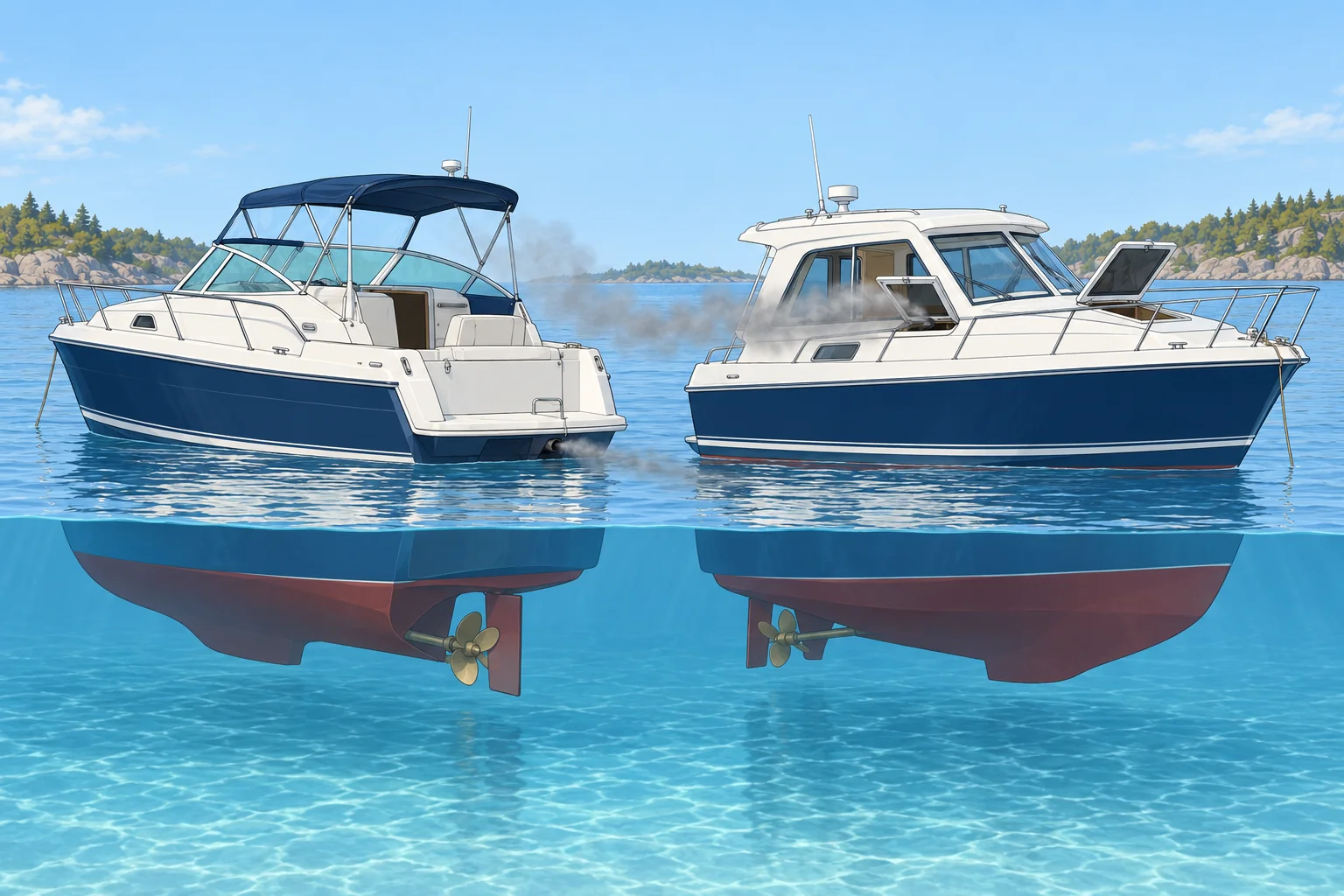
Exhaust can be drawn into the cockpit and cabin by the wind, or swirl back into an enclosed cockpit or canopy at low speed. It collects under the swim platform near exhaust outlets. A neighbouring boat’s generator or engine can fill your cabin through open hatches. A faulty heater or a cooker used for warmth fills a closed cabin.
CO alarms
Fit a CO alarm made for boats, to EN 50291-2 in Europe or UL 2034 in the US, in each sleeping cabin and near the helm or saloon. Test it regularly and never remove its battery. CO mixes with air, so follow the maker on mounting height.
The signs
Early signs look like seasickness or a hangover: headache, dizziness, nausea, tiredness. Then confusion, collapse and death. If several people feel ill at once, suspect CO. Never swim or sit near the exhaust or under the swim platform while an engine or generator runs.
2Step by step
CO alarm or suspected poisoning
- 1
Get everyone into fresh air away from exhausts. Do not enter contaminated accommodation to rescue someone.
CO can incapacitate you too; a rescue attempt can add another casualty.
- 2
Call for urgent medical help from a safe position, even if symptoms improve. Follow emergency instructions.
Suspected CO exposure needs urgent medical assessment.
- 3
Stop engines, generator, heater and cooker only if you can do so without exposure.
Source control must not delay escape or put anyone back in danger.
- 4
Ventilate from a safe position. Keep people out until the source is corrected and the affected spaces are confirmed safe.
Opening a hatch alone does not prove the boat is safe.
3Key points
- 1
CO is invisible and odourless: only an alarm detects it.
- 2
Sources: engines, generators, heaters, cookers, neighbouring boats.
- 3
Fit marine CO alarms (EN 50291-2) in each sleeping cabin.
- 4
Headache, dizziness, nausea in several people: suspect CO.
- 5
Suspected CO: fresh air away from exhausts and urgent medical help. Stop sources only if safe.
4Frequent mistakes
Wrong: If you cannot smell exhaust, there is no CO.
Right: CO has no smell. Rely on CO alarms and treat unexplained headaches seriously.
Wrong: Feeling ill in the cabin at anchor is just seasickness.
Right: If several feel ill at once with a generator or heater running, suspect CO and get everyone into fresh air.
5Practice case & exam keys
At anchor in a calm bay, you run the generator in the evening with hatches open. Another boat anchors close astern and runs theirs too. Overnight two crew wake with headaches and nausea; the CO alarm has no battery in it.
Show the answer
Get everyone into fresh air away from exhausts and call for urgent medical help, even if symptoms improve. Stop your generator only if safe. Stay out of the cabin; do not return to ventilate or replace the alarm battery. Have the exhaust problem and alarm checked and the spaces confirmed safe before anyone sleeps aboard again.
Exam keys
- CO: colourless, odourless; from incomplete combustion.
- Sources: engines, generators, heaters, cookers, other boats’ exhausts.
- Marine CO alarms (EN 50291-2 / UL 2034) in sleeping cabins.
- Symptoms: headache, dizziness, nausea, drowsiness; fresh air and medical help.
Finish this unit
When you've read it, answer three questions. Get all three right to finish the unit; opening the page alone doesn't count.
My notes for this unit
No notes