

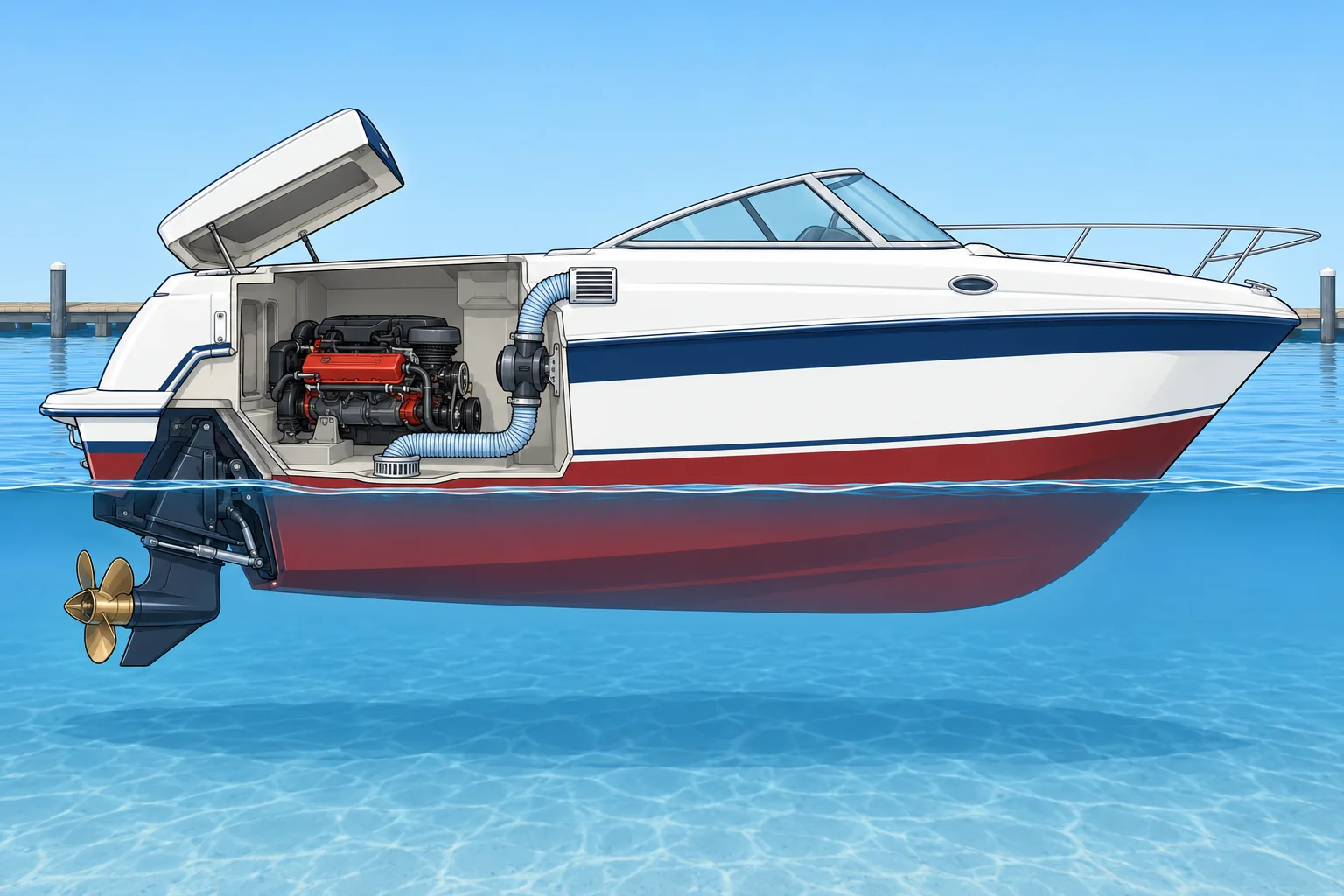
Petrol vapour and engine-space blowers
1The lesson in plain words
Petrol vapour sinks. Before starting a petrol inboard: check for fuel or vapour; if clear, run the blower, then check again. Do not start if either is found.
The danger
Petrol (gasoline) evaporates easily, even in the cold. Its vapour is heavier than air and explosive at only about 1.4–7.6 % in air. In a closed engine space or bilge, a cup of spilt petrol can make enough vapour for an explosion.
Petrol inboards
Boats with petrol inboards or sterndrives have an engine-space blower (extractor fan) and electrical parts that are ignition-protected: designed not to ignite surrounding petrol vapour during normal operation. Before starting, check for fuel or vapour. If either is present, do not operate switches or start; have the cause corrected. Otherwise run the blower for its labelled time: in the USA this is 4 minutes. Then check the engine space again. Any petrol smell: do not start.
Portable tanks
Outboard portable tanks are safest filled ashore or on the pontoon. Store them on deck or in a locker sealed from the cabin and drained overboard. Operate the tank vent as its maker instructs, and keep spare petrol out of the cabin.
Static and sparks
Flowing petrol builds static. Keep the nozzle in contact with the filler, and put a portable tank on the ground, not in the boat, to fill it. Mobile phones, switches and engines are all spark sources near vapour.
2Step by step
Starting a petrol inboard
- 1
Check the bilge and engine space for a petrol smell or liquid.
If you find either, do not start or operate switches; have the cause corrected.
- 2
Run the engine-space blower for the time on its label (4 minutes in the USA).
It replaces vapour-laden air with fresh air.
- 3
Sniff the engine space again before starting.
If you find fuel or smell vapour, do not start; have the cause corrected.
- 4
Start the engine only if checks are clear. Keep the blower running while idling or motoring slowly, as the maker directs.
It keeps clearing vapour while you motor slowly.
3Key points
- 1
Petrol vapour is heavier than air and explosive at about 1.4–7.6 %.
- 2
Petrol inboards: check, blower, check again. Fuel or vapour found: do not start; have the cause corrected.
- 3
Fill portable tanks off the boat; store them on deck.
- 4
Ignition-protected parts in petrol engine spaces.
4Frequent mistakes
Wrong: The blower has run, so a petrol smell is safe to start through.
Right: A petrol smell means vapour remains. Do not start or operate switches; stay clear and get competent help to correct the cause.
Wrong: Store spare petrol under the saloon seats where it is cool.
Right: Vapour leaks and sinks into the bilge. Keep petrol on deck or in a sealed locker that drains overboard.
5Practice case & exam keys
On a hot day you run the blower of your petrol sterndrive for four minutes. When you open the engine hatch you still smell petrol, and there is a wet patch under the fuel filter.
Show the answer
Do not start or operate switches. Get everyone ashore and keep ignition sources away. Close the fuel valve only if safely accessible. Leave an already-running ignition-protected blower on. Ventilate from outside only if safe. Stay out of the engine space. Get competent help to contain the spill, repair the leak and confirm the space is safe before restarting.
Exam keys
- Petrol vapour heavier than air; explosive about 1.4–7.6 %.
- Check first; if clear, blower for labelled time, then check again. Any fuel or vapour: do not start.
- Ignition-protected equipment in petrol engine spaces.
- Portable tanks: fill ashore, store on deck or sealed locker draining overboard.
Finish this unit
When you've read it, answer three questions. Get all three right to finish the unit; opening the page alone doesn't count.
My notes for this unit
No notes