

Lubrication: grease points, wire dressing and keeping oil off the sea
1The lesson in plain words
Grease the right points with the right grease at the right interval, dress wires, and keep every drop of oil on board.
Grease points
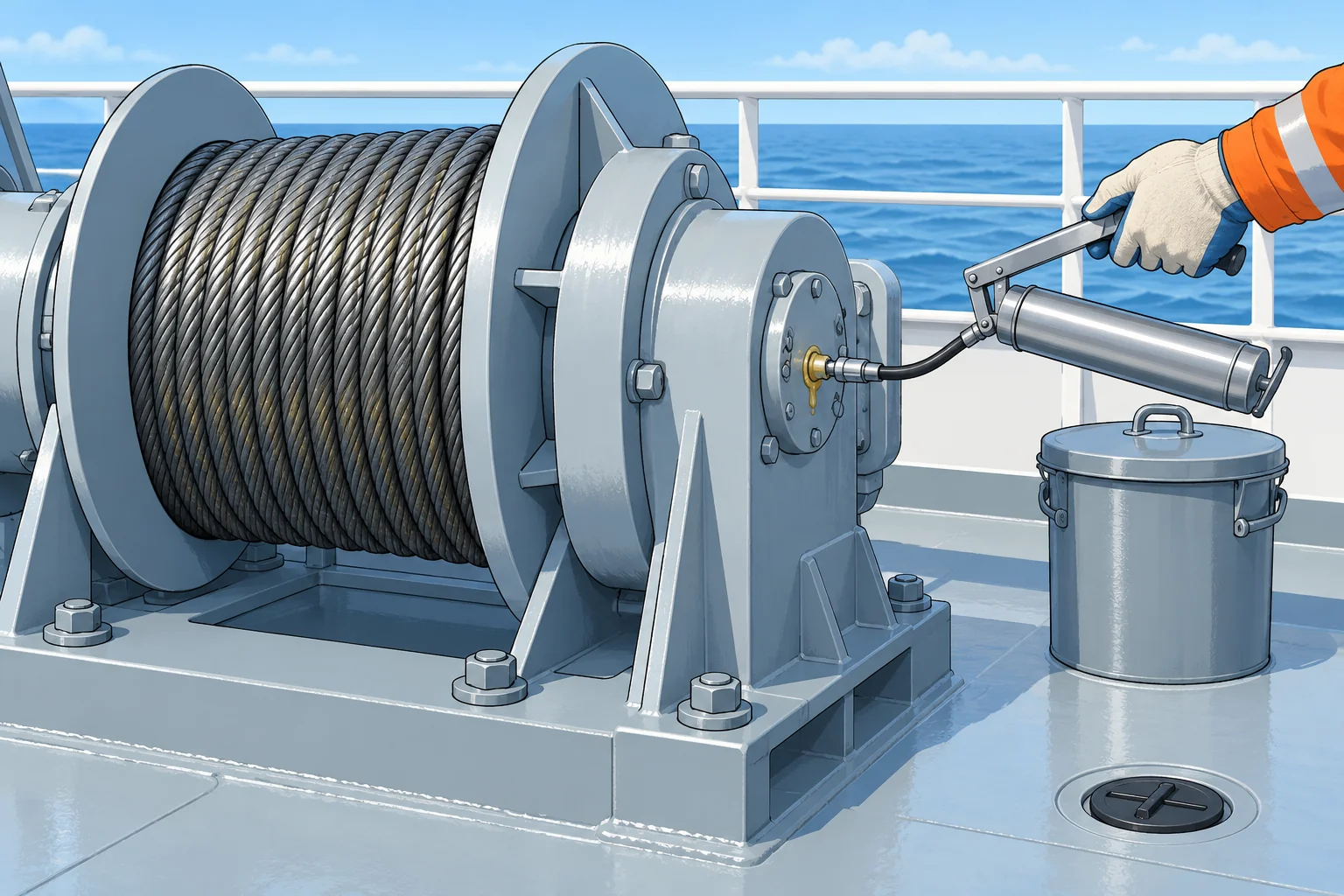
Deck machinery has grease nipples, small valves where a grease gun pushes grease into a bearing. The lubrication chart lists every point, the grease, quantity and interval. Wipe the nipple clean first so dirt is not pumped in. Apply the quantity specified by the maker; do not keep pumping to force grease out. Too much can damage seals.
The right grease
Use the grease named on the chart. Greases contain oil and a thickener, which gives grease its consistency. Some do not mix: incompatible greases can soften and run out, leaving the bearing dry. If the type changes, the old grease is purged as the maker describes. Keep containers closed and labelled so grease stays clean.
Wire rope dressing
Wire dressing is the maker’s approved lubricant for a steel rope. It reduces wear and internal and external corrosion. Stop and isolate the machinery and secure the rope against movement before cleaning or touching it. Use the maker’s cleaning method and apply dressing with a brush or purpose-made applicator. Never clean or dress a moving rope by hand.
Oil on deck
Oil and grease cause falls. Fit scupper plugs, which block deck drains, before oil work. Save-alls are trays that catch leaks around vents and machinery. Keep their drains shut during oil work and transfer collected oil to the designated oily-waste container. Wipe up spills with absorbent from the spill kit. Oily rags can self-heat and catch fire: keep them in a closed metal bin. Pollution rules are in Ocean: pollution.
2Step by step
Greasing a deck machinery bearing
- 1
Isolate the machine if any part can move while you work.
Grease points sit near drums, gears and wires that can trap hands.
- 2
Check the lubrication chart for grease type, quantity and interval.
The wrong grease can mix badly and leave the bearing dry.
- 3
Wipe the nipple clean before connecting the grease gun.
Dirt pumped into a bearing wears it fast.
- 4
Apply the quantity specified by the maker; do not keep pumping to force grease out.
Too much grease can burst seals and overheat the bearing.
- 5
Wipe off excess, refit caps and record the job.
Records show the job was done and when it is next due.
3Key points
- 1
The lubrication chart gives every grease point, grease type, quantity and interval.
- 2
Clean the nipple; apply the maker’s specified quantity. Do not over-grease.
- 3
Use the specified grease; incompatible greases can soften and run out.
- 4
Stop and isolate machinery before hand cleaning or dressing wire ropes; secure the rope and use the maker’s method.
- 5
Scupper plugs and save-alls keep oil on board; oily rags go in a closed metal bin.
4Frequent mistakes
Wrong: Any grease will do; use what is in the gun already.
Right: Use the grease on the lubrication chart. Mixing incompatible greases can make them soften and leave the bearing dry.
Wrong: Leave oily rags in a heap in the deck store to use later.
Right: Oily rags can heat up and ignite on their own. Keep them in a closed metal bin and land them as the ship’s garbage plan says.
5Practice case & exam keys
You are greasing the windlass. Grease is not reaching a bearing, and grease is oozing from the joint between the gun and the nipple. The chart says lithium-complex grease; the gun is loaded with a calcium-based grease from another job.
Show the answer
Stop; do not increase pressure. Report that grease is not reaching the bearing and is leaking at the coupling. Leakage does not prove the nipple is blocked. Use a clean gun containing the specified grease. If wrong grease entered the bearing, tell the officer so the maker’s changeover procedure can be followed. Clean up and record the job.
Exam keys
- Lubrication chart: points, grease, quantity and interval. Clean nipples; apply the maker’s amount. Do not force grease out.
- Use the specified grease: incompatible greases can soften and run out.
- Wire ropes: stop and isolate machinery; secure the rope before hand cleaning or dressing. Use the maker’s method.
- Scupper plugs, save-alls and spill kit; oily rags in a closed metal bin (self-heating).
Finish this unit
When you've read it, answer three questions. Get all three right to finish the unit; opening the page alone doesn't count.
My notes for this unit
No notes