

Taking and securing stores, and your part in cargo work
1The lesson in plain words
Stores come aboard by crane or by hand. Lift safely, stow them so nothing moves at sea, and report damaged cargo or leaks at once.
Stores by crane
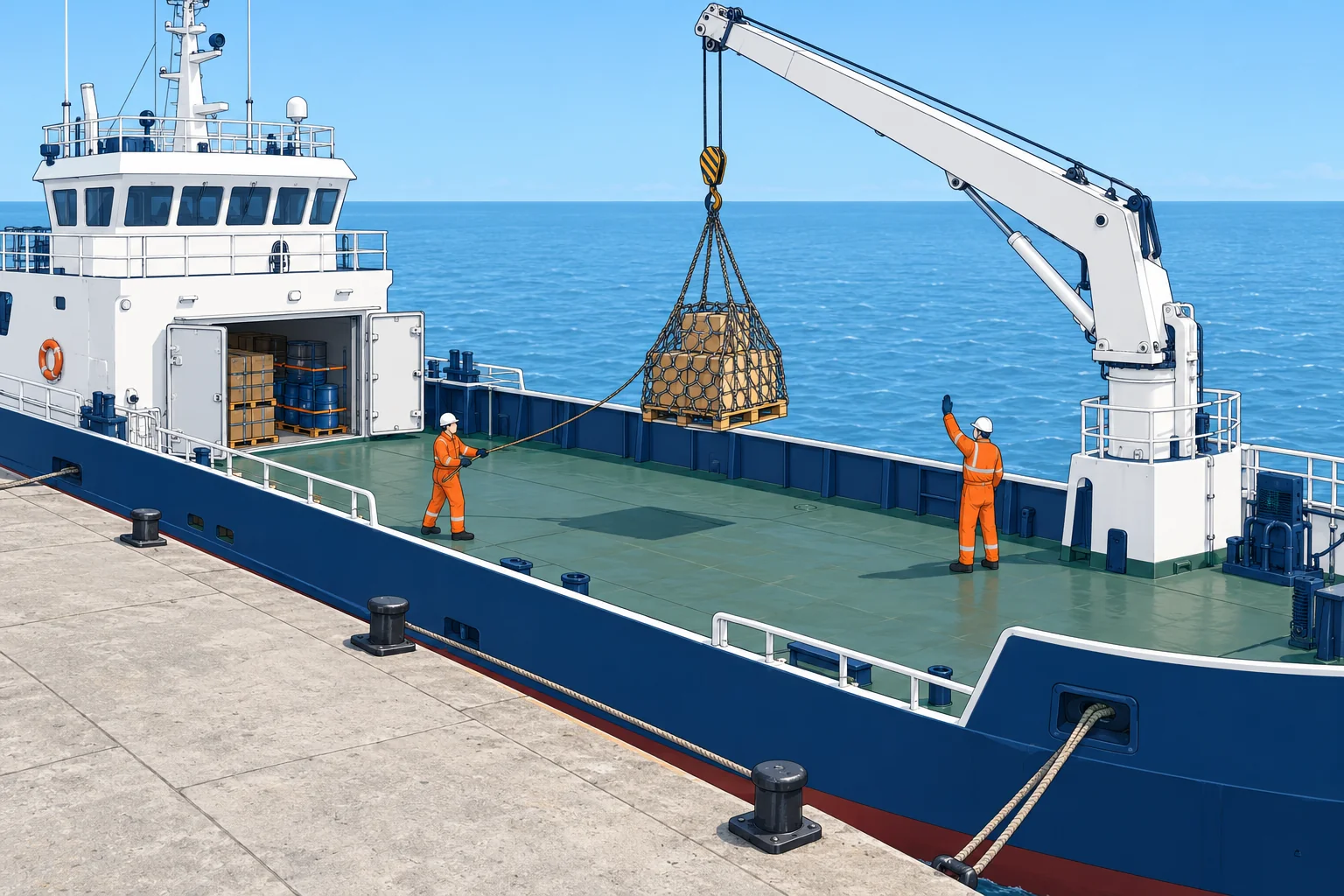
Stores arrive on pallets or in cargo nets, lifted by the stores crane. Use one signaller, who directs the crane operator. Keep everyone clear of the suspended load. Use tag lines, ropes used from a safe position to control swing. Land the load on a clear, flat spot. Check nets and pallets before lifting: torn netting or a broken pallet can drop everything. Crane machinery and SWL: see Ship: deck equipment and machinery.
Manual handling
Manual handling means lifting, carrying, pushing or pulling by hand. Before you lift, look at the load, the route and yourself: is it too heavy, awkward or slippery? Use a trolley, a chain block (a hand-operated lifting device), or help from another person. Lift with a straight back and bent knees, keep the load close, and do not twist. Wear gloves and safety shoes; keep the route clear and dry.
Securing for sea
Before the ship sails, everything must be stowed so it cannot move in a seaway. Put heavy items low, lash drums and gas bottles upright, use shelves with lips or bars, and close and latch locker doors. A loose drum or crate can crush a person, break a pipe or start a fire.
Chemicals and cold rooms
Paints, thinners, cleaning chemicals and gas bottles go to their own lockers, as the ship directs. Each chemical comes with a safety data sheet (SDS) explaining its hazards, the personal protective equipment (PPE) to wear and first aid; read it before use. Refrigerated provision rooms have an inside door release and an alarm button for anyone shut in: know where they are.
Cargo work
During cargo operations a rating may watch hatches, tend moorings, read draught marks (markings showing how deep the hull sits in water) or check lashings. Report at once any damaged or leaking package, a container with a damaged door, an unusual smell or a loose lashing. Keep away from the leak until an officer has decided what to do.
2Key points
- 1
Stores lifts follow crane rules: one signaller, tag lines, nobody under the load.
- 2
Before lifting by hand, assess load, route and yourself; use aids or help.
- 3
Stow for sea: heavy items low, drums and gas bottles upright and lashed, lockers latched.
- 4
Read the safety data sheet before using a chemical; know the cold room’s inside release.
- 5
Report damaged or leaking cargo, a damaged container or loose lashings at once, and keep clear.
3Frequent mistakes
Wrong: Store paint drums on the top shelf so they do not get in the way.
Right: Heavy items go low and lashed. A heavy drum high up is a falling hazard in a seaway.
Wrong: A small leak from a drum in the hold is easier to stop yourself than to report.
Right: Keep clear and report it. The officer checks what it is, its hazards and the right response first.
4Practice case & exam keys
Two hours before sailing, provisions arrive on pallets on the quay. One pallet carries a heavy box of tinned food on top of eggs and a 25 kg drum of cleaning chemical that is not lashed. The crane is ready.
Show the answer
Do not lift it as it is. Separate the cleaning chemical from the food and secure it for a separate lift. Restack the food with heavy boxes low and protect the eggs. Check pallets and secure each load. Use one signaller and tag lines from safe positions; keep everyone clear. Aboard, put the chemical upright and lashed in its designated locker, with its SDS available. Secure provisions with heavy items low.
Exam keys
- Stores lifts: one signaller, tag lines, never under the load; check nets and pallets.
- Manual handling: assess, use aids or help, straight back, bent knees, load close, no twisting.
- Secure stores for sea: heavy low, drums and bottles upright and lashed, lockers latched.
- Safety data sheet for every chemical; report damaged or leaking cargo and keep clear.
Finish this unit
When you've read it, answer three questions. Get all three right to finish the unit; opening the page alone doesn't count.
My notes for this unit
No notes