

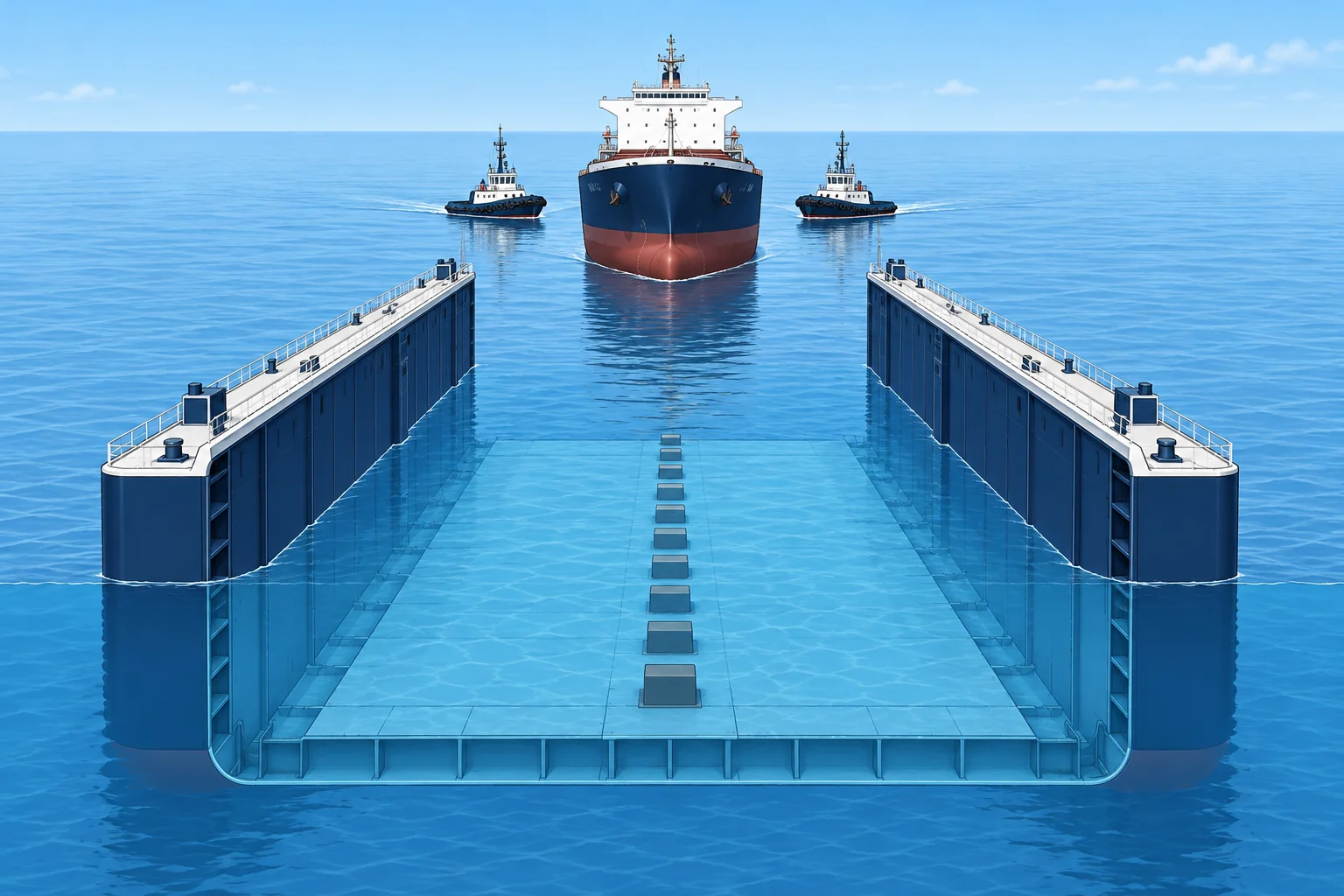
Planning a dry-docking: when, what and the specification
1The lesson in plain words
A docking is expensive and short. Good planning decides how much work gets done, at what cost, and whether the ship leaves on time.
When to dock
For cargo ships under the normal five-year survey regime, two examinations of the outside of the bottom are required, one at renewal, no more than 36 months apart. The other may be an in-water survey by divers where class and flag accept it. ESP ships of 15 years and over must be dry-docked for each bottom examination. Passenger ships follow different bottom-survey requirements.
The docking specification
Months ahead the company builds a docking specification: hull cleaning and painting, steelwork, sea chests and valves, propeller, rudder, tailshaft seals, anodes, class items and the owner's own jobs. The ship feeds it with defect lists, tank reports and maker's service intervals. Yards quote against it. Work found late costs more, so a precise list saves money and days.
Before arrival
Send the yard the docking plan, the planned arrival condition and the last bottom survey report. Agree the trim, draught and stability with the dockmaster. Gas-free the fuel tanks where hot work is planned, and land or secure dangerous stores. Plan crew accommodation and the hand-over of responsibilities with the yard.
The safety meeting
Hold a meeting with the yard before work starts. Agree who is responsible for fire safety, hot work and enclosed-space permits, gas testing, shore fire main and power, and the alarm and evacuation plan. Contractors outnumber the crew in a dock, and many dock fires start in hot work near fuel or insulation.
2Key data
- Cargo-ship bottom examinations: normal regime
- 2 per 5-year cycle, max. 36 months apart
- Cargo-ship normal regime: one examination
- With the renewal survey
- In-water survey instead
- Where class and flag accept; not ESP ships ≥ 15 years
- Before arrival
- Docking plan, arrival condition, last bottom survey
3Key points
- 1
Cargo ships, normal regime: two bottom examinations in five years, one at renewal, no more than 36 months apart.
- 2
ESP ships of 15 years and over must dock; others may use an in-water survey if accepted.
- 3
A precise docking specification saves time and money.
- 4
Agree fire safety, permits and responsibilities with the yard before work starts.
4Frequent mistakes
Wrong: Every bottom survey must be done in dry-dock.
Right: The intermediate examination may be an in-water survey where class and flag accept it, except for ESP ships of 15 years and over.
Wrong: Once in the yard, fire safety is the yard's job alone.
Right: The ship's crew and the yard share it. Agree who does what in writing before work starts.
5Practice case & exam keys
Your container ship had her last bottom survey in dry-dock 33 months ago at the renewal survey. The intermediate survey is due. The office asks whether the ship must dock.
Show the answer
The next bottom examination must be within 36 months of the last, so it is due within 3 months. The ship is not an ESP ship, so class and flag may accept an in-water survey by approved divers, if the hull is fit for it (clear marks, accessible fittings, good visibility). If coating, propeller or sea-valve work is needed anyway, a dry-docking now may be the better choice. The office decides with class.
Exam keys
- Normal cargo-ship regime: two bottom examinations in five years, max. 36 months apart.
- In-water survey in lieu and the ESP age limit.
- Docking specification and what feeds it.
- Pre-arrival information and the yard safety meeting.
Finish this unit
When you've read it, answer three questions. Get all three right to finish the unit; opening the page alone doesn't count.
My notes for this unit
No notes