

The CSS Code and the Cargo Securing Manual
1The lesson in plain words
Cargo that shifts can list, damage or sink a ship. The CSS Code sets the principles; the ship’s approved Cargo Securing Manual tells you exactly how to secure.
Why cargo shifts
At sea your ship rolls from side to side, pitches bow up and down, and heaves vertically. A cargo item feels sideways forces that can approach its own weight in heavy weather, plus wind and sea on deck. Friction alone will not hold it. Shifted cargo can cause a list, hole the ship, crush people and go overboard. SOLAS chapters VI and VII require cargo units to be loaded, stowed and secured throughout the voyage to an approved Cargo Securing Manual.
The CSS Code
IMO’s Code of Safe Practice for Cargo Stowage and Securing (CSS Code, consolidated 2021 edition) gives general principles and annexes for problem cargoes: containers on ships not designed for them, portable tanks, wheeled cargo, heavy items, steel coils, heavy metal products, anchor chains, scrap, logs, unit loads. Annex 13 gives methods to assess securing; Annex 14 covers safe access for lashing containers.
Three kinds of cargo
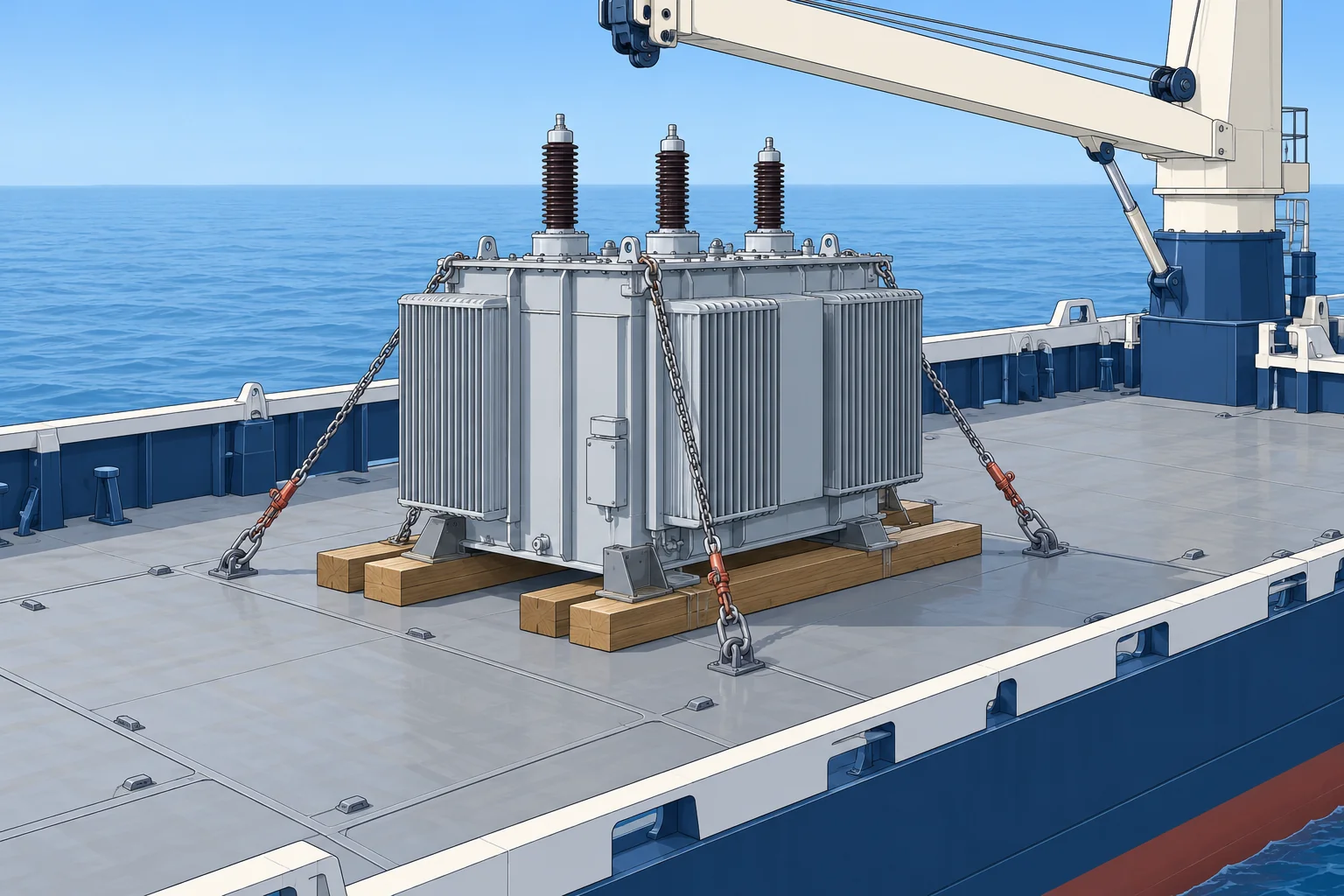
Standardized cargo travels in a system designed for it, such as containers on a cellular container ship. Semi-standardized cargo comes in a limited range of types, such as vehicles and trailers on a roll-on/roll-off (ro-ro) deck. Non-standardized cargo needs individual stowage and securing: machinery, steel coils, project cargo. For non-standardized cargo, ask the chief mate to verify the securing arrangement against the approved manual.
The Cargo Securing Manual
It is written to IMO’s guidelines, MSC.1/Circ.1353/Rev.2, and approved by the flag State. It lists the ship’s fixed securing points and portable gear with their strength, gives stowage and securing instructions for the cargoes the ship carries, and sets the inspection and maintenance of the gear. Record lashing gear in it and replace worn or damaged items.
Principles
Stow tight and block where you can. Use dunnage, packing such as timber beneath or between cargo, to spread loads and add friction. Keep lashings short, direct and at good angles, and use gear of similar stretch on one item so it shares the load. Inspect before sailing, during the voyage and before and after heavy weather. If cargo starts to move, report to the master and control deck access; inspect only when conditions permit.
2Key data
- Legal basis
- SOLAS VI and VII: secure cargo to the approved manual
- CSS Code
- IMO guidance; consolidated 2021 edition
- Manual guidelines
- MSC.1/Circ.1353/Rev.2
- Annex 13
- Methods to assess securing arrangements
- Annex 14
- Safe access for lashing containers
3Key points
- 1
SOLAS VI and VII require cargo to be secured to the ship’s approved Cargo Securing Manual.
- 2
The CSS Code gives principles and annexes for problem cargoes; Annex 13 assesses securing.
- 3
Cargo is standardized, semi-standardized or non-standardized.
- 4
The manual lists securing points and gear, their strength and how to maintain them.
- 5
Stow tight, block, use dunnage, lash short and direct; inspect before and after heavy weather.
4Frequent mistakes
Wrong: The CSS Code is only advice, so securing is up to the stevedores.
Right: The Code is guidance, but SOLAS makes securing to the approved Cargo Securing Manual mandatory, and the ship stays responsible.
Wrong: A heavy item will not slide: friction holds it.
Right: Rolling and wet steel can reduce friction to almost nothing. Secure every item against sliding and tipping in all directions.
5Practice case & exam keys
Stevedores have secured a 30 t generator on deck with lashings of mixed wire, web straps and chain, all at different angles and some very long. They say it is the way they always do it. What do you do?
Show the answer
Check the arrangement against the Cargo Securing Manual. Mixed gear of different stretch does not share the load: the stiffest lashings take it first and may part one by one. Ask for similar gear, short and direct, at proper angles, with blocking or dunnage against sliding. Report to the chief mate and do not accept it until it meets the manual.
Exam keys
- SOLAS VI/VII: secure to the approved Cargo Securing Manual (guidelines MSC.1/Circ.1353/Rev.2).
- Standardized, semi-standardized, non-standardized cargo.
- CSS Code Annex 13: assessing securing arrangements; Annex 14: safe access.
Finish this unit
When you've read it, answer three questions. Get all three right to finish the unit; opening the page alone doesn't count.
My notes for this unit
No notes