

Lashing practice: containers, ro-ro, heavy items and checks at sea
1The lesson in plain words
Know the gear, fit it as the manual shows, and check it before sailing, during the voyage and around heavy weather.
Container gear
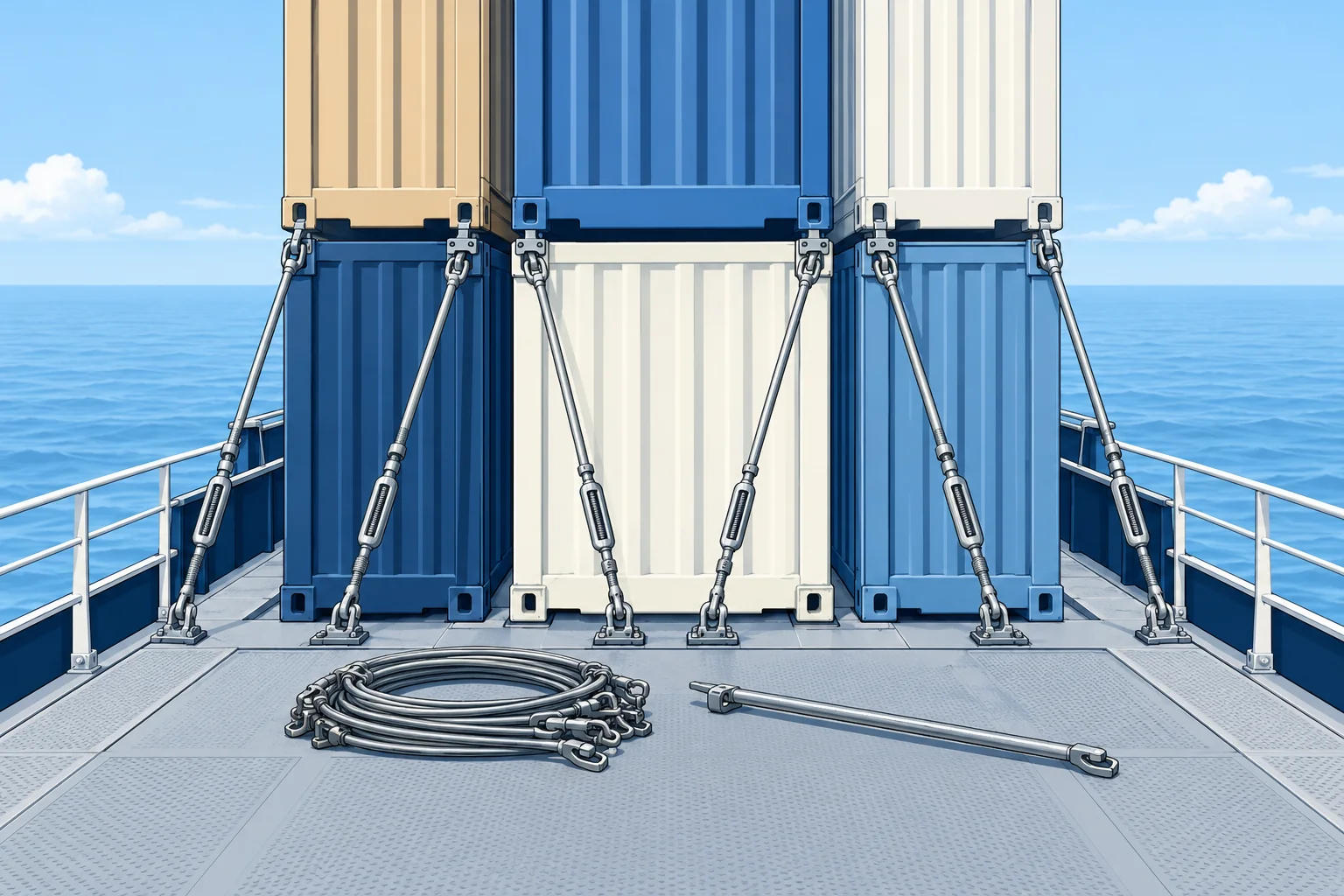
Twistlocks secure container corner fittings together or to deck fittings. Semi-automatic twistlocks are often called SATLs. On deck, lashing rods (steel braces) run diagonally to turnbuckles (screw tensioners) on the hatch cover or lashing bridge (a raised working platform). Bridge fittings join the tops of neighbouring stacks. In holds, cell guides (vertical steel rails) restrain the containers. Follow the approved manual’s lashing plan.
Stack weights
Follow the maximum stack weight and individual container-weight limits in the approved stowage plan. Put heavy containers low in the stack. Container lashing loads and GM are covered in Cargo planning.
Ro-ro cargo
Vehicles and trailers are secured with chains or web lashings from the deck’s securing points to the vehicle’s own points, with parking brakes on. Unaccompanied trailers rest on trestles under the front end. IMO’s guidelines for road vehicles (resolution MSC.479(102)) call for deck points of at least 100 kN MSL for each lashing, and two to six points each side of a vehicle.
Heavy and steel items
Heavy items sit on timber dunnage over load-bearing structure, are blocked against sliding, and lashed with short, direct chains or wires to strong points. Steel coils are stowed in rows, axis fore and aft (along the ship), wedged and lashed together; one loose coil can set a row moving. Welded stoppers may be used where the manual allows.
Checks at sea
Inspect lashings before sailing, regularly on passage when conditions allow, and before and after heavy weather. Tighten slack turnbuckles, check that twistlocks are locked, look for chafe, stretched wires and crushed dunnage. Go in pairs with a light and a radio, and only when it is safe; use designated access routes and keep clear of cargo pinch points and suspended loads. Log what you checked and did.
2Key data
- Twistlock / SATL
- Locks container corners to each other and to the deck
- Lashing rod + turnbuckle
- Diagonal from corner castings to the deck or lashing bridge
- Ro-ro deck securing point
- MSL ≥ 100 kN for each lashing (MSC.479(102))
- Points per vehicle side
- 2 to 6, depending on the vehicle
- Steel coils
- Rows with the axis fore and aft, wedged and lashed
3Key points
- 1
Containers: twistlocks, lashing rods, turnbuckles, bridge fittings; heavy boxes low in the stack.
- 2
Ro-ro: deck points ≥ 100 kN MSL/lashing; 2–6 points per vehicle side; brakes on; trailers supported on trestles.
- 3
Heavy items: dunnage, blocking, short direct lashings; coils fore and aft, wedged.
- 4
Check before sailing and around heavy weather, in pairs, only when safe; log it.
4Frequent mistakes
Wrong: Put the heaviest containers on top where the crane can reach them.
Right: Follow the approved stowage plan and stack-weight limits; put heavy containers low.
Wrong: Check the lashings when the weather is at its worst.
Right: Check before heavy weather arrives and after it. Report concerns to the master, control deck access and inspect only when conditions permit safe work.
5Practice case & exam keys
Heavy weather is forecast for tonight on a ship carrying containers on deck and a few trailers on the weather deck. It is now 14:00, wind force 5. What do you do on your watch?
Show the answer
Tell the master and assess deck safety before sending anyone out; wind force alone does not establish safe access. If conditions permit, work with the bosun and crew in pairs: tighten turnbuckles, check twistlocks and secure trailers as the manual allows. Secure the deck, control access and log the checks. Report concerns during the weather; inspect again only when conditions permit safe work.
Exam keys
- Container gear: twistlocks, lashing rods, turnbuckles, bridge fittings; stack weights, heavy low.
- Ro-ro: deck points ≥ 100 kN MSL per lashing; 2–6 points per vehicle side (MSC.479(102)).
- Inspect before and after heavy weather, in pairs, only when safe.
Finish this unit
When you've read it, answer three questions. Get all three right to finish the unit; opening the page alone doesn't count.
My notes for this unit
No notes