

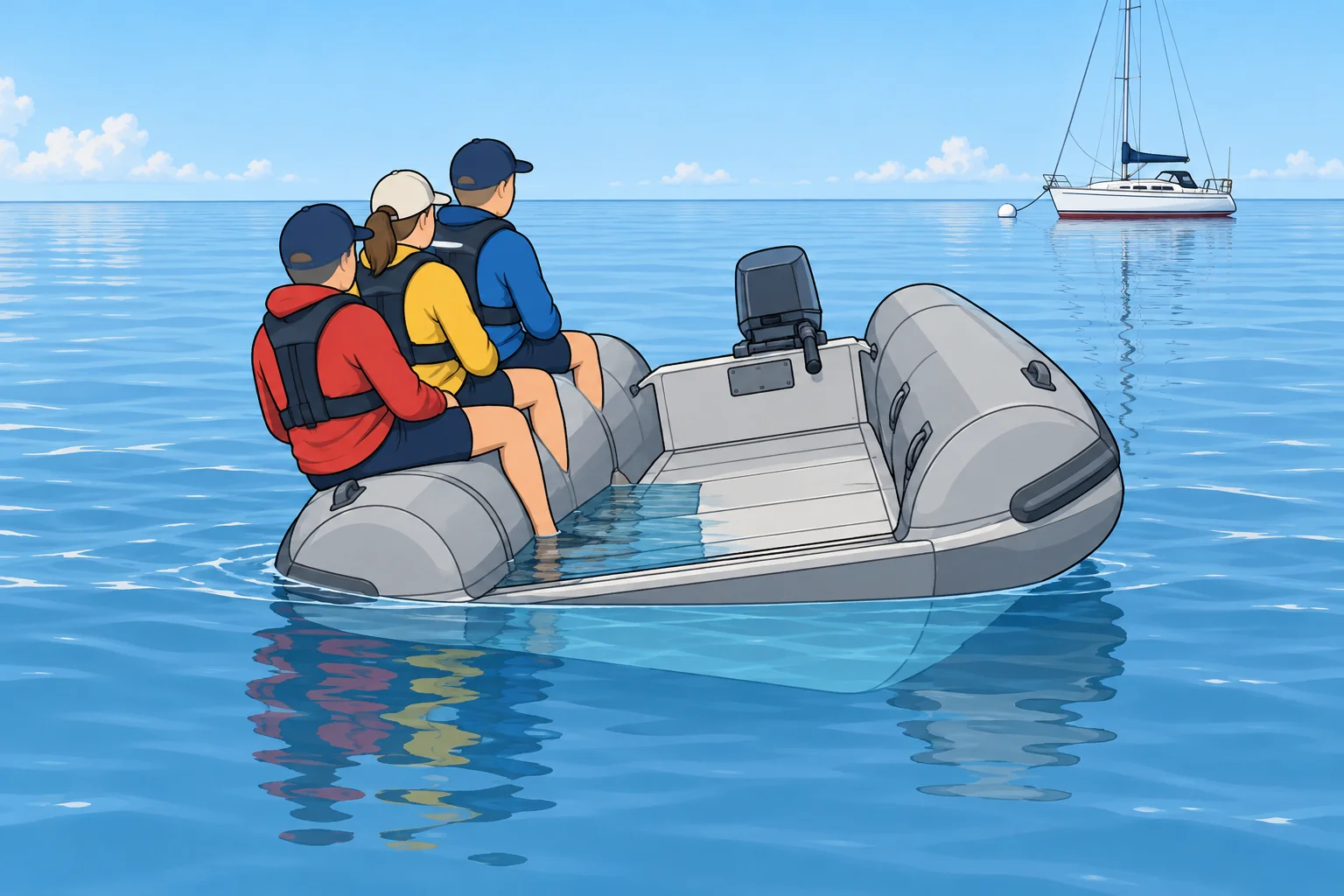
Weight high up, water aboard and people on one side
1The lesson in plain words
In a small boat, the crew is a big part of the weight. Where people sit, and any water sloshing aboard, decide whether she stays upright.
People are heavy ballast
In a 4 m dinghy or tender, three adults can weigh more than the boat. When they stand up, G rises a long way and the lever shrinks. Get in at the centre, step onto the middle of the floor, keep low and sit down. Hand gear in; do not jump in carrying it.
People on one side
When everyone sits on one side, G moves to that side. If enough stability remains, she settles at a heel with G and B vertically aligned. Otherwise, she may swamp or capsize. With little freeboard, the low side may reach the water. Spread the crew evenly side to side, and keep the bow and stern loads balanced.
Water on the floor
Loose water aboard runs to the low side when she heels. It moves G to the low side and makes her heel more, so more water runs over. This is the free surface effect, and it can capsize a swamped boat. Bail early: scoop the water out. Keep cockpit drains clear.
Swamping
A boat is swamped when she fills with water. Waves from behind can wash over a low transom, the stern panel. A heavy load leaves less height above the water. A swamped boat with built-in buoyancy should still float. Stay with it: it is easier to see than a swimmer.
The builder’s plate
Small boats sold in the EU carry a builder’s plate showing the maximum number of people and the maximum load. Stay within both. The numbers assume people sit normally, not all on one side or standing.
2Key data
- Standing up
- Raises G: the boat becomes much less stable
- Sitting to one side
- Moves G sideways: the boat heels
- Loose water
- Runs to the low side and adds to the heel
- Builder’s plate
- Maximum persons and maximum load: never exceed
3Key points
- 1
In small boats the crew’s weight can exceed the boat’s: sit low and central.
- 2
Crew on one side moves G sideways and heels the boat.
- 3
Loose water runs downhill and makes heel worse: bail early.
- 4
Respect the maximum persons and load on the builder’s plate.
- 5
If swamped or capsized, stay with the boat.
4Frequent mistakes
Wrong: Step onto the side of the tender to get in quickly.
Right: Step into the middle of the floor, keep low and sit down at once. Weight on the edge can tip a small boat over.
Wrong: A little water slopping on the floor does not matter.
Right: Loose water moves to the low side and increases heel. Bail it out before more comes in.
Wrong: The plate limit is for calm days; one extra person is fine in a hurry.
Right: The plate limits apply always. Make two trips.
5Practice case & exam keys
Five people want to ride the 3 m tender back to the yacht in a short chop. The plate says 3 persons. Two crew stand at the bow to grab the yacht’s ladder as you arrive.
Show the answer
Make two trips: five people exceed the plate limit and leave very little freeboard. Keep everyone seated low and spread out. Standing at the bow raises G and moves it forward, so the bow may dip and take water. Approach slowly, let one person at a time move to the ladder, and keep the others still. Everyone wears a lifejacket.
Exam keys
- Small boat: crew weight matters greatly. Stay seated low and central while under way; board one person at a time.
- Loose water aboard increases heel (free surface effect): bail early.
- Builder’s plate: maximum persons and load. Never exceed.
- Swamped or capsized: stay with the boat.
Finish this unit
When you've read it, answer three questions. Get all three right to finish the unit; opening the page alone doesn't count.
My notes for this unit
No notes