
NAVTEX: warnings printed on the bridge
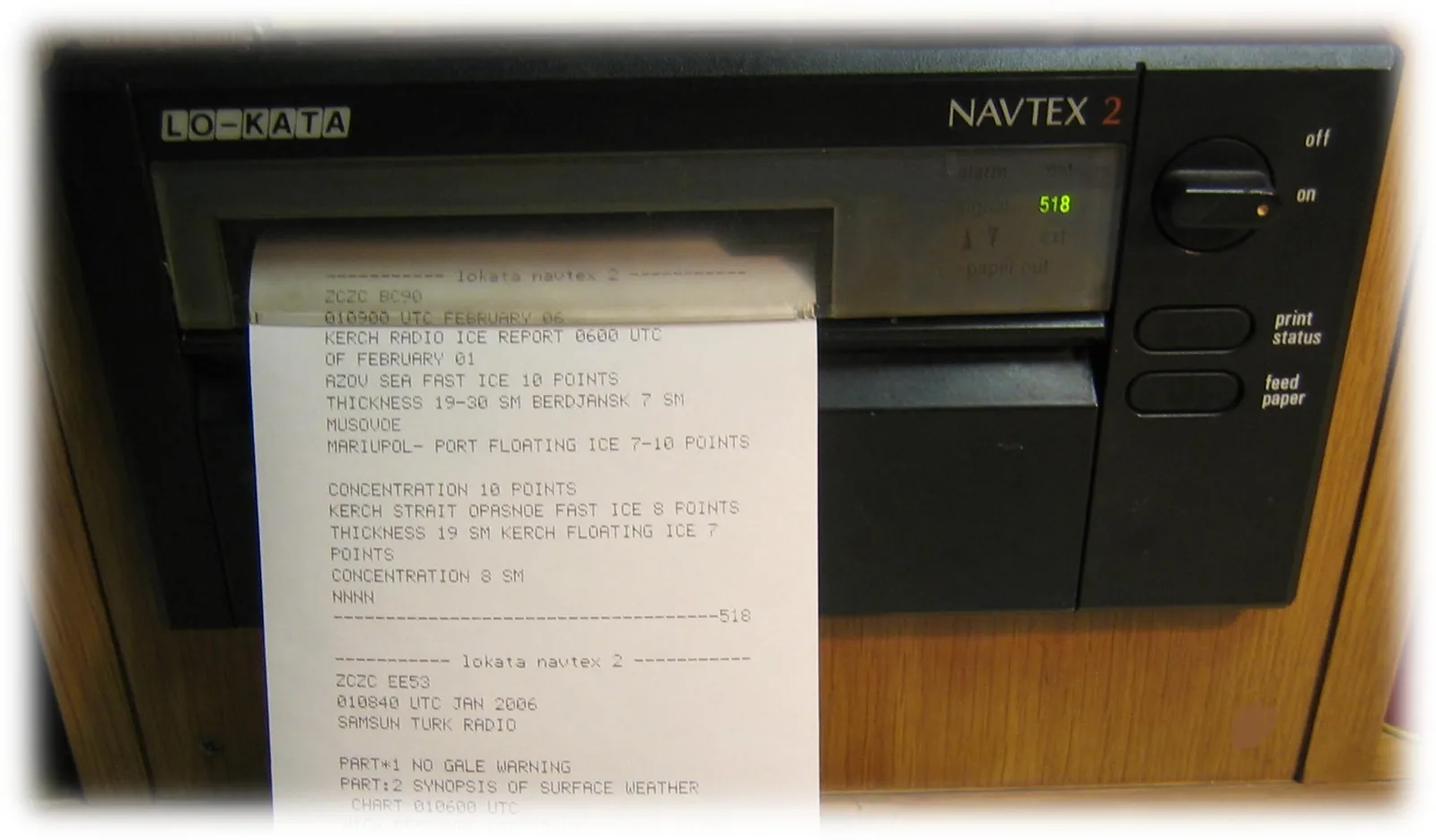
NAVTEX prints MSI automatically near the coast.
International NAVTEX broadcasts on 518 kHz in English; national NAVTEX uses 490 kHz and 4209.5 kHz, often in the local language (NAVTEX Manual). Its designed maximum range is about 400 nautical miles; the required range is 250 to 400 miles.
Every message starts with ZCZC and four characters, B1 B2 B3 B4, and ends with NNNN. B1 is the station's letter (A to X), which also sets its time slot: each station transmits for 10 minutes every four hours. B2 is the subject. B3B4 is the message number, 01 to 99.
Subjects: A navigational warnings, B meteorological warnings, C ice reports, D search and rescue information, piracy warnings and tsunamis, E meteorological forecasts, F pilot and VTS messages, G AIS service messages, H LORAN, J GNSS, K other electronic navaids, L navigational warnings additional to A.
- A, B, D and L cannot be switched off on the receiver: they carry the most essential information.
- A message with B2 = D sets off the receiver's alarm.
- Message number 00 cannot be rejected and overrides your selections; it is used only for vital messages.
- You choose stations (B1) and optional subjects (for example C, ice) on the receiver, and it stores the messages it has received (CEPT GOC B3 3.2).
Check this lesson
What is special about message number 00?