
- 15 mmaximum length of a private seagoing boat or bareboat charter
- 18 mmaximum yacht length
- 12 nautical milesfrom the coast in area III
- From age 16age in the original text of the regulationsNN 27/2005, Article 52
- 70%required in the written assessment
One step upWhat is Voditelj brodice kategorije B?
Voditelj brodice kategorije B is Croatia’s certificate of competence for operating a boat. It is a higher category than A, so it also lets you operate boats for which category A is sufficient. You take the exam before an examination board, and the Ministry or a harbour master’s office issues the certificate.
Your cruising groundWhat you can skipper, and where the limits lie
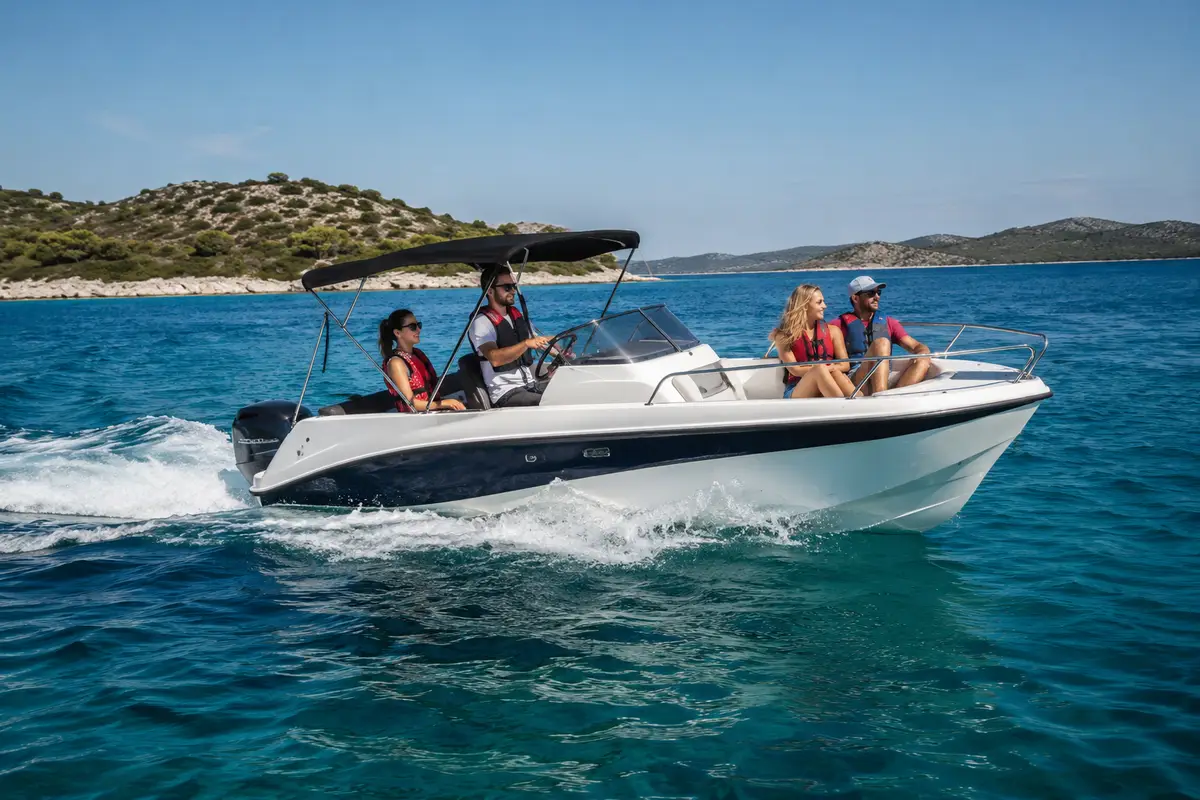
This category covers private seagoing boats and bareboat charters up to 15 m, and yachts up to 18 m. You can navigate in area III, up to 12 nautical miles from the coast, and in sheltered area IV. That is a useful scope for coastal boating, with defined limits on where you can go.
With category B, you can
- Skipper a private seagoing boat up to 15 m
- Skipper a bareboat charter up to 15 m
- Skipper a yacht up to 18 m in area III and sheltered area IV
- Also operate boats for which category A is sufficient
Category B does not let you
- Assume you are authorised for open-sea areas I and II
- Skipper a boat longer than 15 m under this category
- Skipper a yacht longer than 18 m under this category
Before applyingThe basic requirements
- Be at least 16 under the original text of the regulations [NN 27/2005, Article 52]
- Pass the exam under the syllabus in Appendix 7
- Contact the Ministry or the responsible harbour master’s office, which handles exam and certificate administration
A steady approachHow to get your certificate
- Get to know the official syllabus
The syllabus in Appendix 7 has five subjects: marine navigation; engines and protective measures; seamanship with regulations and meteorology; manoeuvring with navigation safety and first aid; and the maritime radiotelephone service.
- Practise navigation basics
Work on charts, courses, the IALA system, terrestrial navigation, the compass and electronic aids.
- Revise safety and rules
The syllabus includes engine operation, fuel, firefighting, pollution prevention, stability, ropes and knots, Adriatic winds and cooperation with the SAR service.
- Pass before an examination board
You take the exam before an examination board, while the Ministry or a harbour master’s office handles exam and certificate administration.
What is assessedThe exam at a glance
| Part | What to expect |
|---|---|
| Assessment format | Oral and/or written assessment |
| Written part | You need 70% to pass |
| Main topics | Five subjects: navigation, engines, seamanship with regulations and meteorology, manoeuvring and first aid, radiotelephony |
| Navigation and safety | COLREG rules, lights, day shapes, sound signals, IALA marks and distress signals |
The wider pictureWhere category B fits among Croatian qualifications
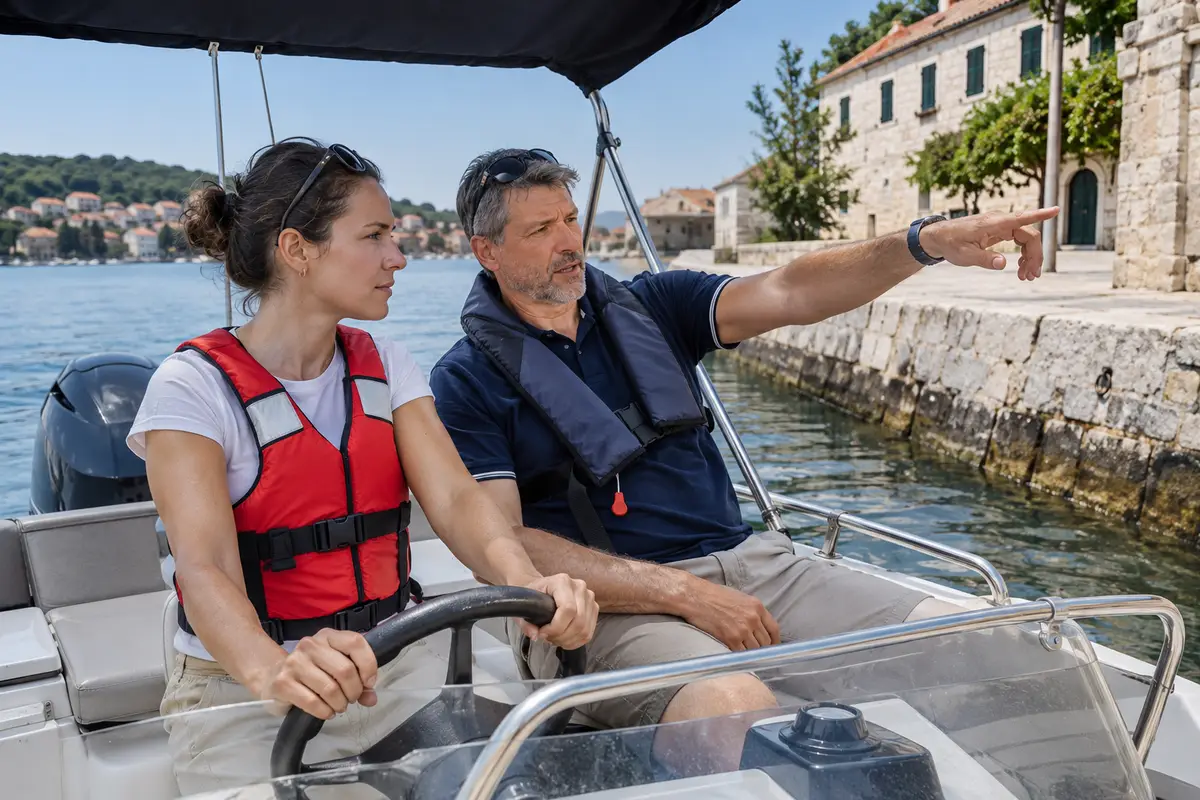
- Voditelj brodice kategorije A (category A boat skipper)sea, up to 15 kW and area IIIa–IIIc
- Voditelj čamca kategorije A (category A inland boat skipper)inland waters, up to 15 kW
- Voditelj brodice kategorije Bboats up to 15 m and yachts up to 18 m
- Voditelj čamca kategorije B (category B inland boat skipper)inland waters, unlimited power
- Međunarodna svjedodžba za upravljanje rekreacijskim plovilom (International Certificate for Operators of Pleasure Craft)optional ICC for certain holders of an inland-water licence
- Voditelj brodice kategorije C (category C boat skipper)boats up to 15 m and yachts up to 18 m, including open-sea areas I and II
- Zapovjednik jahte kategorije A (category A yacht master)yachts in all navigation areas
- Zapovjednik jahte kategorije B (category B yacht master)yachts up to 500 GT in all navigation areas
The magazine verdict
Why it is a useful choice
- Covers private seagoing boats and bareboat charters up to 15 m
- Allows yachts up to 18 m in area III and sheltered area IV
- Also covers boats for which category A is sufficient
Keep in mind
- Area III ends 12 nautical miles from the coast
- The exam covers a wide range of topics, from engines to radio communications
- Open-sea areas I and II require the higher category C
If you want to take on more responsibility aboard a coastal boat or yacht, Voditelj brodice kategorije B provides a broad, practical starting point. Study it as a whole: navigation, engines, regulations and safety at sea all matter when you take the helm.
Topics tested
Practice tests
IALACOLREG Exam Pass
Voditelj brodice kategorije B: get ready for your exam with the Exam Pass
Unlimited timed mock exams, every mistake back until it's right, and a readiness score that shows when you're ready for the exam.
512 exam-style questions with explanations · 7 timed subject exams · every simulator scenario
One payment for 12 months, so it covers a resit too. No subscription.
Practice questions (with answers)
Under the normal arrangement in Rule 23(a), a power-driven vessel of 50 metres or more underway must show:
Show answer
Correct answer: B. Two masthead lights, sidelights, and sternlight
Rule 23(a): vessels 50m+ must show two masthead lights (forward and aft), sidelights, and sternlight.
Under the standard arrangement in Rule 25(a), a sailing vessel underway displays which navigation lights?
Show answer
Correct answer: B. Sidelights and a sternlight
Rule 25(a) prescribes sidelights and a sternlight for a sailing vessel underway. Rule 25(b) permits a combined lantern below 20 m; paragraph (c) allows a separate red-over-green pair, not with that combined lantern; paragraph (d) provides a conditional alternative below 7 m.
A vessel of at least 12 metres not under command (NUC) shows which status lights?
Show answer
Correct answer: B. Two all-round red lights vertically
Rule 27(a)(i) prescribes two all-round red lights vertically. Under Rule 27(g), vessels under 12 metres, except those engaged in diving operations, are not required to show the Rule 27 lights and shapes.
A vessel of 50 metres or more at anchor at night shows:
Show answer
Correct answer: B. An all-round white light forward and a lower one aft
Rule 30(a): an all-round white light in the fore part and another all-round white light at a lower level near the stern.
An isolated danger mark indicates:
Show answer
Correct answer: B. A danger with navigable water all around
An isolated danger mark is on or near a danger with navigable water around it. Consult charts and nautical publications for the extent of the danger and safe passing distance.
Safe water marks have:
Show answer
Correct answer: A. Red and white vertical stripes
Safe water marks are red and white vertical stripes, indicating navigable water all around.
Special marks are coloured:
Show answer
Correct answer: C. Yellow
Special marks are yellow, indicating special areas like military zones, cables, or pipelines.
How does IALA Region B differ from Region A?
Show answer
Correct answer: B. The colours are reversed — red to starboard
Region A: port-hand red, starboard-hand green. Region B: port-hand green, starboard-hand red. Interpret both in the charted conventional direction of buoyage.
The full guide
Voditelj brodice kategorije B is a Croatian boat-leader qualification. The permitted vessel, navigation area, age and examination conditions must be confirmed under current MMPI rules and with the competent port authority.
Selected study topics include COLREG 1972, IALA Region A buoyage, lights and shapes, sound signals and basic seamanship. Follow the current official syllabus and port-authority instructions.
Who should take Voditelj brodice B
Croatian recreational skippers who need to check the current category-B vessel and navigation-area limits with the competent port authority.
How to prepare
Use these lessons and practice tests to review selected COLREG, IALA, lights and sound-signal topics. Follow the current official syllabus and assessment instructions from the competent port authority.
Other exams
Reviewed by Ramon Curto, Nautical teacher at IECNPC · Last reviewed: