- Beyond 6 milesfrom a shelter, with the coastal option
- 90 minutesfor the theory exam
- 5 multiple-choice questionsalongside chartwork and tides
- 10 out of 20minimum overall score
- 7 out of 12minimum chartwork score
- From age 16as with the coastal option
Heading offshoreWhat the permis hauturier changes
The Permis Plaisance Extension Hauturière extends the Permis Plaisance Côtier (coastal recreational boating licence) for navigation beyond 6 miles from a shelter. It is for recreational boaters planning a Mediterranean crossing, offshore Atlantic navigation or responsibility for a hired sailing yacht more than 6 miles from a shelter.
Your cruising groundWhat you can do, and what the extension does not replace
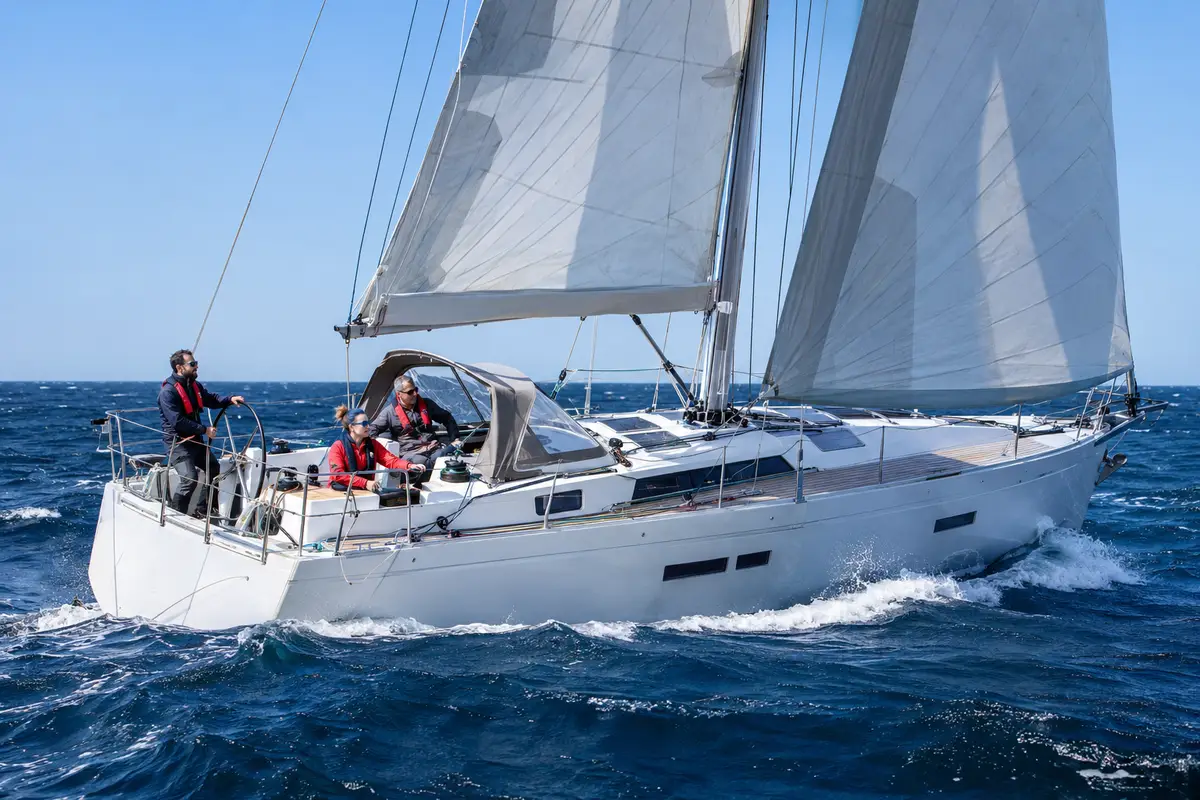
The coastal licence keeps you within 6 miles of a shelter; the offshore extension takes over beyond that. Its core is a written navigation exam rather than another manoeuvring session: chartwork covering position, heading, leeway and tidal drift, course over ground and dead reckoning; a tidal calculation using the rule of twelfths; and five multiple-choice questions.
With the offshore extension, you can
- Navigate a recreational motorboat beyond 6 nautical miles from a shelter, with the coastal option
- Prepare offshore navigation by working on position, heading, leeway and tidal drift, dead reckoning and tides
- Plan Mediterranean crossings or offshore Atlantic navigation
But the extension does not let you
- Take it without the coastal option, or an old permis A or permis mer “côtier” (earlier sea licences), which it extends
- Work as a paid skipper: that requires a professional qualification
- Skip the written navigation exam covering chartwork, tides and multiple-choice questions
Before plotting your routeThe prerequisites
- Be 16
- Hold the coastal option, or an old permis A or permis mer “côtier”
- Want to navigate offshore, beyond 6 miles from a shelter
Practical preparationHow to earn the offshore extension
- Start with the coastal licence
The offshore extension adds to the coastal option; an old permis A or permis mer “côtier” also qualifies. This is the foundation you need before heading offshore.
- Register with or without a school
You can train at a school or register directly as an independent candidate: Cerfa 14680 (application form 14680), a €38 electronic fiscal stamp for registration, an identity photograph if your licence is more than 10 years old, and your original licence.
- Practise chartwork by hand
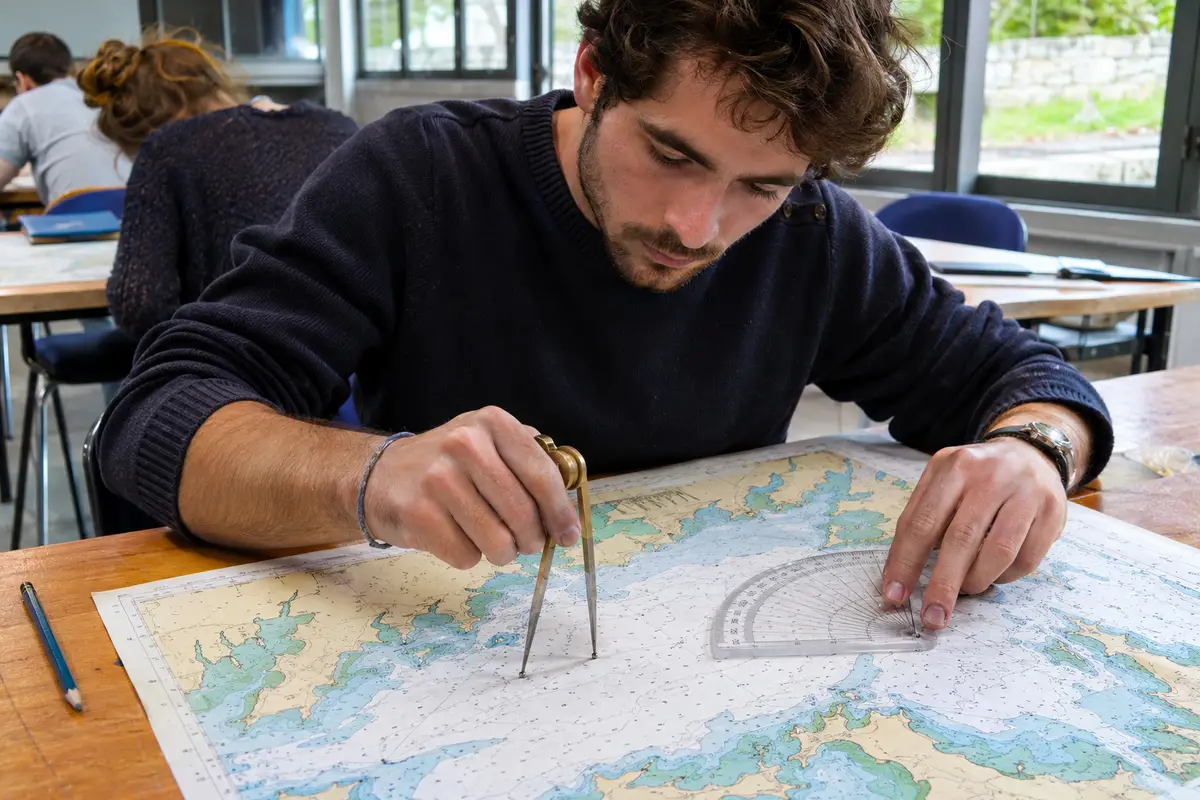
Learn to fix your position, calculate compass heading, leeway and tidal drift, work out dead reckoning and calculate tides using the rule of twelfths. On exam day, you use the SHOM (Service hydrographique et océanographique de la marine, French hydrographic office) special examination chart no. 9999.
- Prepare for the written exam
The exam lasts 90 minutes: chartwork, a tidal calculation and 5 multiple-choice questions.
- Meet both thresholds
You need at least 10 out of 20 overall and 7 out of 12 for chartwork. There is no additional practical test.
The exam at a glanceAn exam that puts you in the navigator’s seat
| Detail | What to remember |
|---|---|
| Duration | 90 minutes |
| Chartwork | Marked out of 12; at least 7 required |
| Tidal calculation | Marked out of 4, using the rule of twelfths |
| Multiple-choice questions | 2 electronic aids (0.5 points each), 2 weather (1 point each), 1 safety equipment (1 point) |
| Overall score | At least 10 out of 20 |
| Chart used | SHOM special examination chart no. 9999 |
| Registration | Cerfa 14680, €38 fiscal stamp, independent entry possible |
| Additional practical test | None |
France’s other optionsFrance’s recreational boating qualifications
- Contremarque (rental authorisation)under 5 m, through approved inland rental
- Carte de plaisance (rental boating card)from 5 to 15 m, through approved inland rental
- Permis de conduire des bateaux de plaisance à moteur — option côtière (coastal option)up to 6 miles from a shelter
- Permis de conduire des bateaux de plaisance à moteur — option eaux intérieures (inland waters option)under 20 m on inland waters
- Permis de conduire des bateaux de plaisance à moteur — extension hauturière (offshore extension)beyond 6 miles from a shelter, with the coastal option
- Permis de conduire des bateaux de plaisance à moteur — extension grande plaisance eaux intérieures (large inland pleasure craft extension)20 m or more on inland waters, with the inland waters option
- Certificat international de conducteur de bateau de plaisance (international certificate for recreational boat operators)based on an inland qualification that entitles you to the certificate
The magazine verdict
What matters most
- The 6-mile shelter limit no longer sets your horizon
- The exam develops practical chartwork, tidal and route-planning skills
- No additional practical test is required
Plan ahead
- You need the coastal licence before this extension
- The overall score is not enough: chartwork has its own threshold
- This title does not replace the professional qualification needed for paid skippering
Choose the offshore extension if your plans really involve offshore navigation and you enjoy careful route preparation. It rewards your ability to understand a chart, a tide and a route before casting off more than memorised answers.
Topics tested
Practice tests
IALACOLREG Exam Pass
Permis Plaisance Extension Hauturière: get ready for your exam with the Exam Pass
Unlimited timed mock exams, every mistake back until it's right, and a readiness score that shows when you're ready for the exam.
512 exam-style questions with explanations · 7 timed subject exams · every simulator scenario
One payment for 12 months, so it covers a resit too. No subscription.
Practice questions (with answers)
The day shape for a vessel constrained by draught is:
Show answer
Correct answer: C. A cylinder
Rule 28: the day shape is a cylinder.
A pilot vessel on duty displays at the masthead:
Show answer
Correct answer: B. White over red all-round lights
Rule 29(a): white over red all-round lights at or near the masthead.
A vessel of 12 metres or more aground at night additionally shows:
Show answer
Correct answer: C. Two red all-round lights vertically
Rule 30(d): a vessel aground shows anchor lights plus two all-round red lights in a vertical line.
Five or more short and rapid blasts mean:
Show answer
Correct answer: C. Doubt or danger — the intentions of the other vessel are not understood
Rule 34(d): at least five short and rapid blasts indicate doubt about whether sufficient action is being taken.
An East Cardinal mark shows how many quick flashes?
Show answer
Correct answer: B. 3 flashes
White lights, when fitted: North Q or VQ; East VQ(3) 5 s or Q(3) 10 s; South VQ(6)+LFl 10 s or Q(6)+LFl 15 s; West VQ(9) 10 s or Q(9) 15 s. The long flash lasts at least 2 s.
If fitted, the topmark of an isolated danger mark is:
Show answer
Correct answer: B. Two black spheres vertically
Isolated danger marks have two black spheres (balls) as topmark. (if fitted).
Safe water marks are used as:
Show answer
Correct answer: B. Fairway or mid-channel marks
Safe water marks are used as fairway, mid-channel, or landfall marks.
If fitted, the topmark of a special mark is:
Show answer
Correct answer: B. A yellow X-shape (cross)
Special marks have a yellow X-shaped (St. Andrew's cross) topmark. (if fitted).
The full guide
The Permis Hauturier is the offshore extension to the French Permis Plaisance Côtier — required for navigation beyond 6 nautical miles of a refuge.
An extension of the permis côtier, assessed by a 1 h 30 min written chartwork exam (position, tides, tidal streams, passage planning); RIPAM is examined in the côtier.
Who should take the Permis Hauturier
Holders of the Permis Côtier who wish to skipper offshore — Mediterranean crossings, Atlantic blue water, or a hired yacht more than 6 NM from a shelter. Paid or commercial skippering needs a professional qualification.
How to prepare
Learn chartwork and tidal calculation by hand, and practise passage planning with tidal streams and weather. Keep your RIPAM current: it is examined in the côtier, not in this extension.
Other exams
Reviewed by Ramon Curto, Nautical teacher at IECNPC · Last reviewed: