
- 6 mmaximum lengthRD 875/2014 (Real Decreto 875/2014, Royal Decree 875/2014), art. 11
- 2 milesfrom a port, marina or shelter (about 3,7 km)art. 11
- Daytimenavigation by day onlyart. 11
- 18 yearsor 16 with your parents’ permissionart. 13
- Exam-freetheory and practical training onlyart. 11.4 and 11.5
- 2 h + 4 hof theory and, at minimum, practical trainingAnnexes II and III
The basicsThe titulín in two sentences
“Titulín” is the affectionate nickname for the Licencia de navegación (navigation licence), the first step in Spain’s recreational boating qualifications. The nautical school or sailing or powerboating federation where you take the course issues it directly. There is no examination board or issuance appointment at Capitanía Marítima (the harbour master’s office).
Your cruising rangeWhat you can operate and the limits
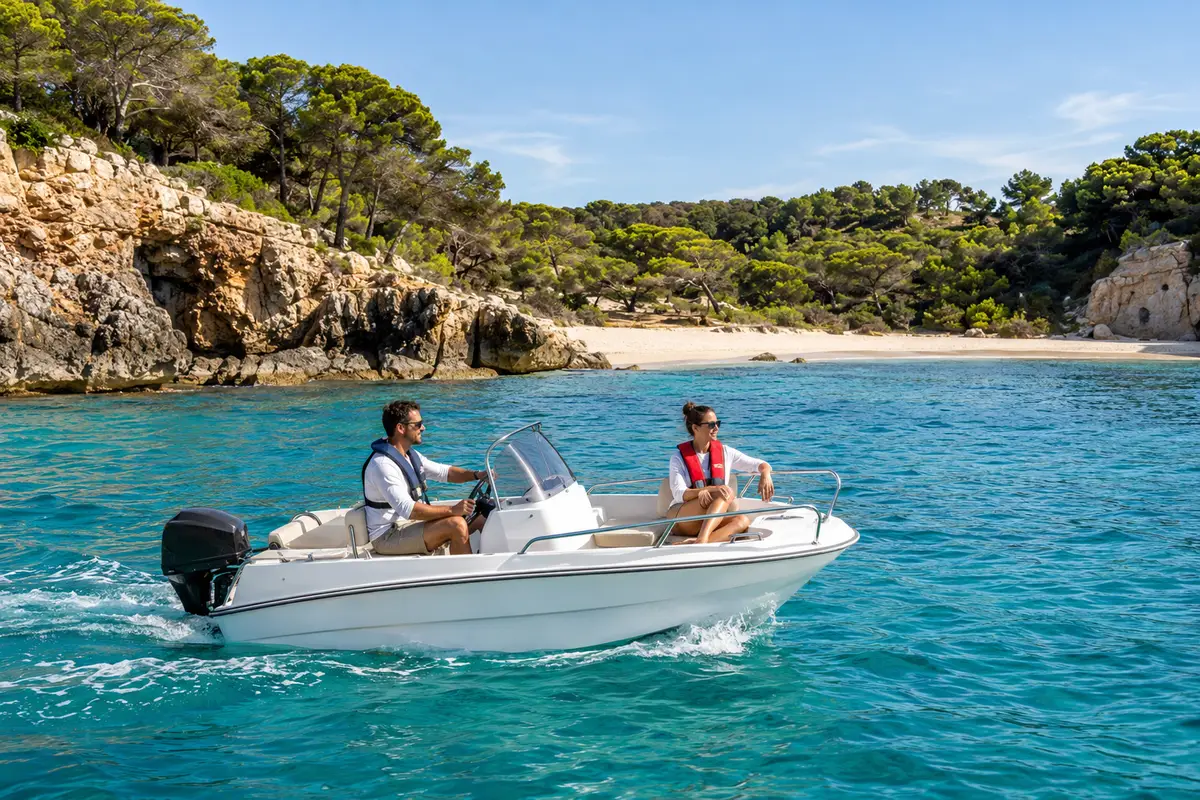
Think of the titulín as a 2-mile circle around any port, marina or place of shelter. You are covered within that circle, by day and in a boat up to 6 metres. The licence’s limits end at that circle and at sunset.
With the titulín you can
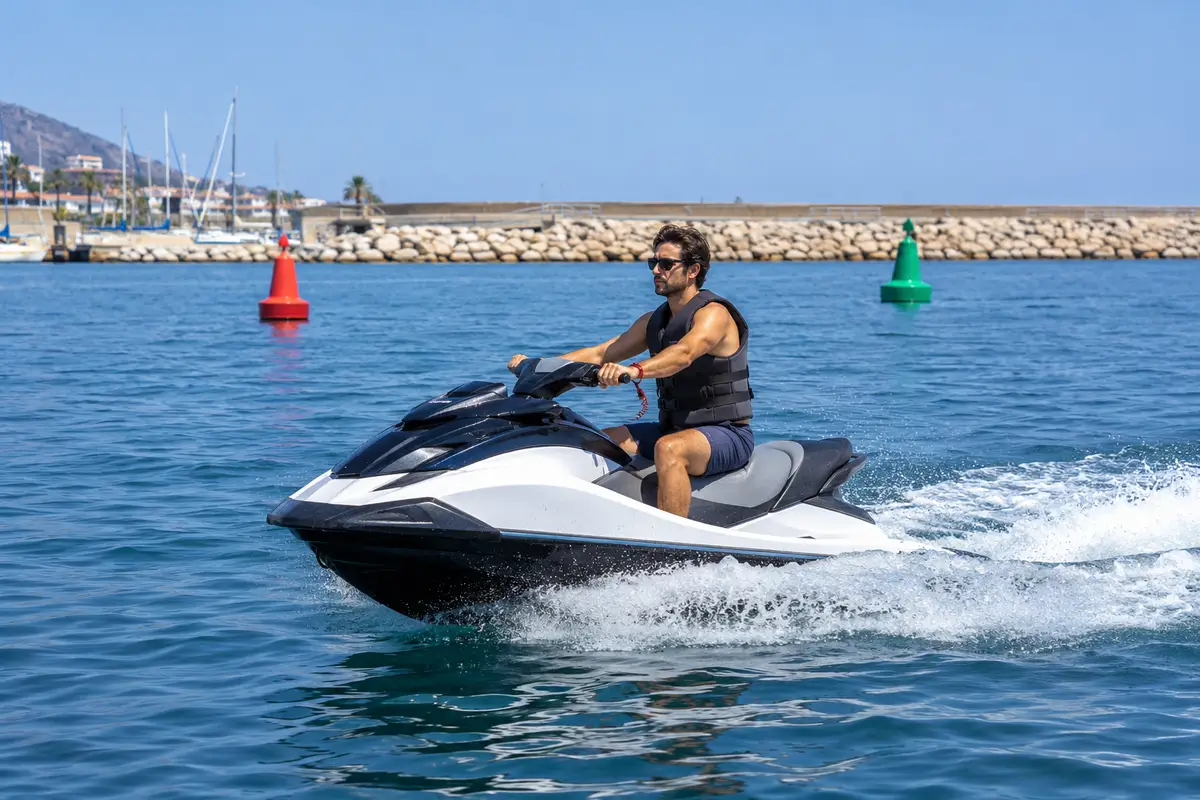
- Operate a jet ski within its own limits
- Operate a motorboat or sailing boat up to 6 metres, with the power authorised by the manufacturer
- Navigate by day, within 2 miles of a port, marina or shelter
Keep within these limits
- Daytime operation only, even with a small boat
- Stay within 2 miles, even in flat-calm seas
- Keep to boats up to 6 metres long
Before you sign upRequirements
- Be at least 18, or 16 with consent from your parents or guardians (article 13)
- You can start without a previous boating qualification. You must demonstrate physical and psychological fitness under articles 21 and 22 of RD 875/2014
Step by stepHow to get it
- Choose a school or federation
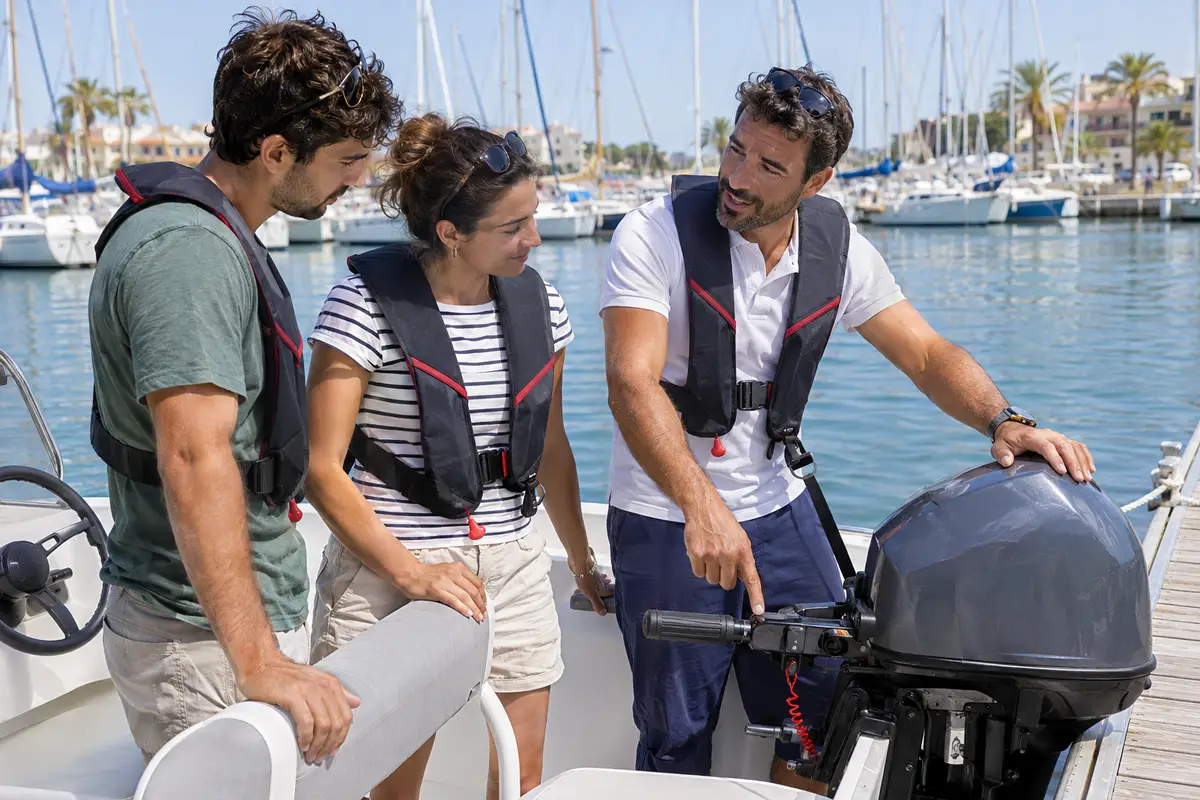
The recreational nautical school or sailing or powerboating federation that trains you also issues your licence (article 3.10). The process is handled by that centre, without an appointment at Capitanía.
- Complete the 2 hours of theory
Study what you need for safe boating close to shore, under anexo II (Annex II) of RD 875/2014. Review steering and sailing rules and buoyage beforehand, as you will use them frequently on the water.
- Complete at least 4 hours of practical training
Take the helm with an instructor beside you to practise leaving and entering port, manoeuvring, anchoring and knowing what to do if something goes wrong (anexo III).
- Collect your licence
Once you complete the training, the centre itself issues the document without an exam or examination board. The licence has no expiry date, so periodic card renewal is unnecessary (official model, Resolución de la DGMM de 12 de mayo de 2021, resolution of the Directorate-General for Merchant Shipping dated 12 May 2021, Annex VII).
The big questionTitulín, PNB or PER?
The difference is how much sea you want to explore. Each step allows a larger boat and greater distance from shore, in exchange for more training and, from PNB onwards, an official exam.
- Licencia de navegaciónby day, from shelter
- PNBfrom a port, marina or shelter
- PERfrom the coast, with 24 m allowed after extra practical training
- Patrón de Yate (yacht skipper)from the coast
- Capitán de Yate (yacht captain)without geographical limits
| Titulín | PNB | PER | |
|---|---|---|---|
| Maximum length | 6 m | 8 m | 15 m (24 m with extra practical training) |
| Distance | 2 miles from shelter, by day | 5 miles from a port, marina or shelter | 12 miles from the coast, or within the Balearic and Canary Islands |
| Exam | None | 27 questions in 45 min. At least 17 correct, with a maximum of 2 buoyage errors and 5 RIPA (Spain’s collision-prevention rules) errors | 45 questions in 90 min. At least 32 correct, with a maximum of 2 buoyage errors, 5 RIPA errors and 2 chartwork errors |
| Practical training | At least 4 h | 8 h + 4 h of radio | 16 h + 12 h SRC (Short Range Certificate) course |
| Jet skis | Yes | Yes | Yes |
Our verdict
The highlights
- Exam-free, with very few hours of training
- Covers jet skis
- Ideal for coves and outings close to home
Keep in mind
- Daytime only and within 2 miles of shelter
- For motorboats up to 5 m and 15 CV, you may already qualify for the exemption
- If you catch the boating bug, you’ll end up getting PER
If you want to use a jet ski or take occasional trips in a small motorboat, the titulín is ideal. If you already know you’ll want to go farther, cruise at dusk or operate a larger boat, save time and go straight to PER.
What you need to know
Free practice tests
IALACOLREG Exam Pass
Licencia de Navegación: get ready for your exam with the Exam Pass
Unlimited timed mock exams, every mistake back until it's right, and a readiness score that shows when you're ready for the exam.
512 exam-style questions with explanations · 7 timed subject exams · every simulator scenario
One payment for 12 months, so it covers a resit too. No subscription.
Practice questions (with answers)
Two sailing vessels in sight have wind on the same side and approach with risk of collision; neither is overtaking. Which gives way?
Show answer
Correct answer: B. The windward vessel gives way
Rule 12(a)(ii): when both have wind on the same side, the windward vessel keeps out of the way.
A vessel is considered overtaking when approaching from:
Show answer
Correct answer: C. More than 22.5 degrees abaft the beam of the other vessel
Rule 13(b): a vessel is overtaking when coming up from more than 22.5 degrees abaft the beam.
A head-on situation exists at night when you see:
Show answer
Correct answer: B. Both sidelights and masthead lights nearly in line
Rule 14(b): head-on exists when a vessel sees both sidelights and/or masthead lights in a line or nearly in a line.
In a Rule 15 crossing encounter, the give-way vessel shall, if circumstances admit:
Show answer
Correct answer: C. Keep well clear and avoid crossing ahead of the other vessel
Rule 15 requires the give-way vessel to keep out of the way and, if circumstances admit, avoid crossing ahead. Rules 8 and 16 require early, substantial and effective action; the safe choice of course or speed depends on the whole situation.
How does IALA Region B differ from Region A?
Show answer
Correct answer: B. The colours are reversed — red to starboard
Region A: port-hand red, starboard-hand green. Region B: port-hand green, starboard-hand red. Interpret both in the charted conventional direction of buoyage.
An East Cardinal mark shows how many quick flashes?
Show answer
Correct answer: B. 3 flashes
White lights, when fitted: North Q or VQ; East VQ(3) 5 s or Q(3) 10 s; South VQ(6)+LFl 10 s or Q(6)+LFl 15 s; West VQ(9) 10 s or Q(9) 15 s. The long flash lasts at least 2 s.
If fitted, the topmark of an isolated danger mark is:
Show answer
Correct answer: B. Two black spheres vertically
Isolated danger marks have two black spheres (balls) as topmark. (if fitted).
Safe water marks are used as:
Show answer
Correct answer: B. Fairway or mid-channel marks
Safe water marks are used as fairway, mid-channel, or landfall marks.
The full guide
The licencia de navegación (popularly the «titulín») authorises personal watercraft and recreational boats up to 6 metres, in daylight, within 2 nautical miles of a port, marina or place of shelter.
It is issued by sailing and motorboating federations and by recreational nautical schools after theory and practical training — there is no administrative exam (Real Decreto 875/2014).
Who it is for
Anyone who wants to skipper a small boat or a jet ski close to shore in Spain without sitting an exam.
How to get it
Complete the theory and practical training set out in annexes II and III of Real Decreto 875/2014; the school or federation then issues the licence.
Other exams
Reviewed by Ramon Curto, Nautical teacher at IECNPC · Last reviewed: