
- 6 milesfrom a shelter, on maritime waters
- 40 questionsin the theory exam
- 5 errorsmaximum allowed to pass
- 35 correct answersthe score to reach
- From age 16to take the permis côtier
- More than 4.5 kWa licence is required above this power for a recreational motorboat (about 6 hp)
Heading to seaThe licence for boating close to the coast
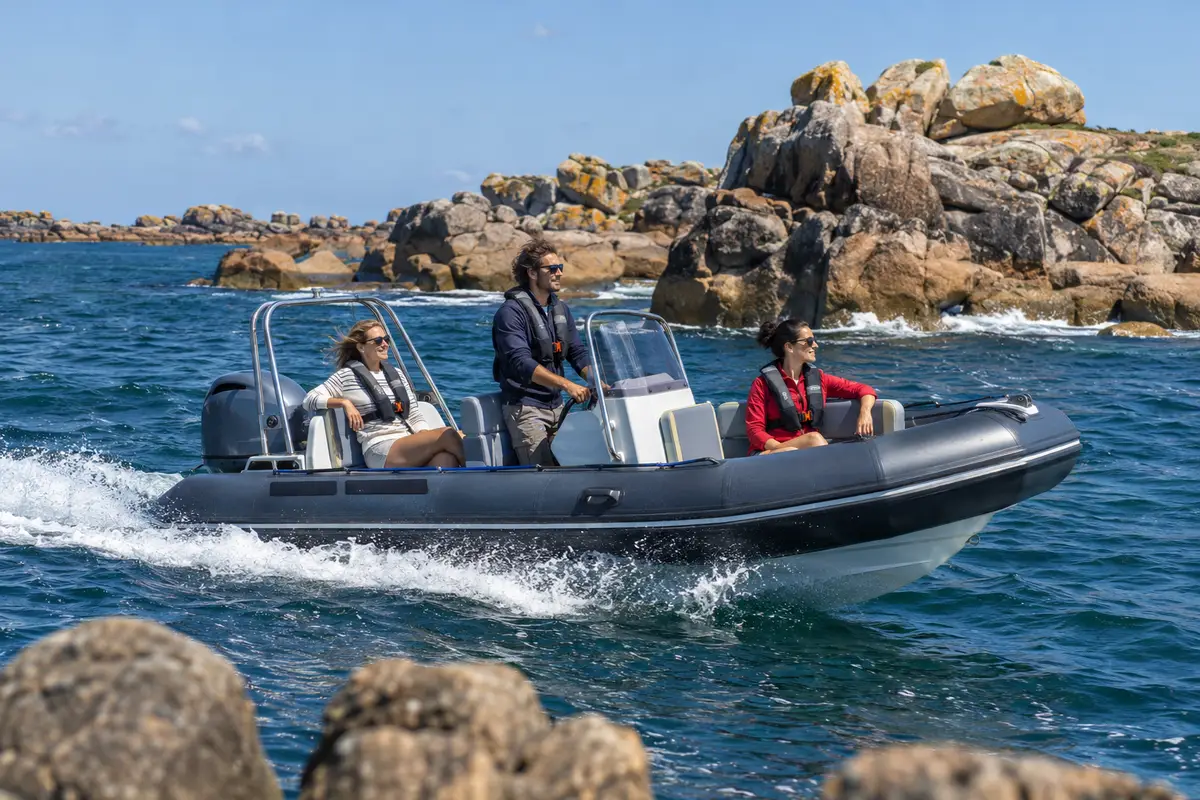
The Permis Plaisance Option Côtière (coastal option of France’s recreational boat licence) lets you operate a recreational motorboat on maritime waters up to six miles from a shelter. Its theory exam is commonly called the “code bateau”. This is the option to consider when your plans involve the sea rather than a river or canal.
Your cruising groundWhat the coastal option actually allows
Keep one simple reference in mind: six nautical miles from a shelter. This limit applies to recreational motorboat navigation at sea. The extension hauturière (offshore extension) removes that limit; the option eaux intérieures (inland waters option) covers rivers and canals.
With the coastal option, you can
- Operate a recreational motorboat at sea up to six nautical miles from a shelter
- Also navigate on lakes and enclosed inland waters
- Prepare for a future offshore extension if you want to go beyond this limit
With the coastal option alone, you cannot
- Navigate beyond six nautical miles from a shelter: the offshore extension removes this limit
- Use this option in place of the inland waters option for rivers and canals
Before you registerWhat you need
- Be at least 16 to take the permis côtier
- Train at an approved establishment
- Plan for practical training assessed and validated by that establishment
From first lesson to licenceHow to prepare
- Choose an approved establishment
Preparation combines the theory exam with training at an approved establishment. Use that framework to organise your route.
- Study the official syllabus
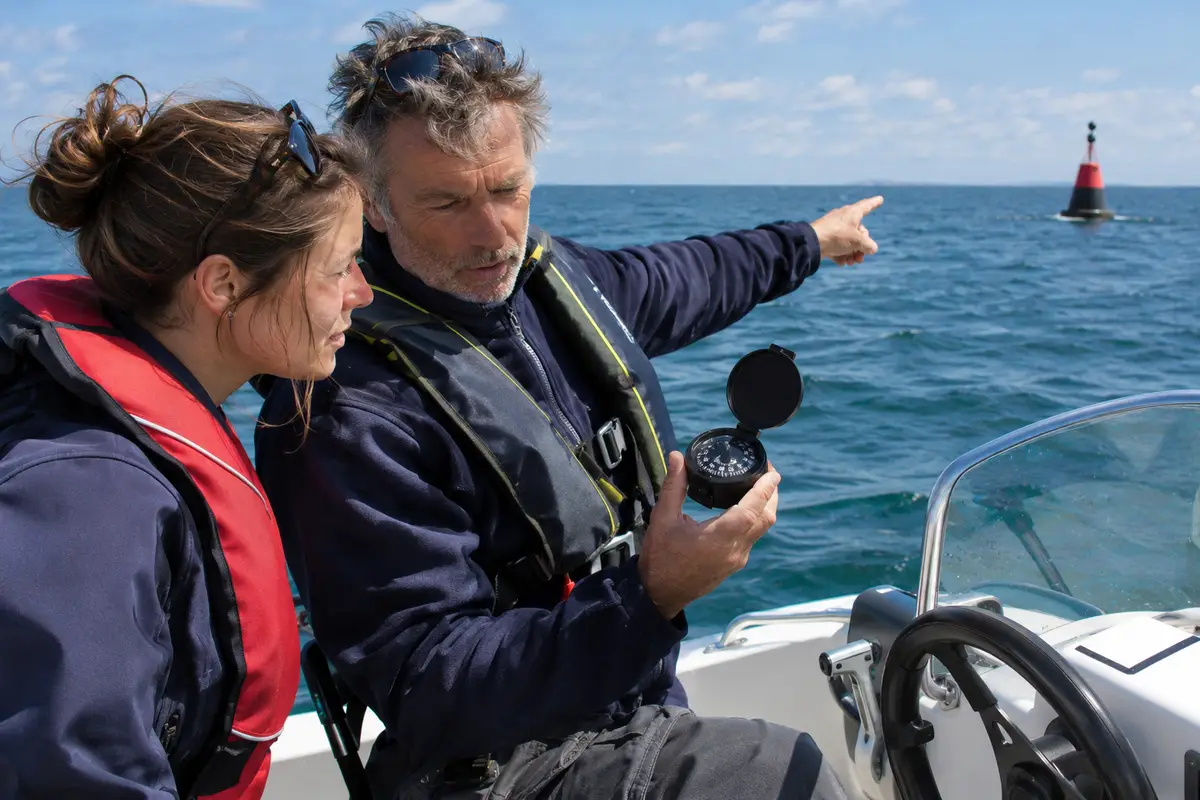
Revise RIPAM (COLREG 1972, the international collision-avoidance rules), AISM (IALA) buoyage in Region A, lights and shapes, sound signals, basic navigation and French regulations.
- Take the theory exam
The code bateau has 40 multiple-choice questions. You may make no more than 5 errors, meaning at least 35 correct answers.
- Have your practical skills validated
Your practical training is assessed and validated by the approved establishment. Online revision helps you practise, without replacing that training or the official assessment.
The code bateauThe theory exam at a glance
| Detail | What to remember |
|---|---|
| Format | 40 multiple-choice questions |
| Pass mark | No more than 5 errors, meaning at least 35 correct answers |
| Useful revision | RIPAM, Region A buoyage, lights, shapes and sound signals |
| Complete the syllabus | French regulations, navigation, safety and the environment |
Finding your placeFrance’s recreational boating qualifications
- Contremarque (rental authorisation)approved inland rental, non-habitable boat under 5 m, on the day of issue
- Carte de plaisance (rental boating card)approved inland rental, hull from 5 to 15 m, for up to 6 weeks
- Permis de conduire des bateaux de plaisance à moteur — option côtière (coastal option)at sea, measured from a shelter
- Permis de conduire des bateaux de plaisance à moteur — option eaux intérieures (inland waters option)on inland waters, for a boat under 20 m
- Permis de conduire des bateaux de plaisance à moteur — extension hauturière (offshore extension)with the coastal option, beyond 6 nautical miles from a shelter
- Permis de conduire des bateaux de plaisance à moteur — extension grande plaisance eaux intérieures (large inland pleasure craft extension)with the inland waters option, for a boat of 20 m or more
- Certificat international de conducteur de bateau de plaisance (international certificate for recreational boat operators)requested on presentation of an inland qualification that entitles you to the certificate
The magazine verdict
Why it stands out
- A clear framework for operating a recreational motorboat at sea
- A simple navigation limit: up to six nautical miles from a shelter
- Also valid on lakes and enclosed inland waters
Keep in mind
- The six-nautical-mile limit stays firm without the offshore extension
- Rivers and canals require the inland waters option
- Online exercises do not replace the full syllabus or mandatory training
Choose the coastal option if you want to operate a recreational motorboat on maritime waters and stay within six nautical miles of a shelter. If your plans take you farther, consider the offshore extension next; if you want river cruising, look at the inland waters option.
Topics tested
Practice tests
IALACOLREG Exam Pass
Permis Plaisance Option Côtière: get ready for your exam with the Exam Pass
Unlimited timed mock exams, every mistake back until it's right, and a readiness score that shows when you're ready for the exam.
512 exam-style questions with explanations · 7 timed subject exams · every simulator scenario
One payment for 12 months, so it covers a resit too. No subscription.
Practice questions (with answers)
Two power-driven vessels in sight meet on reciprocal or nearly reciprocal courses with risk of collision. Under Rule 14, each shall:
Show answer
Correct answer: B. Alter course to starboard
Rule 14(a): each shall alter course to starboard so that each passes on the port side of the other.
Two power-driven vessels in sight are crossing with risk of collision. The give-way vessel has the other on her:
Show answer
Correct answer: B. Starboard side
Rule 15: the vessel which has the other on her starboard side shall keep out of the way.
So far as possible, the give-way vessel shall take action that is:
Show answer
Correct answer: B. Early and substantial
Rule 16 requires every vessel directed to keep out of the way, so far as possible, to take early and substantial action to keep well clear.
What does Rule 18 establish about priority between a vessel not under command (NUC) and a vessel restricted in her ability to manoeuvre (RAM)?
Show answer
Correct answer: C. Rule 18 establishes no priority order between NUC and RAM
Rule 18(b) requires a sailing vessel underway to keep out of the way of NUC, RAM and vessels engaged in fishing. Rule 18 does not rank NUC above RAM; there is no complete vessel priority ladder.
If fitted, the topmark of a special mark is:
Show answer
Correct answer: B. A yellow X-shape (cross)
Special marks have a yellow X-shaped (St. Andrew's cross) topmark. (if fitted).
Emergency wreck marking buoys are coloured:
Show answer
Correct answer: C. Blue and yellow vertical stripes
equal numbers and widths of blue and yellow vertical stripes; 4 to 8 stripes in total. 1 s blue + 0.5 s darkness + 1 s yellow + 0.5 s darkness; period 3 s.
Emergency wreck marking buoys are used for:
Show answer
Correct answer: B. Marking new dangers, including newly discovered wrecks
The emergency wreck marking buoy marks new dangers, including newly discovered wrecks. The competent authority determines further marking once the danger is removed or its information has been sufficiently promulgated.
The topmark of a West Cardinal mark is:
Show answer
Correct answer: C. Two cones point to point
Two separate black cones with their points facing each other. The cones must remain clearly separated.
The full guide
The Permis Plaisance Option Côtière is the French recreational boating licence required for motor-powered craft above 6 hp on coastal waters within 6 nautical miles of a refuge.
Core: RIPAM (COLREG 1972), AISM buoyage (Region A), lights and shapes, sound signals, basic navigation, French maritime authority rules.
Who should take the Permis Côtier
Recreational skippers operating motorboats above 6 hp on French coastal waters, the Mediterranean, the Atlantic, the Channel or the DOM-TOM.
How to prepare
Follow the official syllabus and required approved-school training. These lessons and practice questions help revise COLREG, buoyage, lights and signals; they do not replace the full syllabus or official assessment.
Other exams
Reviewed by Ramon Curto, Nautical teacher at IECNPC · Last reviewed: