
- 40 questionsin the theory exam, taken on a tabletArrêté du 28 septembre 2007, art. 2.1
- 5 errorsmaximum allowed, meaning 35 correct answersArrêté du 28 septembre 2007, art. 2.1
- Under 20 mboat lengthDécret de 2007, art. 2
- More than 4.5 kWengine power: a licence is required above this (about 6 hp)Décret de 2007, art. 2
- From age 16to take the permis fluvialDécret de 2007, art. 3
- 18 monthsvalidity of a passed theory testArrêté du 28 septembre 2007, art. 2.1
At a glanceThe licence for rivers and canals
The permis fluvial is the permis plaisance option eaux intérieures (inland waters option of France’s recreational boat licence). You need it to operate a recreational boat with an engine above 4.5 kW on France’s rivers and canals. It covers boats under 20 m. Its theory test, the “code”, has 40 multiple-choice questions: you may make no more than 5 errors.
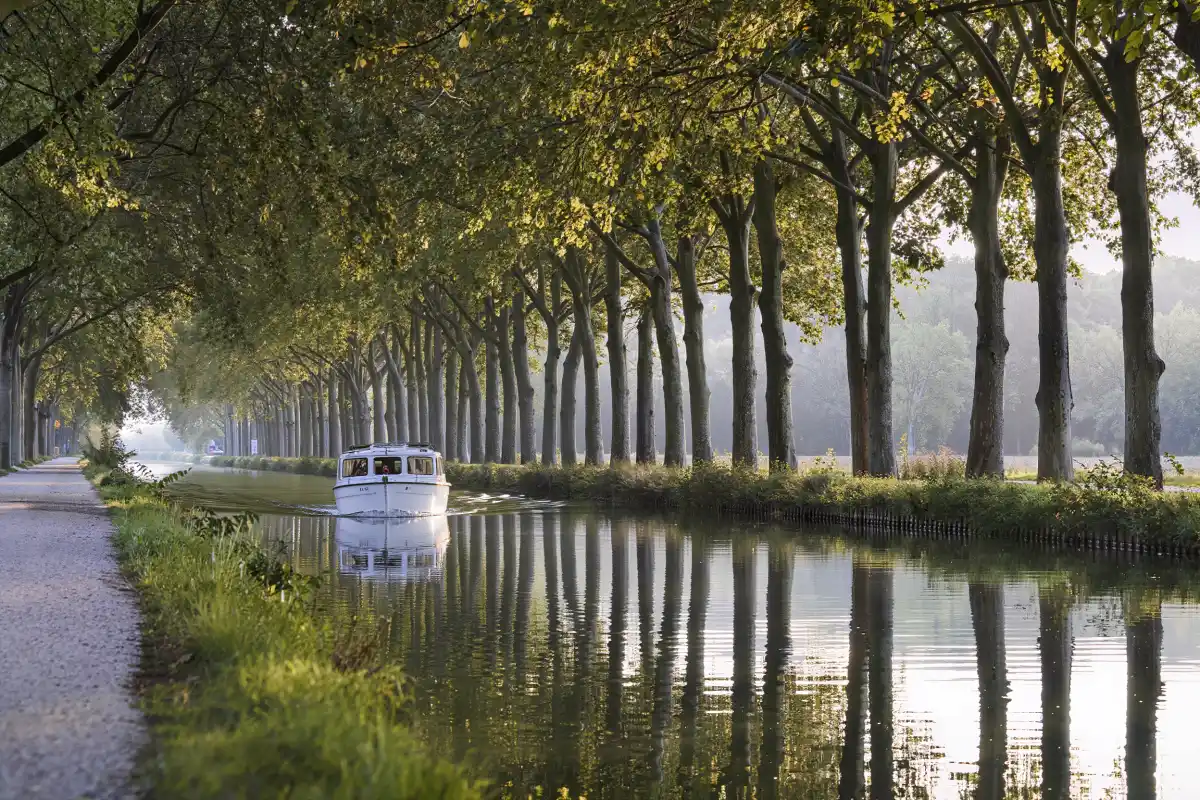
Your cruising groundWhat the permis fluvial allows
With the inland waters option, you can
- Operate a recreational boat under 20 m with an engine above 4.5 kW
- Navigate on rivers, canals and lakes
- Later prepare for the extension grande plaisance eaux intérieures (large inland pleasure craft extension), from age 18, for boats of 20 m or more
With the inland waters option alone, you cannot
- Operate a boat of 20 m or more: you need the large inland pleasure craft extension
- Navigate at sea: you need the option côtière (coastal option)
Before you registerWhat you need
- Be at least 16
- Provide a medical certificate less than 6 months old, a copy of identification and a photograph
- Train at an approved establishment
From first lesson to licenceHow to prepare
- Choose an approved establishment
It provides the mandatory training and validates your practical skills.
- Complete the theory training
At least 5 hours with the instructor. Coastal option holders are exempt.
- Revise the syllabus
Rules of the road, signs and buoyage, locks, bridges and weirs, lights and sound signals, mooring, safety and the environment. Our free course follows this syllabus in 8 topics.
- Take the code
A 40-question multiple-choice test on a tablet at La Poste, Dekra, SGS (Objectif Code) or Bureau Veritas (CodeN’Go). No more than 5 errors. A passed theory test remains valid for 18 months.
- Have your practical skills validated
At least 3 h 30 of practical training, including 2 hours at the helm, shared by the coastal and inland waters options. The instructor validates your skills throughout the sessions.
The codeThe theory exam at a glance
| Detail | What to remember |
|---|---|
| Format | 40 multiple-choice questions on a tablet |
| Pass mark | No more than 5 errors, meaning at least 35 correct answers |
| Validity | 18 months after passing |
| Providers | La Poste, Dekra, SGS (Objectif Code), Bureau Veritas (CodeN’Go) |
| Bring | Identification |
| Questions | No official question bank found: our questions are practice questions |
Your budgetHow much does the permis fluvial cost?
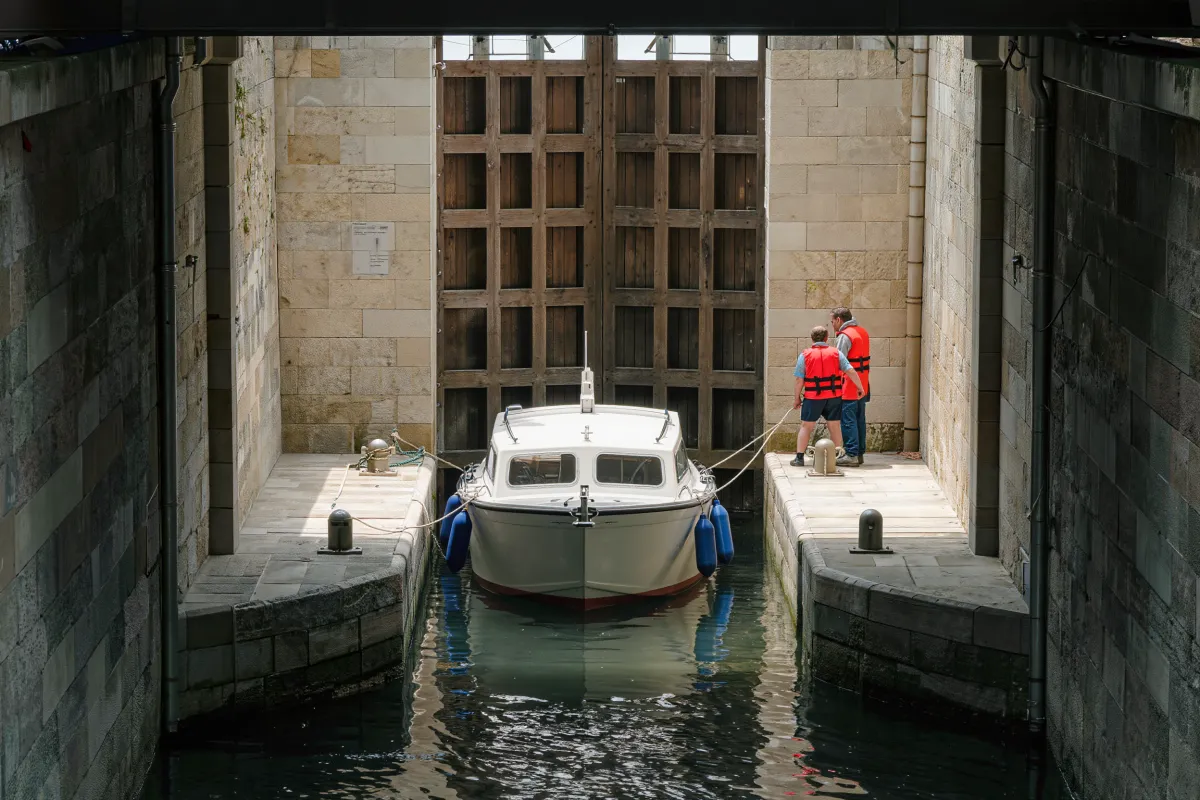
Free practiceOur course and mock exam
Our free course covers the official syllabus in 8 topics, with simple explanations, practical examples and questions with explained answers. The mock exam has 40 questions, 5 per topic, and applies the real pass threshold: no more than 5 errors. Its 30-minute timer is a practice choice, not an official duration. Links are at the top and bottom of this page.
The magazine verdict
Why it stands out
- A licence available from age 16, with a 40-question theory test
- Short practical training: at least 3 h 30, including 2 hours at the helm
- Known fixed fees: a €78 stamp and €30 registration
Keep in mind
- A demanding threshold: no more than 5 errors out of 40
- A passed theory test stays valid for only 18 months
- Online revision does not replace mandatory training at an approved establishment
Choose the inland waters option if you want to operate a recreational motorboat on rivers and canals. If you already hold the permis côtier, it is still needed outside lakes and enclosed waters, but your theory training is reduced.
Related basics (international rules)
Practice tests on the international rules
IALACOLREG Exam Pass
Permis Plaisance Option Eaux Intérieures: get ready for your exam with the Exam Pass
Unlimited timed mock exams, every mistake back until it's right, and a readiness score that shows when you're ready for the exam.
512 exam-style questions with explanations · 7 timed subject exams · every simulator scenario
One payment for 12 months, so it covers a resit too. No subscription.
Practice questions (with answers)
For vessels in sight of one another, an overtaking vessel:
Show answer
Correct answer: B. Shall keep out of the way of the vessel being overtaken
Rule 13(a): any vessel overtaking shall keep out of the way of the vessel being overtaken.
Two power-driven vessels in sight meet on reciprocal or nearly reciprocal courses with risk of collision. Under Rule 14, each shall:
Show answer
Correct answer: B. Alter course to starboard
Rule 14(a): each shall alter course to starboard so that each passes on the port side of the other.
Two power-driven vessels in sight are crossing with risk of collision. The give-way vessel has the other on her:
Show answer
Correct answer: B. Starboard side
Rule 15: the vessel which has the other on her starboard side shall keep out of the way.
So far as possible, the give-way vessel shall take action that is:
Show answer
Correct answer: B. Early and substantial
Rule 16 requires every vessel directed to keep out of the way, so far as possible, to take early and substantial action to keep well clear.
What does Rule 18 establish about priority between a vessel not under command (NUC) and a vessel restricted in her ability to manoeuvre (RAM)?
Show answer
Correct answer: C. Rule 18 establishes no priority order between NUC and RAM
Rule 18(b) requires a sailing vessel underway to keep out of the way of NUC, RAM and vessels engaged in fishing. Rule 18 does not rank NUC above RAM; there is no complete vessel priority ladder.
Under the normal arrangement in Rule 23(a), a power-driven vessel of 50 metres or more underway must show:
Show answer
Correct answer: B. Two masthead lights, sidelights, and sternlight
Rule 23(a): vessels 50m+ must show two masthead lights (forward and aft), sidelights, and sternlight.
Under the standard arrangement in Rule 25(a), a sailing vessel underway displays which navigation lights?
Show answer
Correct answer: B. Sidelights and a sternlight
Rule 25(a) prescribes sidelights and a sternlight for a sailing vessel underway. Rule 25(b) permits a combined lantern below 20 m; paragraph (c) allows a separate red-over-green pair, not with that combined lantern; paragraph (d) provides a conditional alternative below 7 m.
A vessel of at least 12 metres not under command (NUC) shows which status lights?
Show answer
Correct answer: B. Two all-round red lights vertically
Rule 27(a)(i) prescribes two all-round red lights vertically. Under Rule 27(g), vessels under 12 metres, except those engaged in diving operations, are not required to show the Rule 27 lights and shapes.
The full guide
The permis fluvial is the inland option of the French pleasure-boat licence: it is needed to drive a pleasure boat with an engine of more than 4.5 kW on rivers, canals and lakes, for boats under 20 m.
The theory test has 40 questions and allows at most 5 errors. The programme covers the inland rules of the road (RGPNI), signs and buoyage of the waterway, locks, bridges and weirs, lights and sound signals, safety and the environment.
Who needs the permis fluvial
Anyone from 16 who drives a pleasure boat with an engine of more than 4.5 kW on French rivers and canals. A sea licence is valid on inland waters only on lakes and closed waters.
How to prepare
Train with an approved boating school, which validates the practical training. Use the free French course and practice test here to revise the theory; they do not replace the training.
Other exams
Reviewed by Ramon Curto, Nautical teacher at IECNPC · Last reviewed: