
Buying, registering and hiring a boat
Your licence is about you; registration is about the vessel.
NSW registration is required for powerboats and sailing boats with an engine rated at 4.0 kW or more; powerboats and sailing boats 5.5 metres or longer, with or without an engine; vessels needing a mooring licence or marina berth; and all PWC. You must be at least 16 to register a vessel (Boating Handbook, p. 23).
Registration involves proof of purchase and identity, the application and fee, and the required Hull Identification Number (HIN) and Australian Builders Plate (ABP) documentation. The HIN identifies the hull; its plate must be permanently attached and clearly displayed. The ABP gives safety information such as maximum people, load and engine rating; most powerboats built after 1 July 2006 must have one. Display it permanently where the driver can see it. Modifying a boat may invalidate its ABP. Registration lasts 12 months; do not drive after it expires until renewed (pp. 23–26).
Display registration numbers on both sides of the hull, well above the normal waterline, in clear, solid numerals and upper-case letters contrasting with the hull. Sailing boats may instead use the transom. Minimum character height is 150 mm for powerboats and 100 mm for sailing boats and PWC. Powered vessels other than sailing boats with an engine and PWC must display a safety label showing capacity and load where everyone aboard can see it. PWC must display a behaviour label clearly visible to the driver (pp. 25–26).
When buying or selling a registered vessel, transfer registration within 14 days to avoid a late fee. The buyer pays the transfer fee and, if registration has expired, the renewal fee. The seller remains responsible until the transfer is complete. An interstate or overseas registered vessel must be registered in NSW if you move here or use NSW waterways for longer than 3 consecutive months (p. 27).
Do not assume recreational registration and a recreational licence cover commercial use. AMSA regulates domestic commercial vessels under a national system. A certificate of survey addresses vessel standards; a certificate of operation covers operation; a certificate of competency qualifies the person for their role. Specific exemptions may apply. Hire-and-drive vessels must meet commercial safety standards, even though the customer's trip is recreational (pp. 28–31).
When you hire, the company must give you safety instructions before departure. Ask about controls, safety equipment, lifejackets, capacity, navigation and emergencies. You still need a boat licence to drive a hired powered boat at 10 knots or more. To hire and drive a PWC, you must ordinarily have a PWC licence and be at least 16; specific hire-tour exemptions exist. Hire companies may set extra conditions. Hiring does not remove the NSW rules (p. 31).
- A low-speed boat can still need registration: engine power and length are separate registration triggers. Third-party insurance is recommended for damage to someone else's property (p. 23).
- Know the distinction: HIN identifies the boat; ABP describes its capability and capacity; your driving licence qualifies the driver.
Check this lesson
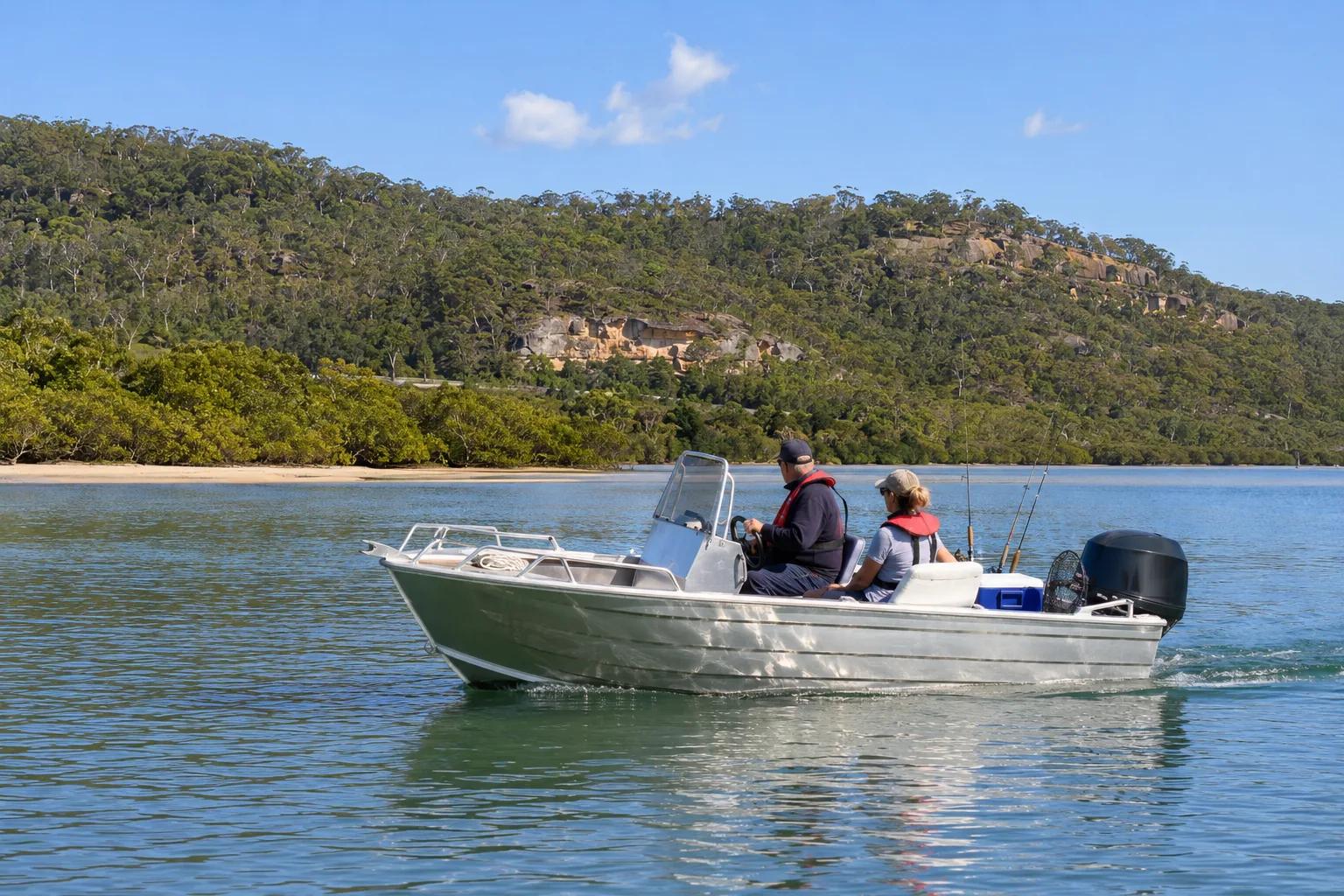
You are repainting a registered NSW powerboat's hull. How should you restore its registration number?