
Your powerboat's lights
Display navigation lights from sunset to sunrise and in restricted visibility, including fog, smoke or glare.
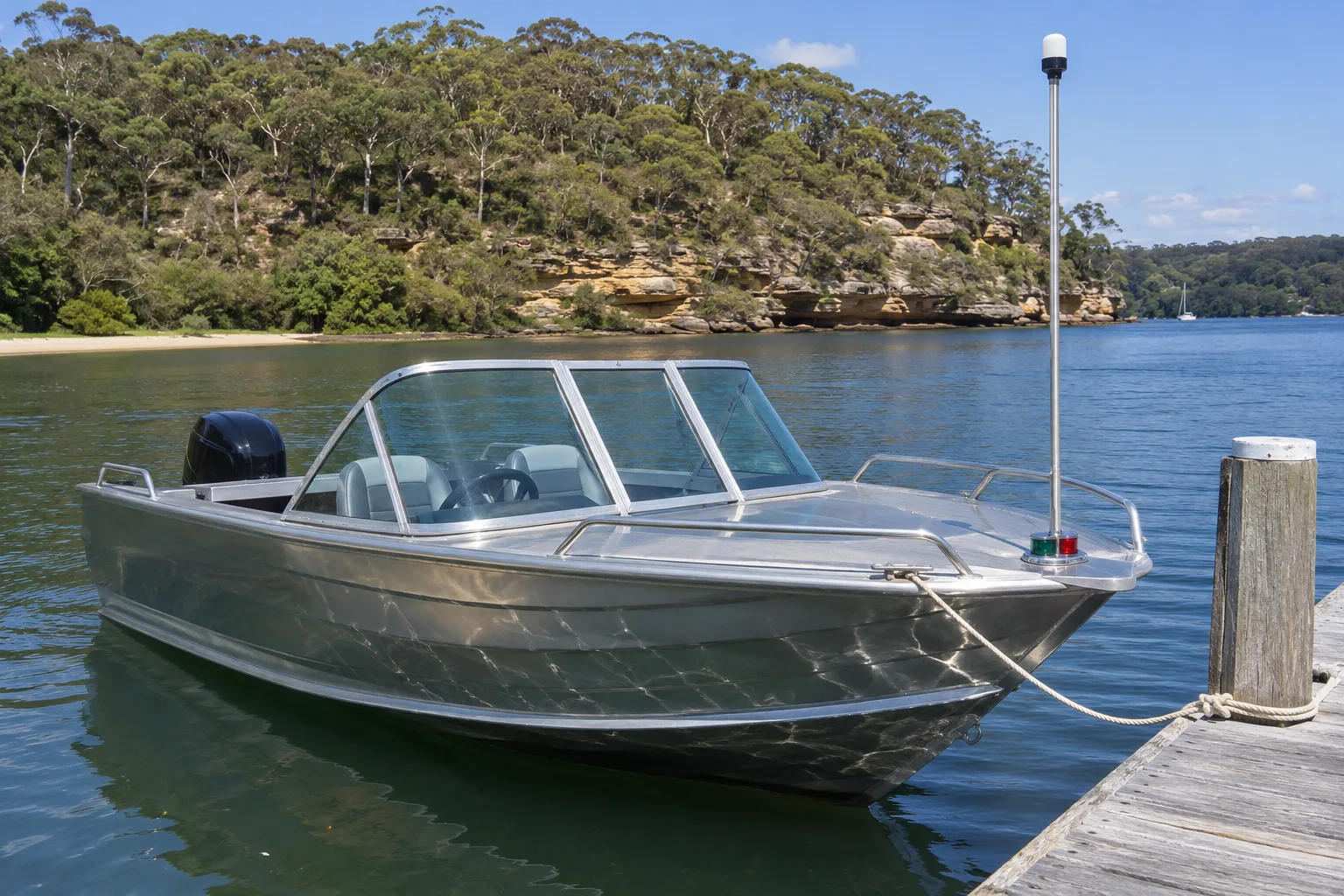
Red is your port sidelight; green is your starboard sidelight. Check the actual lights before leaving, not just the switches. Keep them clear of people, cabin structures and deck lights (Boating Handbook, pp. 116–118, 122).
A powerboat under 12 metres underway needs separate or combined sidelights, plus either a white masthead light and white sternlight, or an all-round white light. The masthead or all-round white light must be at least 1 metre above the sidelights. For this size of boat, sidelights have a minimum visibility range of 1 nautical mile; the white lights have a minimum range of 2 nautical miles (pp. 117, 119).
A powerboat under 7 metres with a maximum speed of no more than 7 knots must show an all-round white light, with sidelights if possible. Maximum speed means what the boat can do. A faster boat does not qualify simply because you drive slowly. PWC must not be driven between sunset and sunrise; fitting lights does not change that restriction. The handbook recommends carrying a torch on a PWC in case of restricted visibility (p. 119).
For powered vessels between 12 and 50 metres, the handbook specifies a masthead light at least 2.5 metres above the gunwale, sidelights (separate or combined) and a sternlight. Combined sidelights must be at least 1 metre below the masthead light. For vessels between 12 and 20 metres, the minimum visibility ranges are 3 nautical miles for the masthead light and 2 nautical miles for sidelights; the sternlight range remains 2 nautical miles (pp. 117, 120).
- All-round white: 360°. Masthead white: 225°, from ahead to just behind each beam.
- Each sidelight: 112.5°, on its own side. Sternlight: white, 135° aft.
- Fit the masthead or all-round white light on the centreline if practical, above obstructions and clear of the driver's eyes. Aim sidelights across the water, not straight up or only forward (p. 118).
- Dim electronic displays and avoid lights that spoil anyone's night vision.
- The handbook recommends all vessels carry a torch where practical, in case they are caught out after dark (p. 116).
Check this lesson
What minimum visibility ranges apply to the sidelights and all-round white light on a 10-metre powerboat?