
Say what you are doing with sound
When underway and in sight of other vessels, sound signals communicate your actions and help prevent collisions.
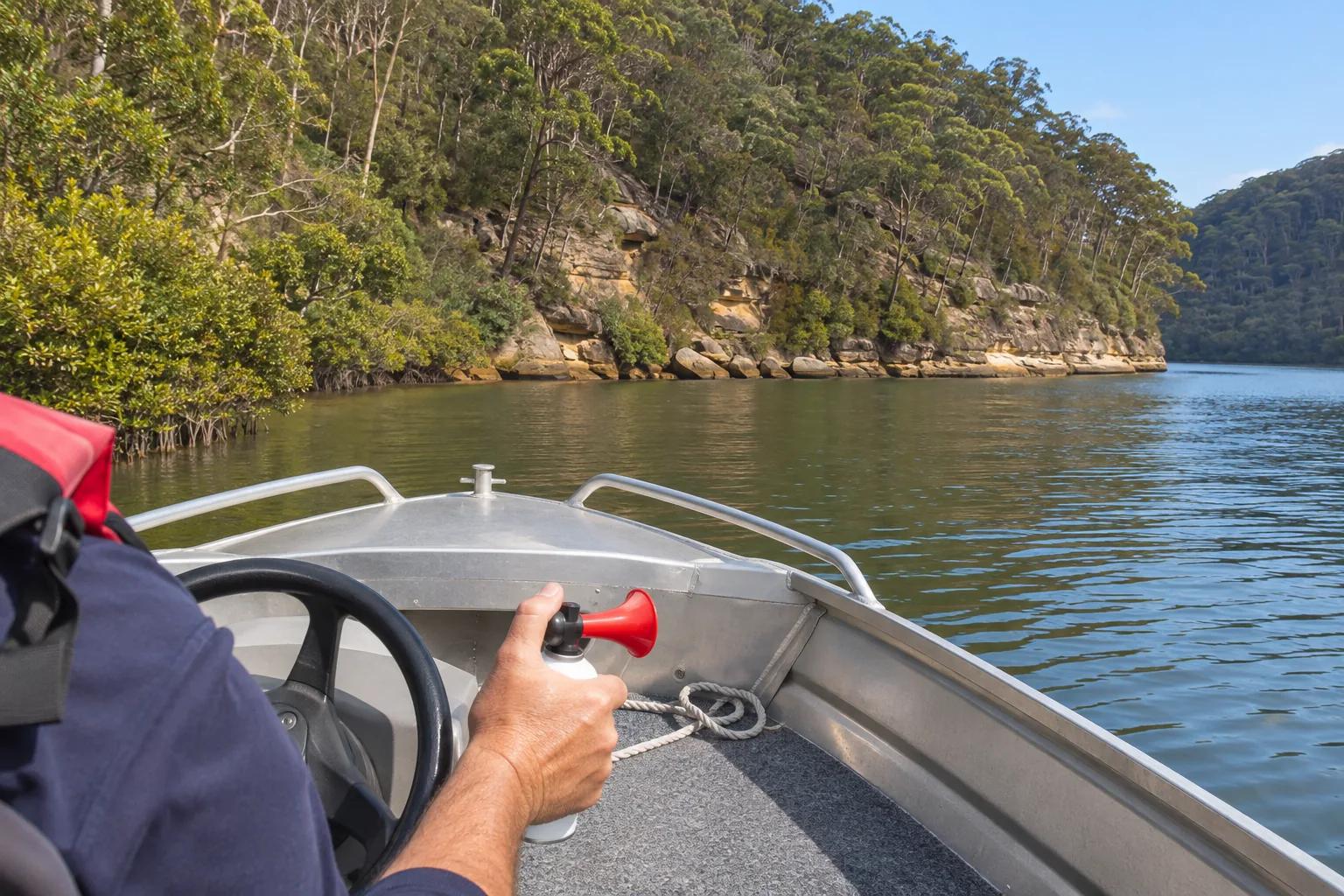
Powerboats and sailing boats must carry a sound signal device, such as an air horn, bell or whistle. A short blast lasts about 1 second; a long blast, also called prolonged, lasts 4–6 seconds (Boating Handbook, p. 127).
Three short blasts mean you are operating engines astern. You may still have forward movement while slowing down: the signal describes the engine action. Five short blasts express doubt about the other vessel's intentions or whether it is taking enough action to avoid collision. Sound signals do not remove your responsibility to avoid a collision.
The handbook says you can accompany these sound signals with light signals (p. 127).
- 1 short: I am altering course to starboard.
- 2 short: I am altering course to port.
- 3 short: I am operating engines astern.
- 5 short: I am unsure of your intentions and doubt your collision-avoidance action.
- 1 long: I am nearing a blind bend and you may not see me.
Check this lesson
You use a manoeuvring sound signal in sight of another vessel. What does the handbook say about light signals?