

 See units
Medical first aid (STCW A-VI/4-1): examining a casualty, toxic hazards (MFAG) and the ship's medical guide
Hypothermia, immersion and care of rescued persons
1The lesson in plain words
At officer level you measure, stage and monitor the cold casualty, avoid harm while rewarming, and care for survivors taken from the sea.
What is new here
Cold shock, Float to Live and basic rewarming are taught in Hypothermia, cold-water immersion, drowning and heat illness. Here you add core temperature, the temperature deep inside the body. Use a low-reading thermometer designed for core measurement, following its approved method and measurement site. A low measuring range alone is not enough: skin and ordinary forehead readings are unreliable in a cold casualty. Record the value, time and site. Do not delay care to obtain a reading.
Stages
By core temperature: mild is 32 to below 35 °C; moderate, 28 to below 32 °C; severe, below 28 °C. Typical signs progress from shivering and clumsiness, through confusion and weaker shivering, to unconsciousness with very slow pulse and breathing. These signs vary and do not reliably predict core temperature. When measurement is unavailable, report consciousness, shivering and vital signs to the radio doctor.
Rewarming without harm
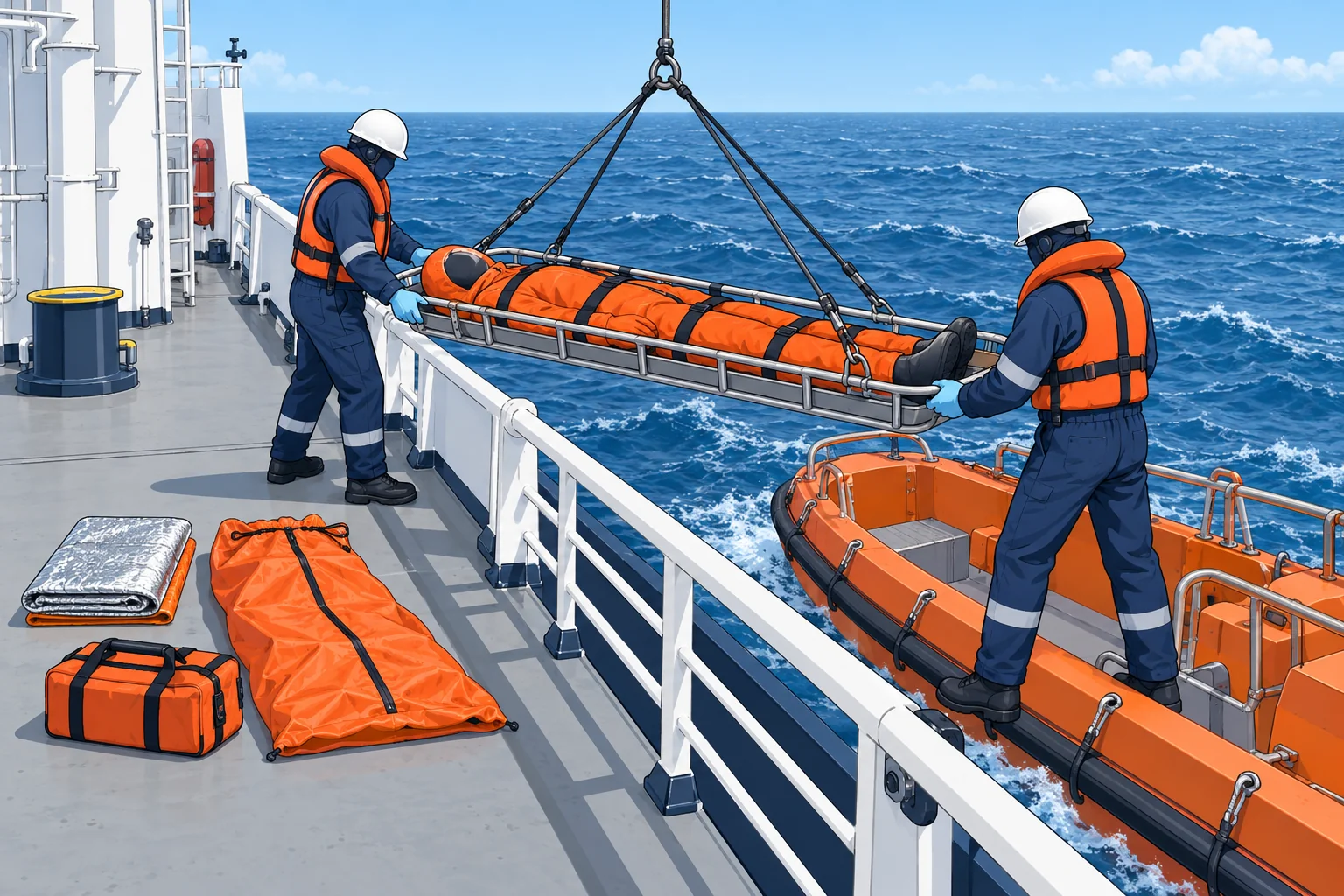
After-drop is a further fall in core temperature after rescue, as cold blood returns from the limbs. Keep the casualty flat, still and horizontal; do not rub the limbs or put a cold casualty in a hot shower. Mild: dry clothes, insulation and warm sweet drinks if fully alert. Moderate or severe: insulate, put wrapped heat packs on the chest, armpits and back, and get urgent radio medical advice: severe cases need hospital treatment; continue gentle warming while evacuation is arranged.
Cardiac arrest in the cold
A cold heart is irritable: rough handling can trigger cardiac arrest. Check breathing and pulse for up to a minute in a severely cold, unresponsive casualty. With no signs of life, start CPR and use the AED. Cold may protect the brain: do not stop just because CPR has lasted a long time. Continue until signs of life return, rescuers take over, continuing is unsafe or impossible, or the radio doctor advises stopping.
Survivors from the sea
Rescued persons, from the water or a liferaft, may have hypothermia, dehydration, sunburn, salt-water sores, cold injury of the feet, injuries and inhaled sea water. Examine each one fully and record vital signs and temperature. Give fluids by mouth slowly if alert, and handle cold feet gently. Anyone who inhaled water needs radio medical advice even if well. Expect shock, grief and fear: stay calm, give information and keep companions together.
2Key data
- Thermometer
- Low-reading device designed for core-temperature measurement
- Mild
- 32 to below 35 °C; typically shivering, alert, clumsy
- Moderate
- 28 to below 32 °C; often confused, shivering weak or stopped
- Severe
- Below 28 °C; often unconscious, slow pulse and breathing
- Breathing check
- Up to 1 minute in a severely cold casualty
- After-drop
- Core keeps falling after rescue: flat, still, insulated
3Key points
- 1
Use a low-reading thermometer suitable for core measurement; record the value, time and site.
- 2
Stage by core temperature; if unavailable, report consciousness, shivering and vital signs. Signs vary.
- 3
Handle gently and horizontally: rough handling can trigger cardiac arrest.
- 4
Do not stop solely because CPR has lasted a long time; follow standard CPR stopping rules and radio medical advice.
- 5
Examine every rescued person fully; inhaled water always needs radio medical advice.
4Frequent mistakes
Wrong: Put a cold, drowsy survivor in a hot shower to warm him quickly.
Right: Fast surface warming can make the blood pressure collapse. Insulate, use wrapped heat packs and get advice.
Wrong: A survivor who stops shivering is warming up.
Right: Stopped shivering while still cold and drowsy warns of worsening hypothermia. Get urgent advice; signs alone cannot reliably show core temperature.
Wrong: Stop CPR on a cold casualty after 20 minutes.
Right: Do not stop solely because CPR has lasted a long time; follow standard CPR stopping rules and radio medical advice.
5Practice case & exam keys
Your rescue boat recovers a fisherman who was in 12 °C water for about 50 minutes. He is drowsy, mumbles answers and is no longer shivering. His core temperature reads 30 °C. What do you do?
Show the answer
This is moderate hypothermia. Keep him horizontal and still: carry him, never let him walk. Cut off wet clothing, insulate him with blankets and a wind- and waterproof cover, and put wrapped heat packs on his chest, armpits and back. Give nothing by mouth, as he is not fully alert. Monitor breathing, pulse and temperature, keep the AED ready, and get urgent radio medical advice: he needs hospital rewarming, so evacuation is likely.
Exam keys
- Stages: mild 32 to below 35 °C; moderate 28 to below 32 °C; severe below 28 °C. Clinical signs vary.
- After-drop: keep the casualty flat, still and insulated; no rubbing, no hot shower.
- Severe hypothermia: check breathing up to 1 minute; start CPR if no signs of life. Follow standard stopping rules and radio advice.
- Rescued persons: full examination; inhaled water needs radio medical advice.
Finish this unit
When you've read it, answer three questions. Get all three right to finish the unit; opening the page alone doesn't count.
My notes for this unit
No notes