

 See units
Medical first aid (STCW A-VI/4-1): examining a casualty, toxic hazards (MFAG) and the ship's medical guide
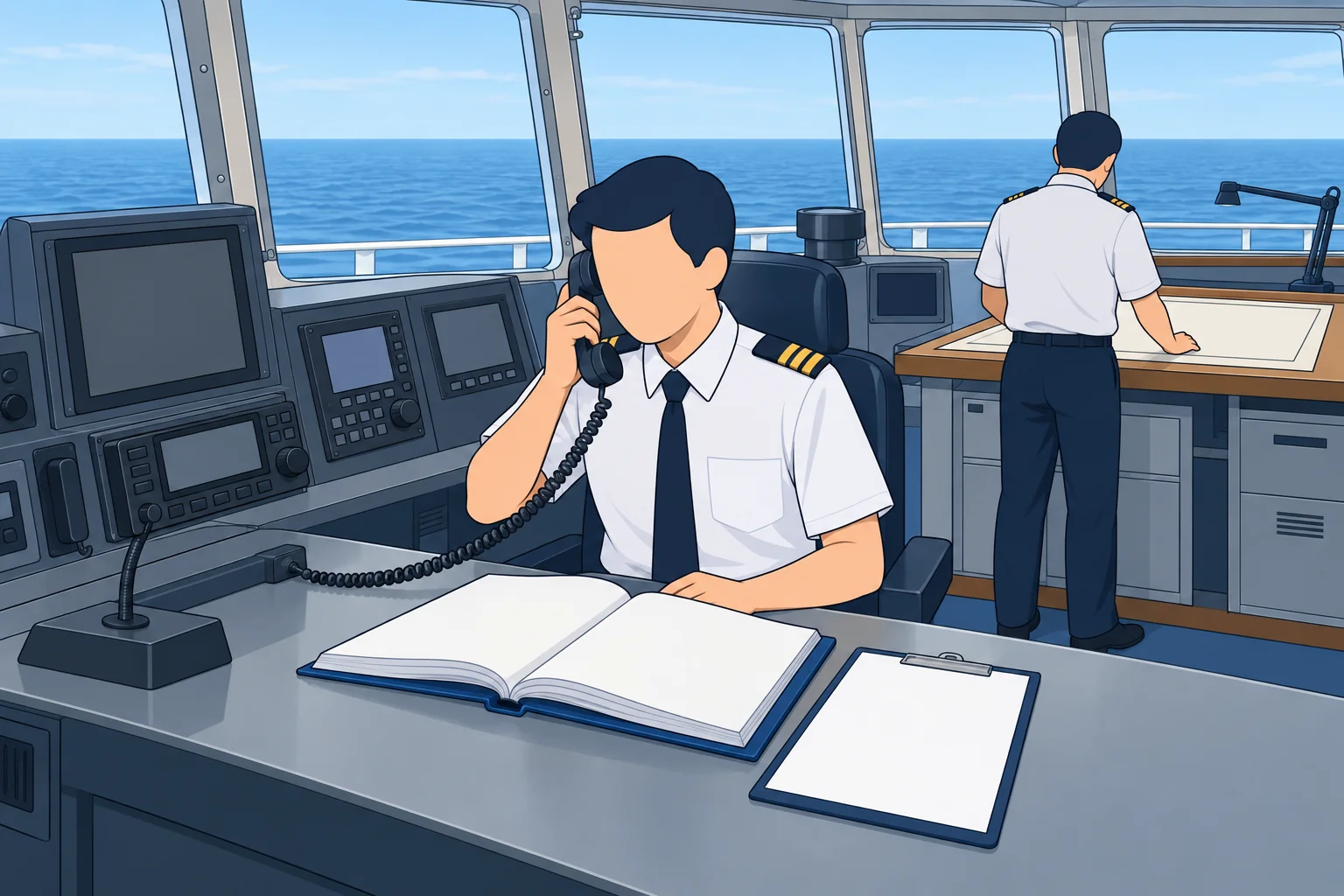
Using the ship’s medical guide and preparing a radio consultation
1The lesson in plain words
The medical guide tells you what to look for and how to treat; the radio doctor decides what this patient needs. Prepare well and the call is short and safe.
The guides on board
Ships carry the WHO International Medical Guide for Ships (IMGS), 3rd edition (2007), or a national equivalent, such as the UK Ship Captain’s Medical Guide or the Spanish Guía sanitaria a bordo. It is written for the seafarers who give first aid and medical care. Its medicine-chest chapter lists medicines by generic name, and the WHO Quantification Addendum (2010) gives the quantities. The MFAG is its chemical supplement.
Finding your way
Learn the guide before you need it. Use the contents and index: the first-aid chapters for emergencies, the chapter on examining a patient, then the condition itself. Follow its cross-references to procedures, such as giving an injection or caring for a patient in bed, and to the medicine chest list. Mark the medical report form, the observation chart and the medicine list so you can open them in seconds.
Before the call
Unless it is an emergency, examine the patient and take the history first. Fill in the guide’s medical report form: ship details, position and nearest port; the patient’s age, sex and weight; complaint, history, allergies and medicines; findings; vital signs with times; and what you have given. Open the medicine chest list, and prepare photos of wounds or rashes if you can send them. The call itself is in Radio medical advice.
During the call
Put the officer who examined the patient on the line, beside the patient if possible. Describe what you saw and measured, not your diagnosis. Name medicines exactly as in your list: generic name and strength. Write down the advice, read it back, and ask how to monitor and when to call again. Prescription medicines are given only on radio medical advice.
After the call
Record everything in the treatment record: times, advice, who gave what, dose, route and the patient’s response; keep it confidential. Repeat vital signs as asked and call back early if the patient gets worse. Tell the master about every consultation. Send a copy of the record with the patient.
2Key data
- IMGS
- WHO, 3rd edition 2007; medicine list by generic name
- Quantities
- WHO Quantification Addendum, 2010
- Chemical supplement
- MFAG, in the IMDG Code Supplement
- Before a call
- Examine, history, report form, vitals with times, medicine list
- Prescription medicines
- Only on radio medical advice
- After a call
- Read back, record, monitor, agree the next call
3Key points
- 1
Learn the guide’s layout before an emergency; mark the report form and medicine list.
- 2
Examine, take the history and fill in the report form before a non-urgent call.
- 3
Report what you see and measure; leave the diagnosis to the doctor.
- 4
Give prescription medicines only on radio medical advice, and record every dose.
- 5
Read the advice back and agree when to call again.
4Frequent mistakes
Wrong: Call the doctor first and examine the patient while you talk.
Right: Except in an emergency, examine and fill in the report form first; the call is shorter and clearer.
Wrong: Give the doctor the brand name on the box.
Right: Use the generic name and strength from the medicine chest list, so nothing is confused.
Wrong: Start antibiotics from the guide if the patient seems infected.
Right: The guide explains medicines, but prescription medicines are given only on radio medical advice.
5Practice case & exam keys
At night, 900 nautical miles from port, the bosun has had abdominal pain for 10 hours, now worst low on the right, with a temperature of 38.4 °C and vomiting. His vital signs are stable. Should you delay the call until the report form is complete?
Show the answer
Get radio medical advice promptly; stable vital signs do not make this safe to postpone. While a colleague prepares the form, report the pain’s course, fever, vomiting, intake/output, allergies, medicines and timed vital signs. Have the medicine list ready. Read back advice and agree monitoring and the next call.
Exam keys
- IMGS 3rd edition (2007) with the 2010 Quantification Addendum, or a national equivalent.
- Before a non-urgent call: examine, history, report form, vital signs with times, medicine list.
- Report findings, use generic names, read back the advice, agree the next call.
- Prescription medicines only on radio medical advice; record every dose.
Finish this unit
When you've read it, answer three questions. Get all three right to finish the unit; opening the page alone doesn't count.
My notes for this unit
No notes