

Keeping the log: what to write and when
1The lesson in plain words
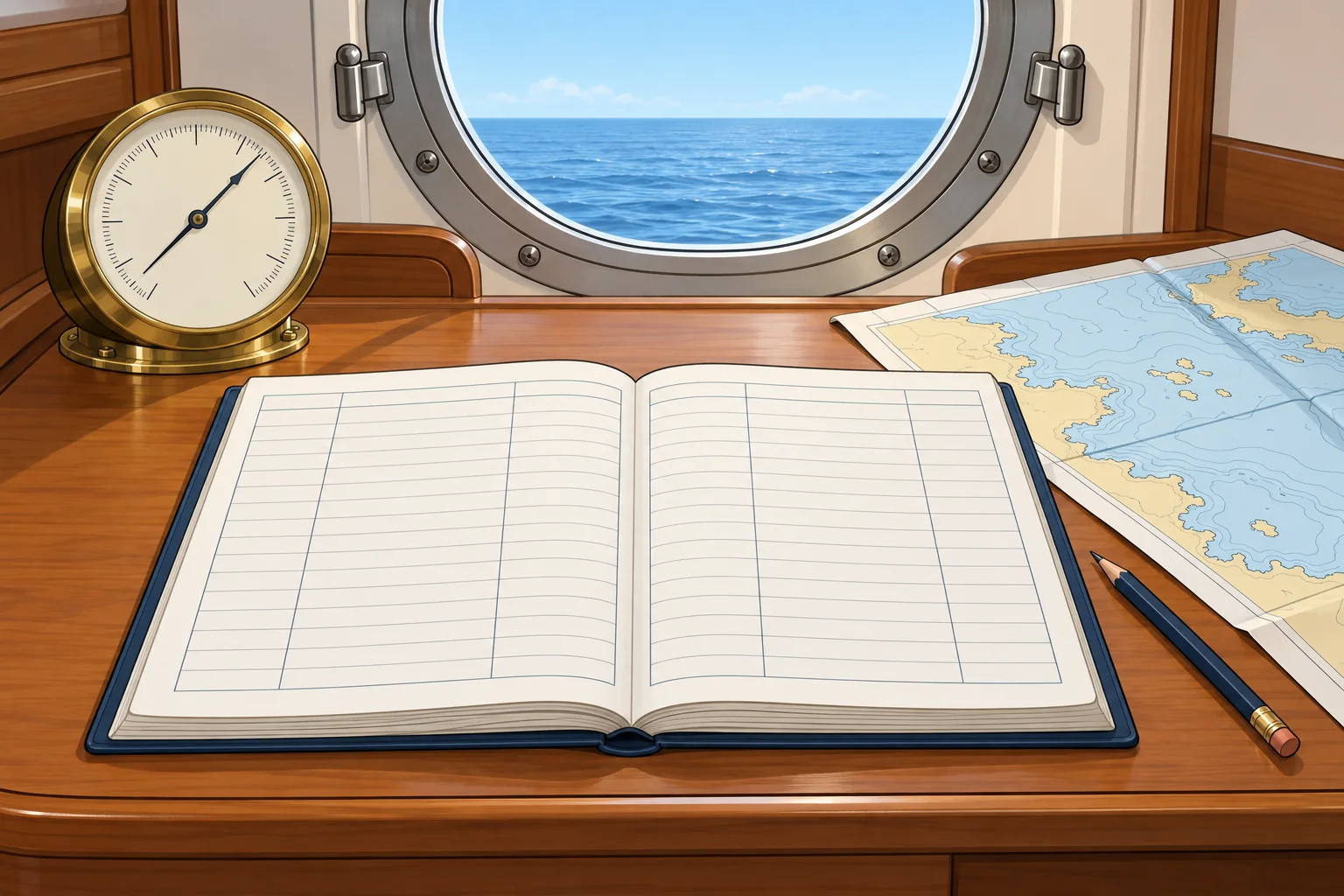
The logbook is the boat's written memory. Write down the time, log reading, heading and position every hour, and at every change.
Why keep a log
The logbook records where you have been, in which direction and how fast. If the GNSS (satellite navigation) or plotter fails, the last entry is your starting point for dead reckoning: working out your position from heading, distance and time. It also shows weather trends and is a record after an incident. Many countries, the UK among them, do not require small pleasure craft to keep one by law, but some flag states do. Keep one anyway.
What to write
Each entry needs the time, the log reading (the distance run through the water, from the boat's speed and distance instrument, also called the log), the heading steered, labelled compass, magnetic or true, and the position with how it was found: a fix, a GNSS position or an estimate. Add the wind direction and force, the barometer reading (air pressure), sea state and visibility, and engine hours when motoring.
When to write
Make an entry at least every hour on passage, and more often near the coast or in poor visibility. Make one also at every course change, sail change, engine start or stop, mark passed and forecast received. Short intervals mean a short dead-reckoning run if the electronics fail.
Events
Note anything unusual: damage, a navigation light out, a VHF call, a reef taken in, a man-overboard drill. Keep entries brief and factual. Correct a mistake with a single line through it, so the original stays readable.
Electronic logs
A plotter track or an app can record much of this automatically, but it stops when the power or the GNSS fails. Keep at least an hourly written entry of position, log reading and heading.
2Key data
- Every entry
- Time, log reading, heading, position and its source
- Weather
- Wind direction and force, barometer, sea state, visibility
- How often
- At least hourly on passage; more often near danger
- Also log
- Course changes, marks passed, forecasts, events
3Key points
- 1
Log the time, log reading, heading and position at least every hour.
- 2
Add an entry at every change: course, sails, engine, mark passed.
- 3
Record the barometer: a steady fall over a few hours warns of wind.
- 4
The last entry is your starting point if the electronics fail.
4Frequent mistakes
Wrong: The plotter's track is all the log you need.
Right: Electronic tracks stop when power or GNSS fails. Keep an hourly written position, log reading and heading.
Wrong: Write the position without saying how you found it.
Right: Note whether it was a fix, a GNSS position or an estimate: they are not equally reliable.
5Practice case & exam keys
At 14:20 you change course and start the engine. Your last log entry was at 14:00. The plotter records your track automatically. What should you record now?
Show the answer
Make an entry now: time, log reading, new heading labelled compass, magnetic or true, position and how it was found, weather and engine hours. Note the course change and engine start; do not wait until 15:00. Keep the written record even while the plotter records a track.
Exam keys
- Entries: time, log reading, heading, position and how it was found.
- At least hourly, and at every change of course or notable event.
- Barometer and wind are logged to spot weather changes.
- The log is the starting point for dead reckoning when the electronics fail.
Finish this unit
When you've read it, match the terms, then answer three questions. Get them all right to finish the unit; opening the page alone doesn't count.
My notes for this unit
No notes