

Shore power, electric shock drowning and corrosion
1The lesson in plain words
Shore power can kill. Use a marine lead and leakage protection. Follow the connection sequence, and never swim in a marina.
Mains aboard
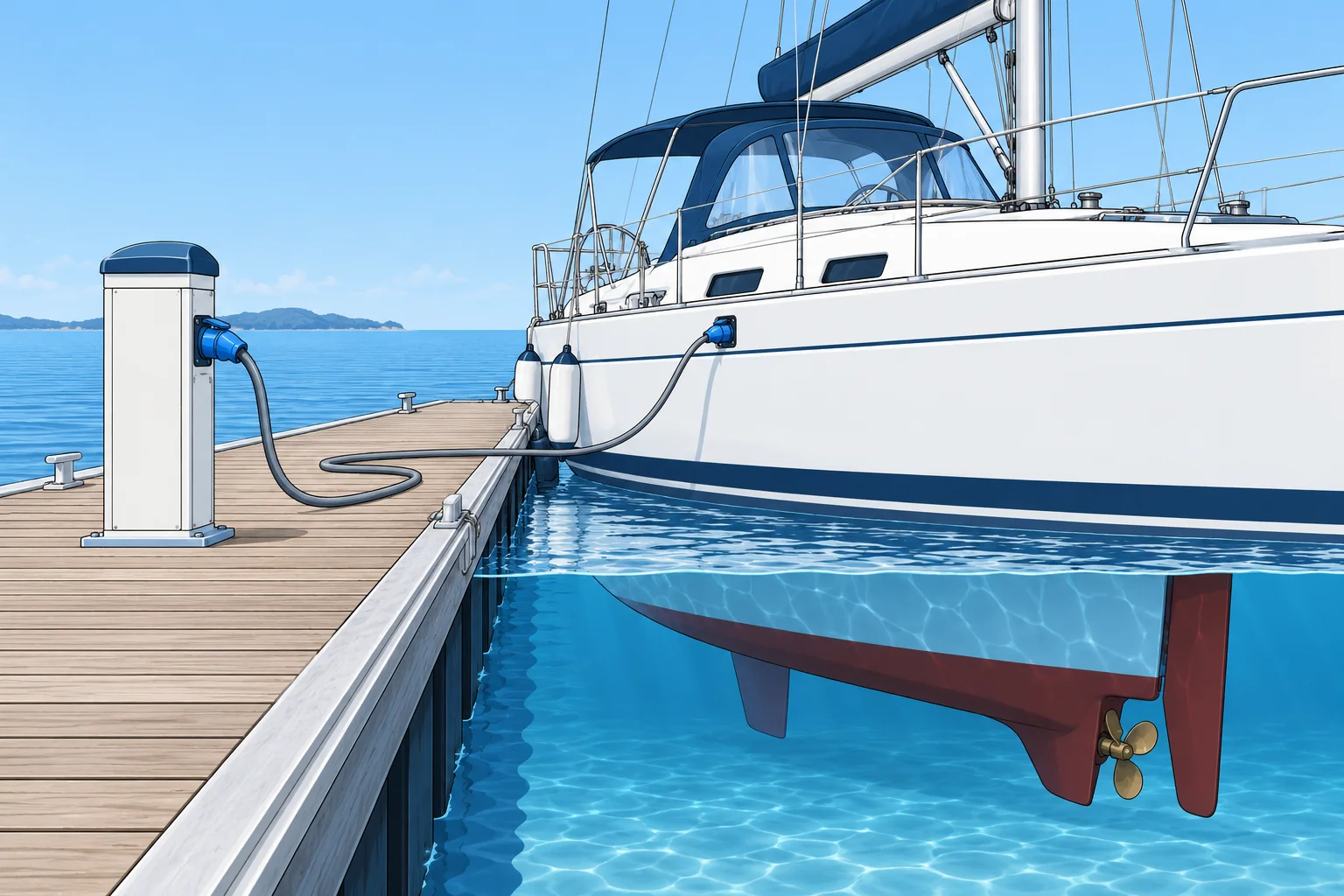
Shore power is 230 V (or 120 V) AC (alternating current): it can kill. The shore supply point is called a pedestal. Use a proper marine lead and connectors, never a household extension. Keep the lead out of the water and clear of the gap between boat and pontoon. Check plugs for burning or corrosion.
Protection on board
An RCD (residual current device) trips when outgoing and returning currents differ. A US ELCI (equipment leakage circuit interrupter) provides whole-boat leakage protection, typically at 30 mA; it does not replace required personal protection at outlets. A reverse-polarity indicator warns of incorrect wiring. A galvanic isolator blocks small corrosion-causing DC currents in the shore earth connection while passing fault current.
Electric shock drowning
A boat or pontoon fault can leak AC into the water, especially fresh or brackish water. It can paralyse a swimmer and cause drowning: electric shock drowning. Never swim in a marina. If someone is in trouble, keep rescuers out. Call emergency services and alert the marina to isolate electrical supplies. Throw a flotation aid or reach from a safe position. Other boats may still supply current; leave water entry to emergency responders.
Corrosion in one line
Galvanic corrosion occurs between electrically connected dissimilar metals in water; stray-current corrosion results from unwanted electrical current and can destroy fittings rapidly. See Propulsion basics for anodes.
2Step by step
Connecting and disconnecting shore power
- 1
Switch off the boat’s shore-power breaker and the pedestal supply.
Never make or break a live connection.
- 2
Check the lead and plugs for damage, burning or corrosion.
Damaged connectors overheat and can start fires.
- 3
Plug in at the boat first, then at the pedestal.
A dropped boat end is never live if the shore end goes in last.
- 4
Switch on the pedestal. With the boat’s main shore-power breaker still off, check the fitted polarity indicator as instructed. Switch on aboard only if the supply is correct.
A polarity warning means leave the boat breaker off, switch off the pedestal and tell the marina. Do not use the supply.
- 5
Test the fitted RCD/ELCI with its test button as instructed. If it fails to trip, switch off and report it. Reset only after a successful test.
Do not rely on protection that fails its prescribed test.
- 6
To disconnect: switch off both, unplug at the pedestal first, then at the boat.
The loose end you handle is never live.
3Key points
- 1
Shore power can kill: marine lead, RCD, polarity check.
- 2
Connect boat end first, then shore; disconnect shore end first.
- 3
A galvanic isolator reduces corrosion caused by small DC currents through the shore earth connection.
- 4
Never swim in a marina: electric shock drowning.
- 5
Rescue: keep out, call emergency services, ask the marina to isolate supplies, throw or reach safely.
4Frequent mistakes
Wrong: Plug the lead into the pedestal first so it is ready, then walk it to the boat.
Right: You would be carrying a live plug. Switch off, plug in at the boat first, then the pedestal.
Wrong: A swimmer is in trouble near a pontoon: jump in at once.
Right: Keep out: current may be in the water. Call emergency services and alert the marina to isolate supplies. Throw a float or reach safely; leave water entry to emergency responders.
5Practice case & exam keys
In a freshwater marina, a child swimming between boats screams and goes limp. A crew member starts to take off his shoes to jump in.
Show the answer
Stop the crew member: suspect electric shock drowning. Keep rescuers out. Call emergency services and alert the marina to isolate power. Throw a lifebuoy or reach from a safe position with a non-conducting aid. Other boats may still supply current. Leave water entry to emergency responders and follow the dispatcher’s instructions.
Exam keys
- RCD/ELCI: leakage protection. Polarity indicator: wiring warning. Galvanic isolator: reduces galvanic corrosion through shore earth.
- Connect boat end first; disconnect shore end first.
- Electric shock drowning: never swim in marinas; call, keep out, isolate supplies, throw or reach safely.
- Galvanic: connected dissimilar metals; stray current: unwanted current, potentially rapid damage.
Finish this unit
When you've read it, answer three questions. Get all three right to finish the unit; opening the page alone doesn't count.
My notes for this unit
No notes