
The 406 MHz EPIRB: the alert that floats free
The EPIRB alerts an RCC through satellites, even if nobody on board can.
It transmits in the 406.0–406.1 MHz band to a rescue coordination centre via satellite, and gives locating signals on scene (SOLAS IV/2.1.5). A 121.5 MHz signal lets aircraft and lifeboats home in on it (47 CFR 80.1077).
SOLAS asks for an EPIRB that is easy to reach, can be released by hand and carried by one person into a survival craft, floats free and switches itself on if the ship sinks, and can also be switched on by hand (IV/7.1.5).
The alert carries the beacon's coded identity, which leads the RCC to the ship's registration. That only works if the beacon is registered in a database open 24 hours a day and the data are updated after any change of name, owner or flag (MSC.514(105)).
- Do not tie the lanyard to the ship: it would stop the beacon floating free. The lanyard is for survivors to secure it to a raft or a person (MSC.514(105)).
- Do not switch it on if help is already immediately available; after use, retrieve and switch it off if you can (MSC.514(105)).
- Tests: an annual test of all aspects, including emission, coding and registration, and shore-based maintenance at intervals not exceeding five years (IV/15.9). The UK also asks for a monthly self-test without using the satellite system (MCA Master's Guide).
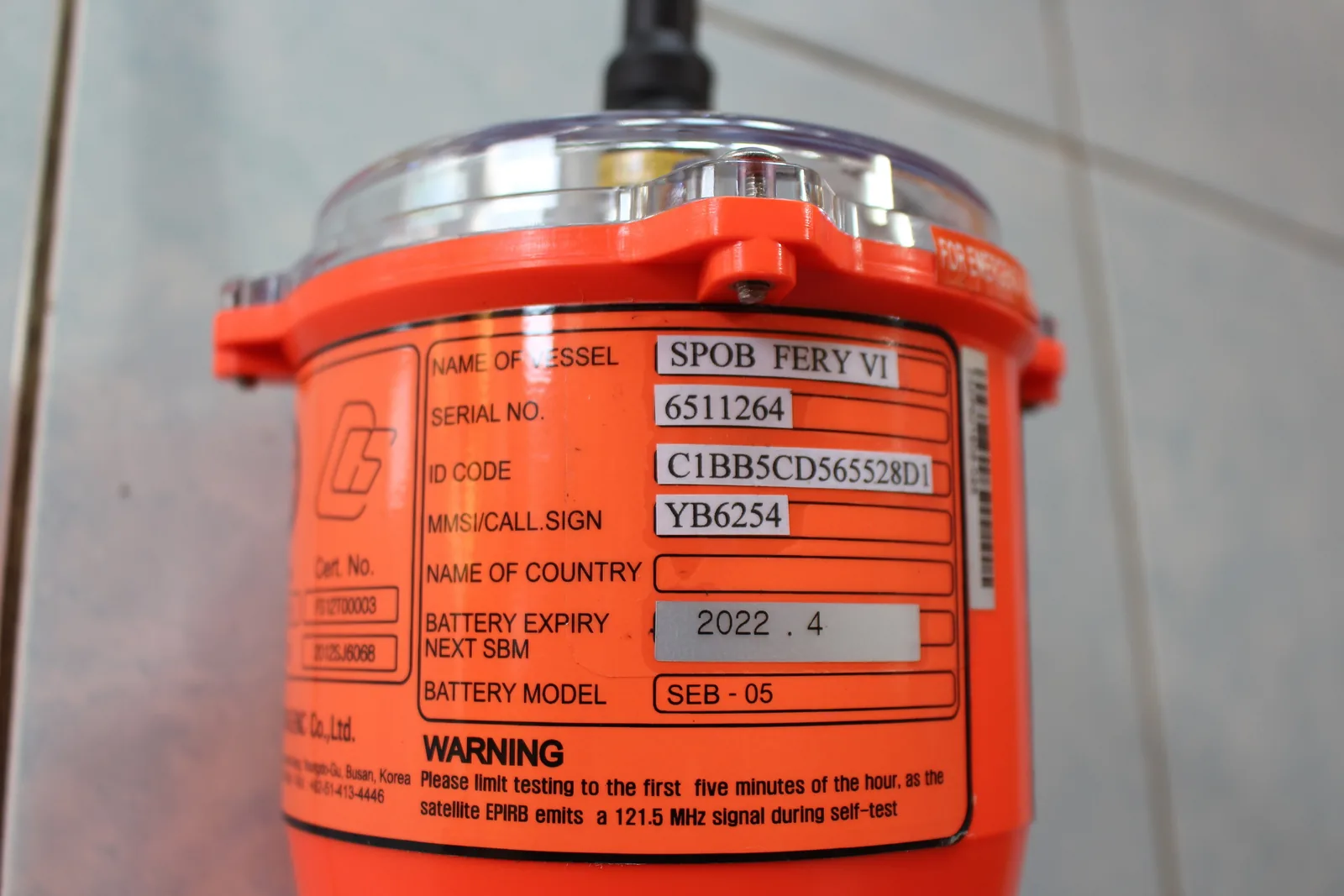
- Check the battery expiry date and the hydrostatic release expiry date (CEPT GOC C3 3.1).
Check this lesson
Which two expiry dates do you check on the EPIRB?