
Antennas and power
Antennas fail quietly.
VHF whips, MF/HF whips or wires on insulators, satellite antennas under domes, and the cables and glands between them all need checking (B1 1.3). A cracked insulator or a wet connector can stop the MF/HF set reaching anyone.
SOLAS IV/13 asks for power at all times to run the radios and charge their batteries, and for a reserve source of energy to run them for distress, urgency and safety when both the main and emergency sources fail. It must run the VHF and the MF, MF/HF or satellite installation of your sea areas at the same time for at least one hour on ships with a compliant emergency source, or six hours on ships without one.
The reserve source must be independent of the ship's propulsion and electrical system. Batteries need an automatic charger that recharges them to minimum capacity within 10 hours, and their capacity is checked at intervals not exceeding 12 months when the ship is not at sea (IV/13.6).
- The reserve source may also light the radio controls (IV/6.2.4, IV/13.5).
- If a radio needs the GNSS position to work properly, that input must keep coming when main and emergency power fail (IV/13.8).
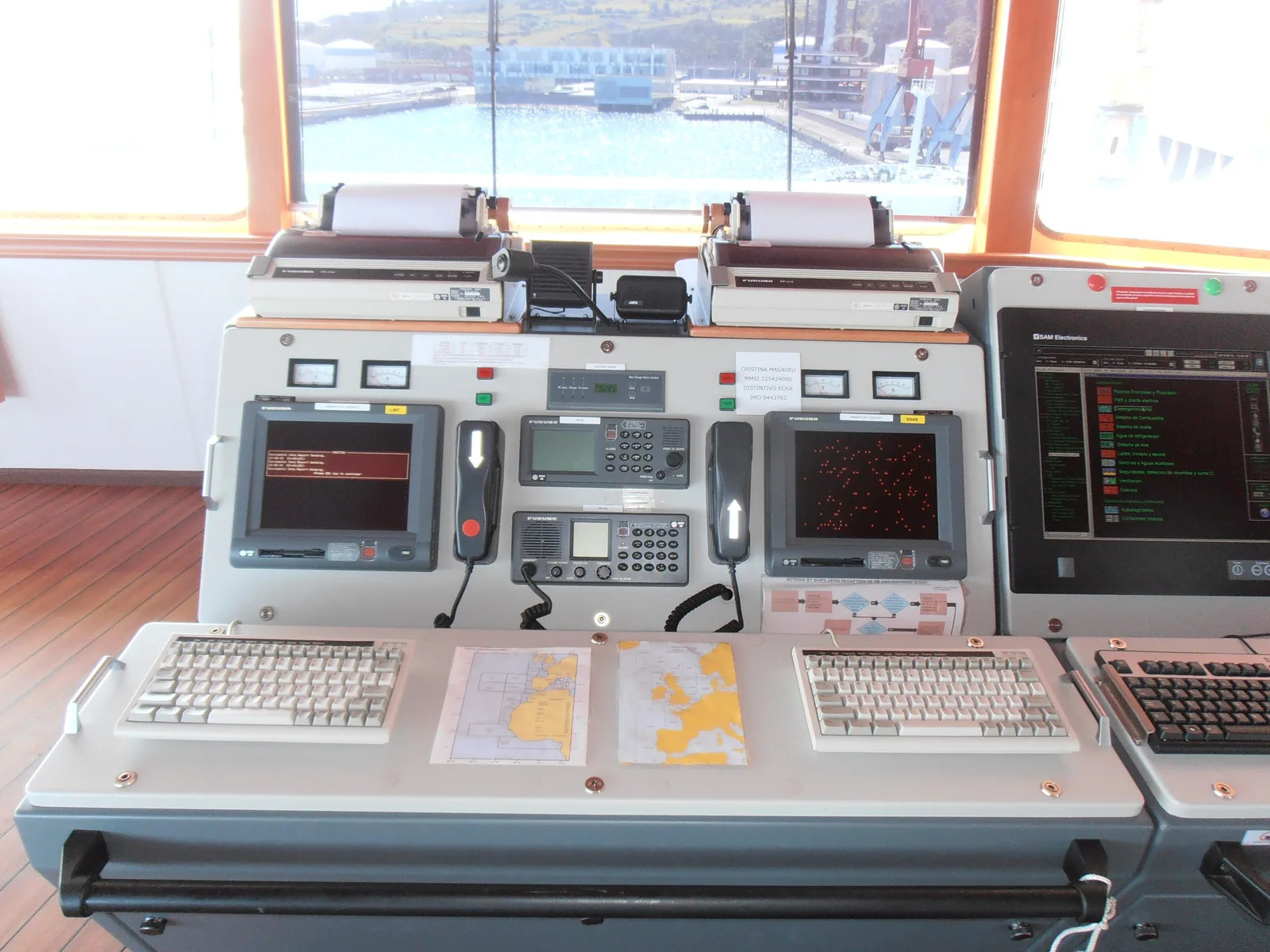
- Each radio installation must be clearly marked with the ship's GMDSS identities, such as call sign and MMSI (IV/6.2.5).
Check this lesson
A ship has an emergency source complying with SOLAS II-1/42 or 43. For how long must the reserve source run the radios?