
A speed limit still leaves you a decision
Always travel at a speed that gives you time to stop or turn away from danger.
A posted limit is the maximum allowed there; you may need to go much slower. Many NSW waterways have no posted speed limit, but the safe-speed duty still applies. Think about visibility, traffic, wind and current, water depth, hazards, and how your boat stops and turns. At night, hazards may be unlit and background lights can hide other vessels, so reassess your speed. Boating Handbook, pp. 92–93.
Speed signs show knots and may have arrows showing where the limit applies. There is no universal 4-knot rule for every NSW shoreline. Read the local signs and keep the required distances.
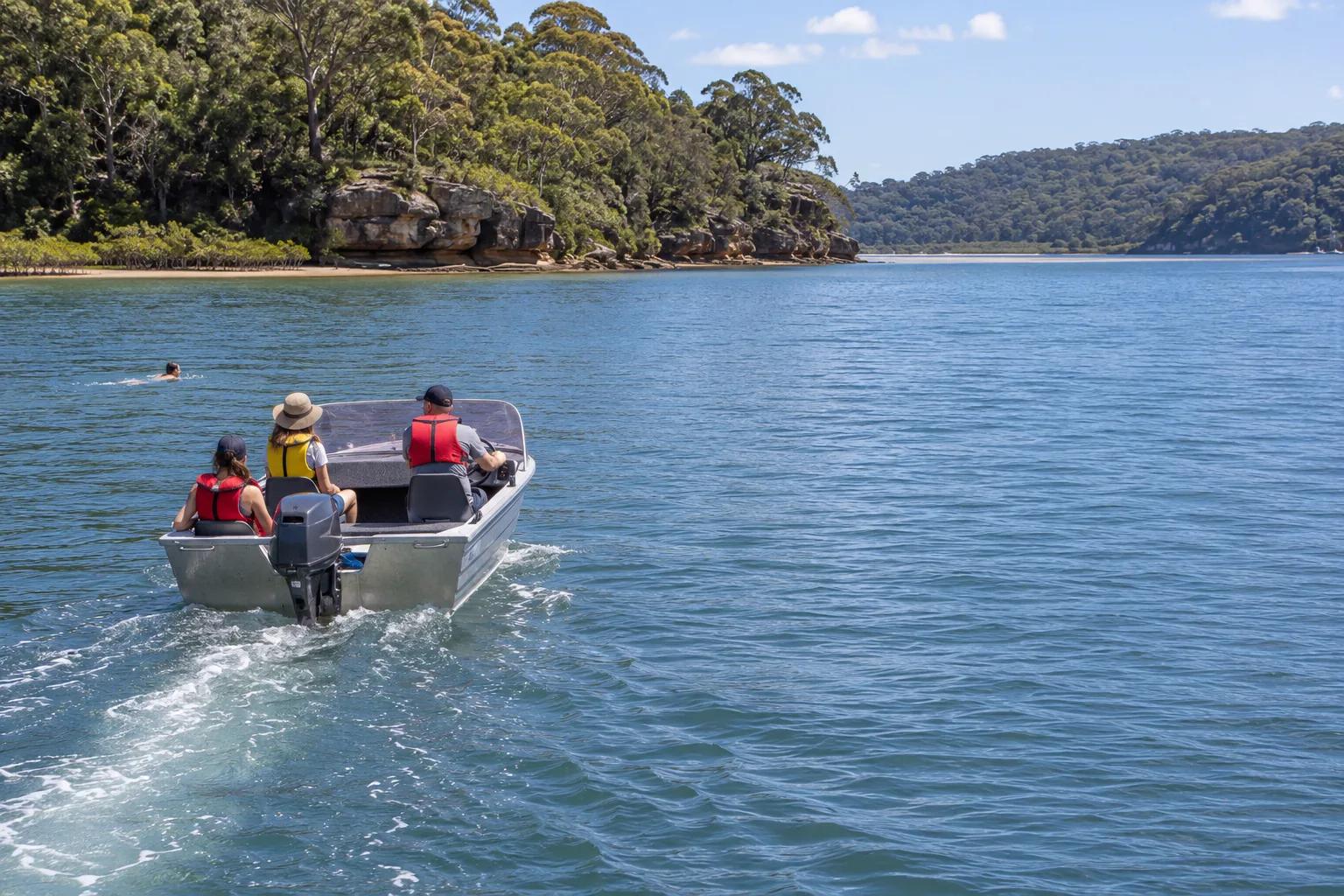
Wash is the wake and waves your boat creates. You must not create excessive wash that damages or unreasonably affects other vessels, the shore, structures or works. You are responsible for damage your wash causes. Many powerboats make their biggest wash when half on the plane. Slow well before a busy beach or anchorage, then look astern to check the result. Boating Handbook, pp. 98–99.
No Wash, Reduce Wash and Minimise Wash signs mean you must travel at a speed that creates minimal wash. If your wake rocks nearby boats or breaks against the bank, slow down. Staying below the posted speed limit does not excuse excessive wash. You must also have lawful authority before securing a vessel to a bridge or navigation aid. Boating Handbook, p. 99.
- Reassess your speed when traffic, visibility or conditions change.
- Slow early so your earlier wake does not follow you into an anchorage.
- Check your wash behind you, as well as your speed ahead.
Check this lesson
In a Minimise Wash area, your wake makes moored boats rock even though you are below the speed limit. What should you do?