
Two powered boats: make your intentions clear
When two powered vessels meet head-on, both must turn to starboard, which is right, and pass at a safe distance.
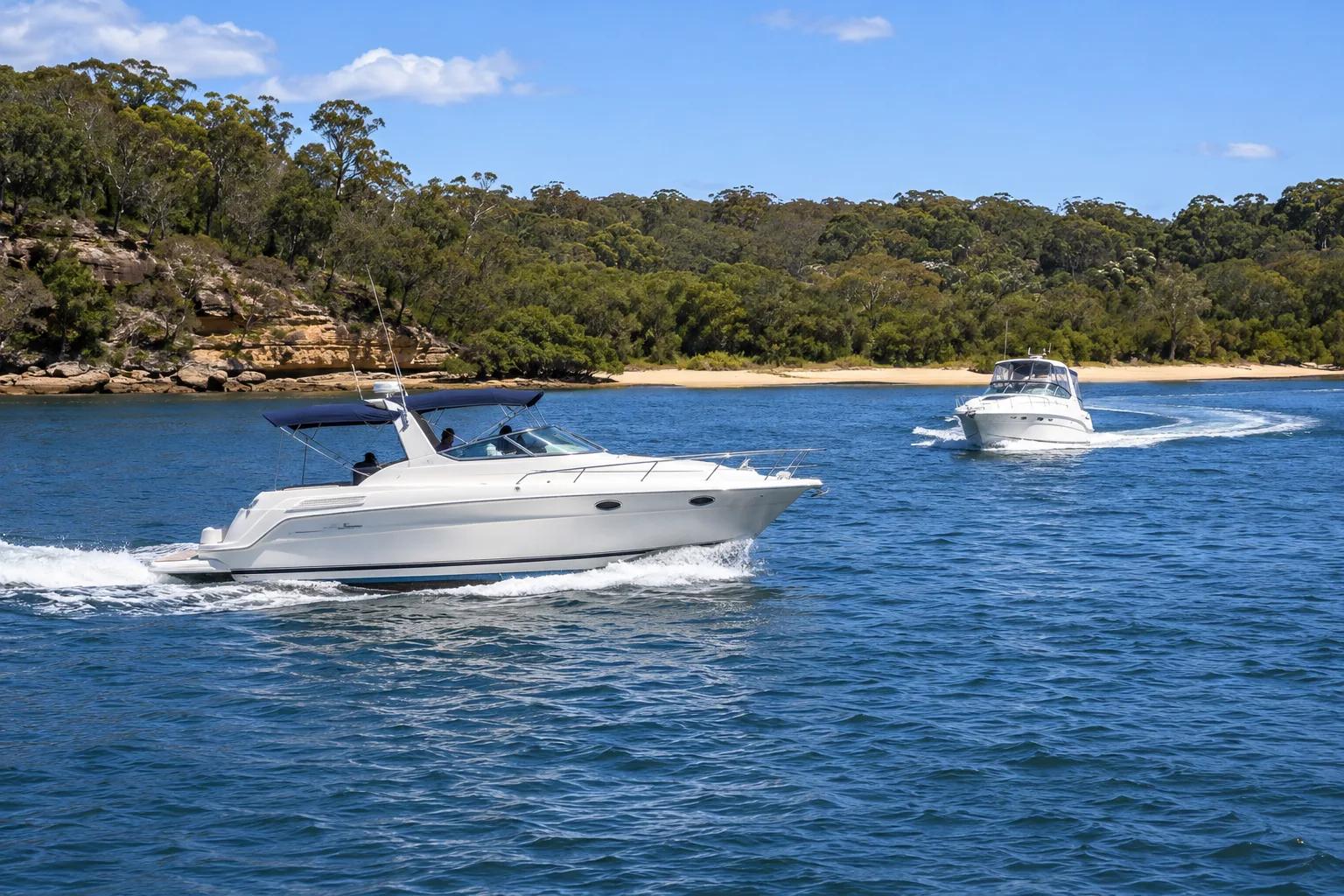
When their paths cross, the powered boat with the other on its starboard side must give way. These rules include PWC. Boating Handbook, pp. 82–83.
The give-way vessel alters course or slows down to let the other pass. Make that action clear early. In an ordinary crossing with room to manoeuvre, slowing and passing behind the other boat can resolve the situation. Check for other traffic and hazards before choosing your action.
The stand-on vessel keeps its course and speed if safe, but stays ready to act to avoid a collision. These responsibilities also apply to vessels drifting or holding position without being anchored. Both skippers have a duty to avoid a collision. Boating Handbook, p. 82.
- Head-on under power: both turn right.
- Crossing under power: give way to the boat on your right.
- Stand on only while it is safe; keep watching what the other boat actually does.
Check this lesson
You and another runabout are crossing in open water. The other is on your starboard side and neither is overtaking. What is your role?