
Leave room for vessels that cannot easily move
All vessels must keep well clear of big ships and other large vessels.
They may be unable to turn or stop quickly, and their stern can swing out widely when turning. The master may not see your small boat. Never cross a channel if you will get in a large vessel's way, cross its bow unless well clear, pass too close behind it or pass between a ship and its escort. Boating Handbook, p. 85.
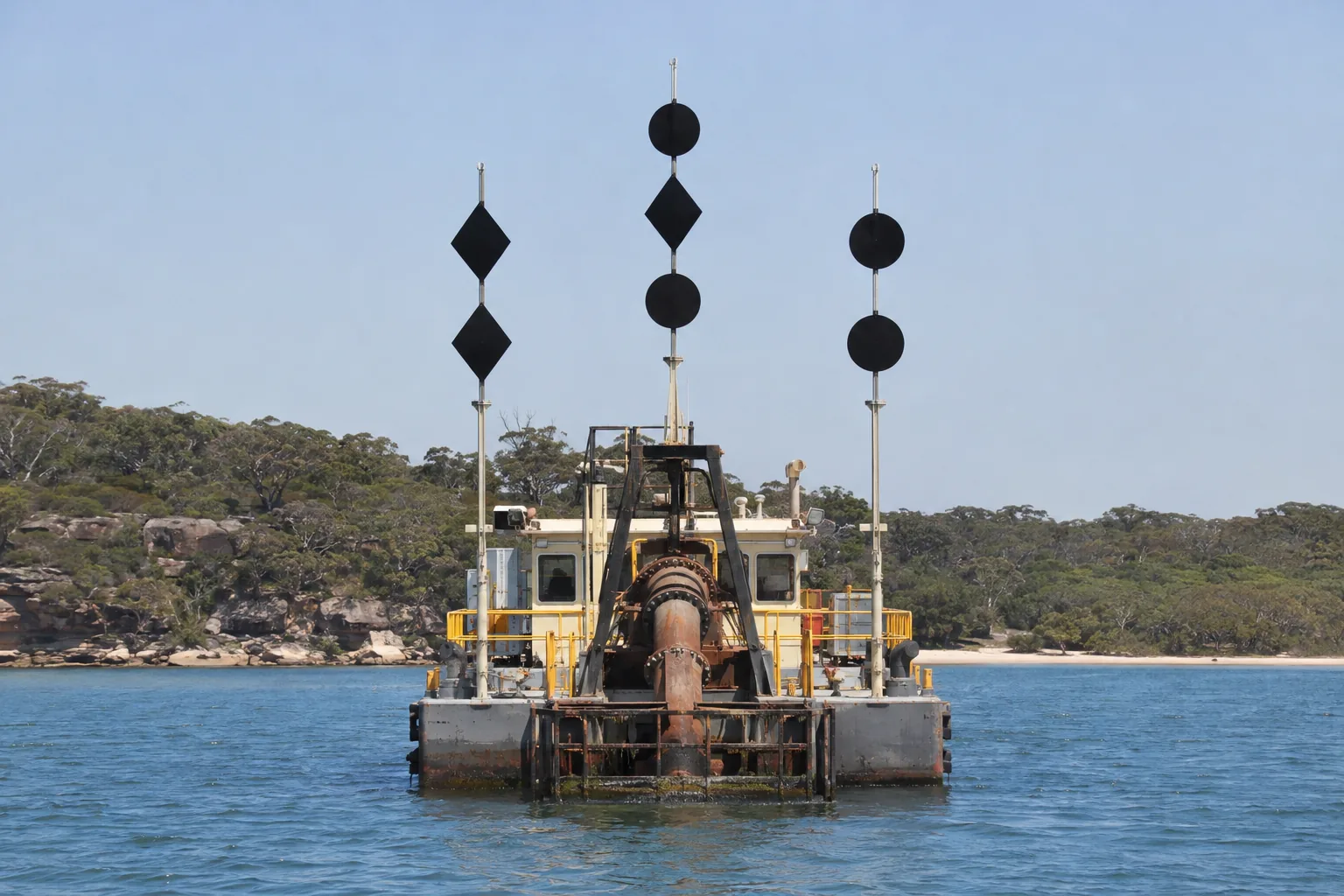
Keep well clear of dredges and work barges. A dredge shows two diamonds on the safe side to pass and two balls on the obstructed side. That signal does not invite you to pass close. Work barges use a red flag and a yellow flag to ask passing vessels to reduce wash. Do not create wash that may damage or unreasonably affect them. Keep well clear of commercial fishing vessels, whose fishing equipment restricts their manoeuvrability. Boating Handbook, p. 86.
Vehicular ferries use chains, ropes or cables to cross the waterway, which significantly restricts their manoeuvrability. When the ferry is moving, slow to 4 knots or less within 100 metres of those chains, ropes or cables. Pass a safe distance behind it, preferably once it has reached the shore, and turn your power off when crossing the chains, ropes or cables. Boating Handbook, p. 86.
- Look at the vessel's work, signals and room to manoeuvre before applying a simple sail-versus-power rule.
- Leave large vessels and their escorts plenty of room; do not squeeze through a gap.
Check this lesson
A vehicular ferry is moving across a river. You are within 100 metres of its chains. What speed limit applies?