
Start with your boat, your waters and your crew
Wearing a lifejacket at all times is recommended.
To work out when it is compulsory, check the vessel type and length, the waters, the time of day and who is aboard. You must also wear one whenever the skipper directs you to. Breakdown, cold water, severe weather, non-swimmers or a risk of swamping are reasons for the skipper to act early (Boating Handbook, p. 33).
Enclosed waters include rivers, lakes and enclosed coastal bays and harbours, such as Lake Macquarie and Pittwater. Open waters include coastal and ocean waters outside enclosed waters. Alpine waters are a particular enclosed-water category, with stricter wear rules: check the handbook list rather than judging by the weather or the name of a lake (pp. 129, 137–138).
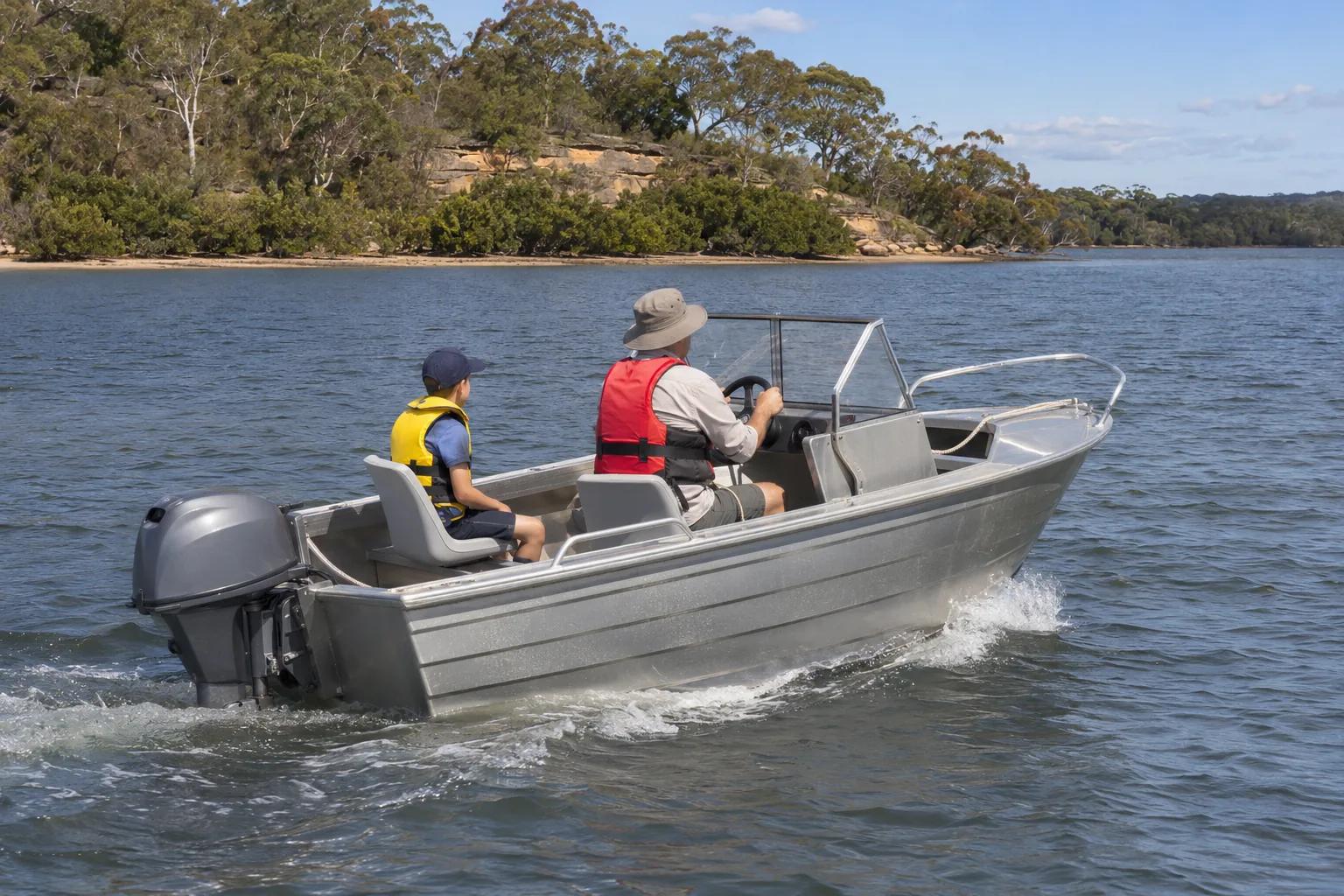
On powerboats and sailing boats under 4.8 m, everyone must wear Level 50S or above on enclosed waters when alone or at night, between sunset and sunrise. An adult with only children aged under 12 counts as alone. On alpine waters, everyone on these small boats must wear Level 50S or above at all times. On open waters and when crossing coastal bars, everyone must wear Level 100 or above at all times; off-the-beach sailing boats have a Level 50S exception (p. 34).
On powerboats and sailing boats 4.8 m or longer, everyone must wear Level 100 or above when crossing a coastal bar. Child rules and the skipper's direction still apply. Do not treat boat length as a reason to ignore those requirements.
Boundary note: the May 2026 handbook says 'under 4.8 m' and, for children, '4.8 m to less than 8 m'. TfNSW webpages use 'up to' wording at these boundaries. Use the stricter reading while you check the current TfNSW page: at exactly 4.8 m, follow the small-boat wear triggers and have under-12s wear at all times; at exactly 8 m, have under-12s wear in open areas while underway. Use the required level for the waters and activity.
- PWC: everyone aboard, including the observer, and anyone being towed must wear Level 50S or above at all times. People towed by any vessel, including wakesurfers, must also wear Level 50S or above (p. 34).
- Canoes and kayaks, including outrigger canoes: Level 50S or above when alone or at night on enclosed waters, and at all times on alpine or open waters and coastal bars (p. 36). The webpage also lists an enclosed-water outrigger exception. Follow the stricter handbook rule and check the current TfNSW page before relying on that exception.
- Sailboards and kiteboards more than 400 metres from shore: Level 50S or above when alone or at night on enclosed waters, and at all times on alpine or open waters and coastal bars (p. 35).
- Surf skis: wearing at all times is recommended. Under 4.8 m, follow the small-powerboat rules; the handbook exempts surf club members involved in lifesaving, training or competition unless the organiser requires wear. At exactly 4.8 m, follow the stricter webpage reading of the small-boat rules and check the current TfNSW page. Lifejackets are recommended for stand-up paddleboard (SUP) users; if wearing one is not possible, a leg rope is recommended (p. 37).
- Ordinary rowing boats: Level 50S or above when alone or at night on enclosed waters, always on alpine waters, and Level 100 or above on open waters and coastal bars. People in rowing racing shells do not have to wear on enclosed waters under their specific rule; Level 50S or above is recommended outside organised events and activities. Other applicable wear rules still apply (p. 38).
Check this lesson
An adult is alone on a sailboard 450 metres from shore on enclosed waters in daylight. What must they wear?