
- No limiton distance offshoreNORMAM-211/DPC (maritime authority standard; annex 5-A, syllabus and exam)
- 40 questionsin the written examNORMAM-211/DPC (maritime authority standard; annex 5-A, syllabus and exam)
- Up to 4 hoursmaximum exam durationNORMAM-211/DPC (maritime authority standard; annex 5-A, syllabus and exam)
- 5.0 out of 10.0minimum passing scoreNORMAM-211/DPC (maritime authority standard; annex 5-A, syllabus and exam)
- From age 18with the ability to read and writeNORMAM-211/DPC (maritime authority standard; annex 5-A, syllabus and exam)
- Mestre-Amadormust be valid and presented when registeringNORMAM-211/DPC (maritime authority standard; annex 5-A, syllabus and exam)
The horizon opensWhat is Capitão-Amador?
Capitão-Amador is a category of the Carteira de Habilitação de Amador (CHA, recreational operator’s licence) for operating pleasure craft between domestic and foreign ports, without a limit on distance offshore. It is the next step for holders of Mestre-Amador (the coastal recreational skipper qualification) who want to go beyond navigation within sight of the coast. Personal watercraft are outside this qualification.
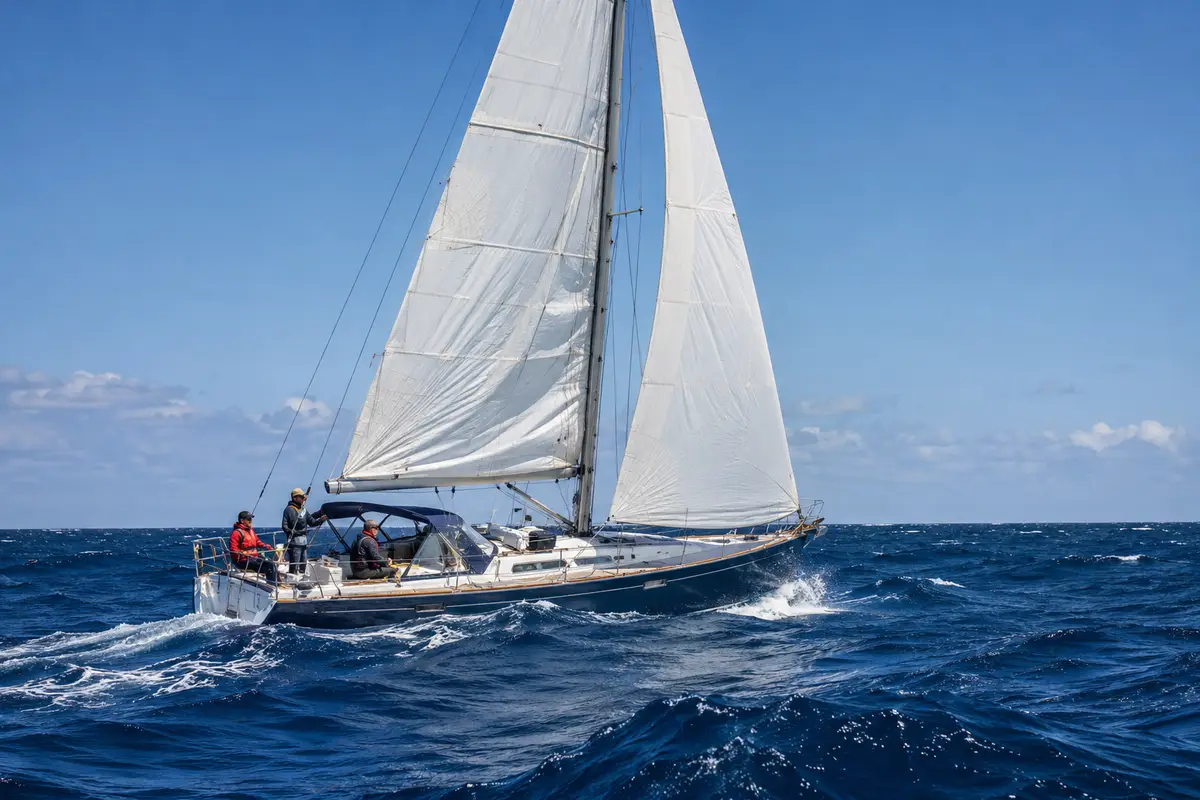
Longer passagesWhere this qualification can take you
A maximum distance from the coast is no longer the central criterion here. The qualification covers pleasure craft on domestic or international voyages without a limit on distance offshore. Even so, your CHA must match the vessel’s registered navigation class and the waters you navigate.
With Capitão-Amador, you can
- Operate pleasure craft between domestic and foreign ports
- Plan navigation without a limit on distance offshore
- Use the qualification for the applicable recreational navigation category
What falls outside the category
- Operating personal watercraft with Capitão-Amador alone
Before you registerWhat you need
- Be at least 18 years old
- Be able to read and write
- Hold a valid Mestre-Amador and present it when registering
- Take the exam in Brazilian Portuguese
- Confirm documents and instructions with the CP/DL/AG (local maritime office) responsible for your registration
Towards the examHow to get Capitão-Amador
- Check that your Mestre-Amador is valid
It must be valid and presented to the CP/DL/AG when you register.
- Follow the DPC calendar
The DPC (maritime authority’s directorate) calendar sets the schedule, and CP/DL/AG offices announce registration periods. In principle, registration is in February and August for exams in April and October, but the Autoridade Marítima (Maritime Authority) may change these dates.
- Confirm registration with the CP/DL/AG
Check the documents and instructions with the Capitania, Delegacia or Agência (local maritime office) handling your registration.
- Study the syllabus and recommended reading
If other sources conflict, the information in the standard’s recommended reading is the information used for the exam.
- Arrive ready for the written exam
Bring your registration receipt, official identification, a black pencil or mechanical pencil, a parallel ruler and/or a pair of set squares, dividers, an eraser and a blue or black ballpoint pen.
The exam in focusWhat to expect from the assessment
| Item | What to expect |
|---|---|
| Format | Written exam |
| Questions | 40 questions |
| Duration | Up to 4 hours |
| Pass mark | At least 5.0 in an exam worth a maximum of 10.0 |
| Syllabus | Celestial and electronic navigation, stability, meteorology and oceanography, communications, survival at sea and chartwork |
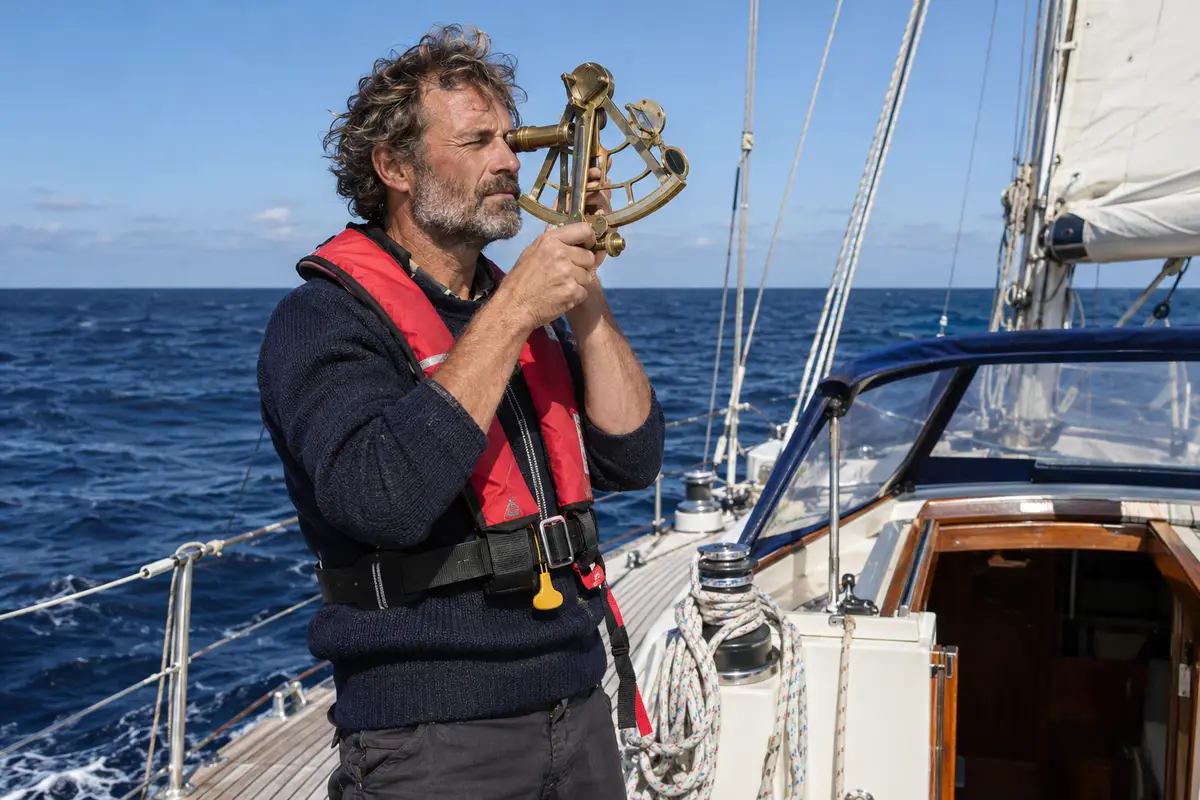
The Brazilian progressionWhere Capitão-Amador fits within the CHA
- Veleiro (sailboat operator)optional card for sail-only boats on inland waters
- Motonauta Especial (restricted personal-watercraft operator)rented personal watercraft in buoyed areas or authorised guided trips, by day only
- Motonauta (personal-watercraft operator)personal watercraft within local inland-navigation limits, by day only
- Arrais-Amador (inland recreational skipper)pleasure craft within local inland-navigation limits
- Mestre-Amadorwithin sight of the coast, including voyages abroad
- Capitão-Amadordomestic or international voyages without a limit on distance offshore
The magazine verdict
What works in its favour
- Allows you to operate pleasure craft on domestic or international voyages
- Imposes no limit on distance offshore
- The syllabus brings together knowledge useful for planning wider-ranging navigation
Keep in mind
- Requires a valid Mestre-Amador before registration
- The exam is written, has 40 questions and can last up to 4 hours
- Personal watercraft are outside this qualification
If you already hold Mestre-Amador and plan to navigate between domestic or foreign ports without keeping your route close to the coast, Capitão-Amador is the category to prepare for. Give the syllabus the attention it needs: broad study, official reading and careful attention to the CP/DL/AG instructions.
Topics tested
Practice tests
IALACOLREG Exam Pass
Capitão Amador: get ready for your exam with the Exam Pass
Unlimited timed mock exams, every mistake back until it's right, and a readiness score that shows when you're ready for the exam.
512 exam-style questions with explanations · 7 timed subject exams · every simulator scenario
One payment for 12 months, so it covers a resit too. No subscription.
Practice questions (with answers)
A vessel of 50 metres or more at anchor at night shows:
Show answer
Correct answer: B. An all-round white light forward and a lower one aft
Rule 30(a): an all-round white light in the fore part and another all-round white light at a lower level near the stern.
For a power-driven vessel underway manoeuvring in sight of another vessel, one short whistle blast means:
Show answer
Correct answer: B. I am altering course to starboard
Rule 34(a): one short blast means 'I am altering my course to starboard.'
Under Rule 35(a), a power-driven vessel making way through the water in restricted visibility sounds:
Show answer
Correct answer: B. One prolonged blast at intervals of not more than 2 minutes
Rule 35(a): one prolonged blast at intervals of not more than 2 minutes.
Navigation lights must be displayed:
Show answer
Correct answer: B. From sunset to sunrise and, if carried, also by day in restricted visibility
Rule 20(b) requires prescribed lights from sunset to sunrise. Under 20(c), those lights, if carried, must also be shown by day in restricted visibility and may be shown in other circumstances when deemed necessary.
An isolated danger mark indicates:
Show answer
Correct answer: B. A danger with navigable water all around
An isolated danger mark is on or near a danger with navigable water around it. Consult charts and nautical publications for the extent of the danger and safe passing distance.
Safe water marks have:
Show answer
Correct answer: A. Red and white vertical stripes
Safe water marks are red and white vertical stripes, indicating navigable water all around.
Special marks are coloured:
Show answer
Correct answer: C. Yellow
Special marks are yellow, indicating special areas like military zones, cables, or pipelines.
How does IALA Region B differ from Region A?
Show answer
Correct answer: B. The colours are reversed — red to starboard
Region A: port-hand red, starboard-hand green. Region B: port-hand green, starboard-hand red. Interpret both in the charted conventional direction of buoyage.
The full guide
Capitão Amador is a Brazilian recreational qualification for the applicable offshore category. Whether it is required depends on the current DPC category and intended navigation area; confirm before departure.
Selected study topics include RIPEAM, offshore chartwork, navigation, weather and distress procedures. Follow the current DPC syllabus.
Who should take Capitão Amador
Recreational skippers whose intended navigation requires the applicable Capitão-Amador category; confirm eligibility and area with DPC.
How to prepare
Use these lessons to review selected topics, then follow the current DPC syllabus and assessment instructions.
Other exams
Reviewed by Ramon Curto, Nautical teacher at IECNPC · Last reviewed: