
Get help early and say what is happening
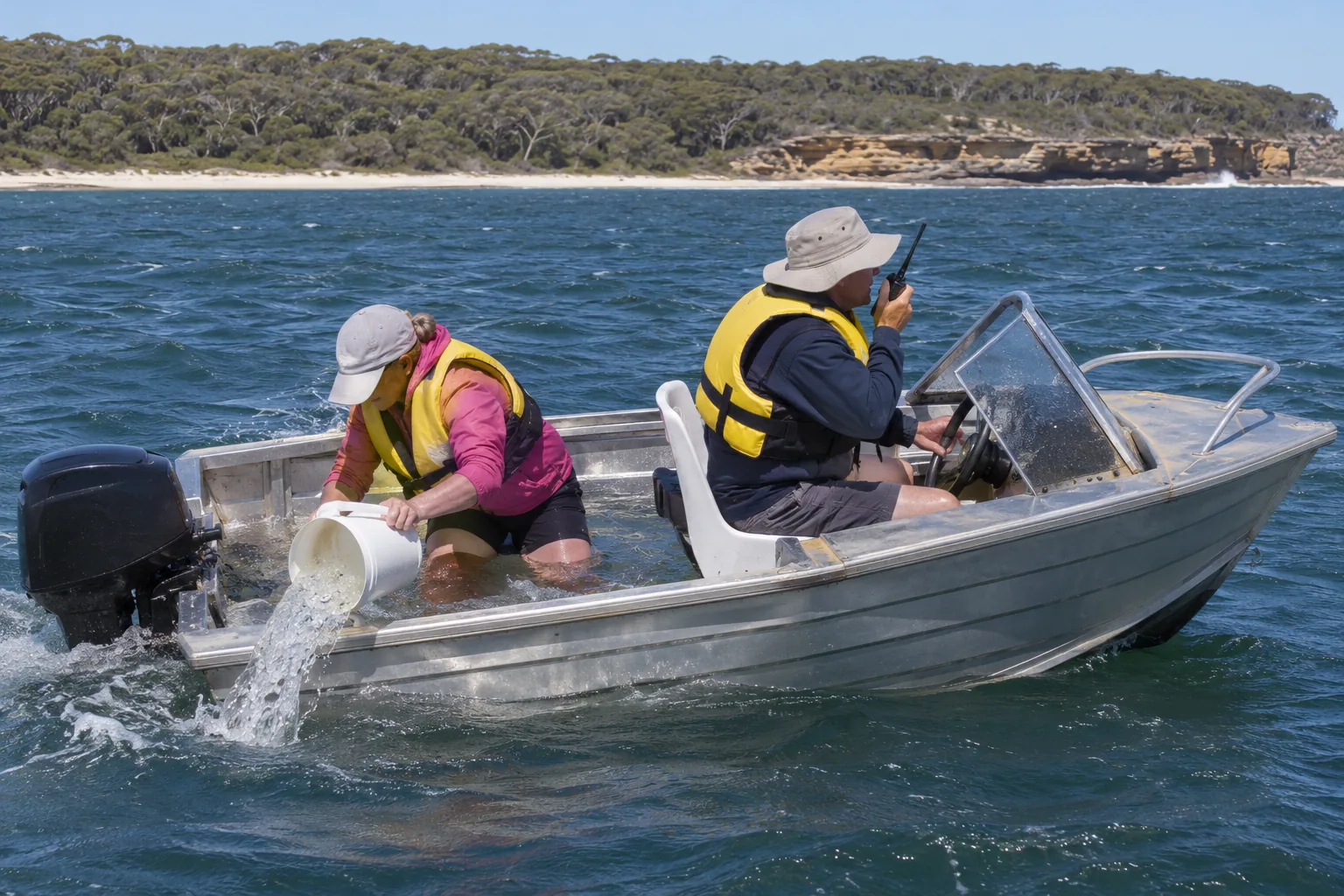
Use VHF channel 16 or 27 MHz channel 88 to call other vessels or a shore station, such as Marine Rescue NSW.
Mayday means imminent danger to the vessel and people. Pan pan means an urgent problem without imminent danger. Securite introduces navigational safety information, such as a hazard or weather warning. The handbook recommends repeating the emergency word three times. Then identify your boat, give your position, explain the trouble and say how many people are involved. Boating Handbook, pp. 149–150.
If a Mayday comes over the radio, listen and let a shore station respond. If no shore station answers, try to relay the message and help. If your own call gets no answer, repeat the call and message on other available frequencies.
An EPIRB sends a distress alert via satellite. In an emergency, use it to alert search and rescue; use flares and an orange V sheet to help rescuers locate you when they are in sight. Orange smoke flares are for daytime; red hand flares work by day or night. Raising and lowering your arms is also an international distress signal. Use distress signals only in an emergency. Boating Handbook, pp. 53 and 149.
A mobile phone can call Triple Zero (000), or JRCC Australia on 1800 641 792, where reception is available. It supplements your safety equipment; it does not replace a required marine radio.
- VHF 16; 27 MHz 88.
- Mayday: imminent danger. Pan pan: urgent trouble. Securite: safety information.
- Give a useful position: GPS coordinates or clear shore references.
Check this lesson
A shore station is about to broadcast a navigation hazard update. Which introductory word fits?