
After an incident, or when fire or gas threatens
If you are involved in a marine incident, stop and give as much help as possible.
Give your details to the others involved and show any required licence or certificate. Incidents include collisions, people falling overboard, close-quarters situations, fire and environmental damage. If Maritime authorised officers or police attend, give your name and address, vessel identity, incident details, names and addresses of people involved and witnesses, the extent of injuries or damage, and any required licence or certificate. Boating Handbook, p. 151.
The skipper of each vessel involved must submit a Vessel Incident Report within 24 hours if someone is killed or injured, damage to vessels or other property exceeds $5000, or there is damage or a risk of damage to the environment. You do not need to submit that report if you gave the required details to authorised officers at the incident. Boating Handbook, p. 152.
For a fire, warn everyone, make a distress call and shut off fuel and gas lines immediately. Use an extinguisher suitable for the fire if you can safely tackle it. Close hatches, vents and ports to reduce oxygen to the fire. Move LPG cylinders away from heat if safe, or spray them with water to keep them cool. If flames threaten to engulf a gas cylinder, abandon the vessel. If you must abandon because of fire, wear lifejackets and leave on the windward side, where the wind comes from. Do not move a burning vessel towards another vessel. When helping a burning vessel, keep to windward and protect your own passengers and boat. To prevent fires, check electrical systems and fuel lines, keep combustible materials out of the bilge and engine compartment, ventilate before starting engines, and fill fuel caddies on shore. Boating Handbook, pp. 153–154.
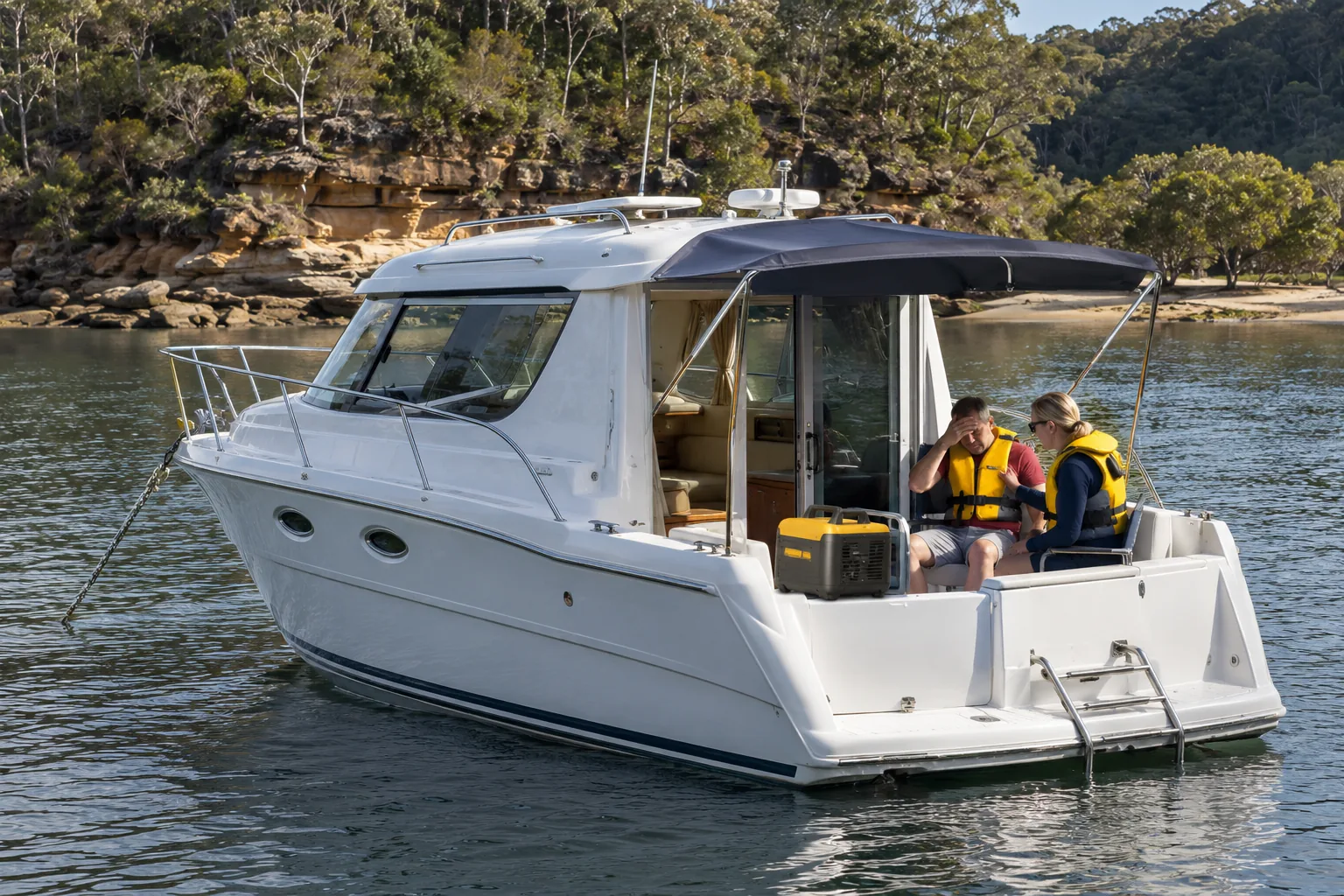
Carbon monoxide has no colour or smell. Engines, generators and fuel-burning cooking equipment can produce it. Headache, nausea, dizziness or irritated eyes may be poisoning, even if they look like seasickness. LPG has a strong smell and is heavier than air, so it can gather in the bilge. If you suspect carbon monoxide build-up or a gas leak, stop the engine, turn off cylinder valves and appliances, move everyone into fresh air and ventilate. Avoid operating electrical switches until the air is clear. Watch anyone affected, give oxygen if possible and perform CPR if they are not breathing. Make a distress call and obtain urgent medical help. Boating Handbook, p. 155.
Keep cabins and cockpits ventilated, maintain exhaust systems and fit a carbon monoxide detector. Never sit on a marlin board or swim platform while a boat with a rear-vented exhaust is underway or idling. If possible, avoid these areas for at least 15 minutes after the engine or generator is switched off. Generators still produce carbon monoxide when a boat is anchored. Never swim under houseboat swim platforms. Avoid leaving engines or generators running while moored, and stay at least 6 metres from other vessels with engines or generators running. Have LPG equipment installed, serviced and inspected by trained technicians. Boating Handbook, p. 156.
- Keep the right extinguisher accessible, away from the stove or engine compartment.
- Practise your fire response before you need it.
- Fresh air and medical help matter even when you cannot smell a gas.
Check this lesson
Several people develop headaches and nausea in a cabin while a generator runs. There is no unusual smell. What is the safest response?