
Keep a person in the water safe
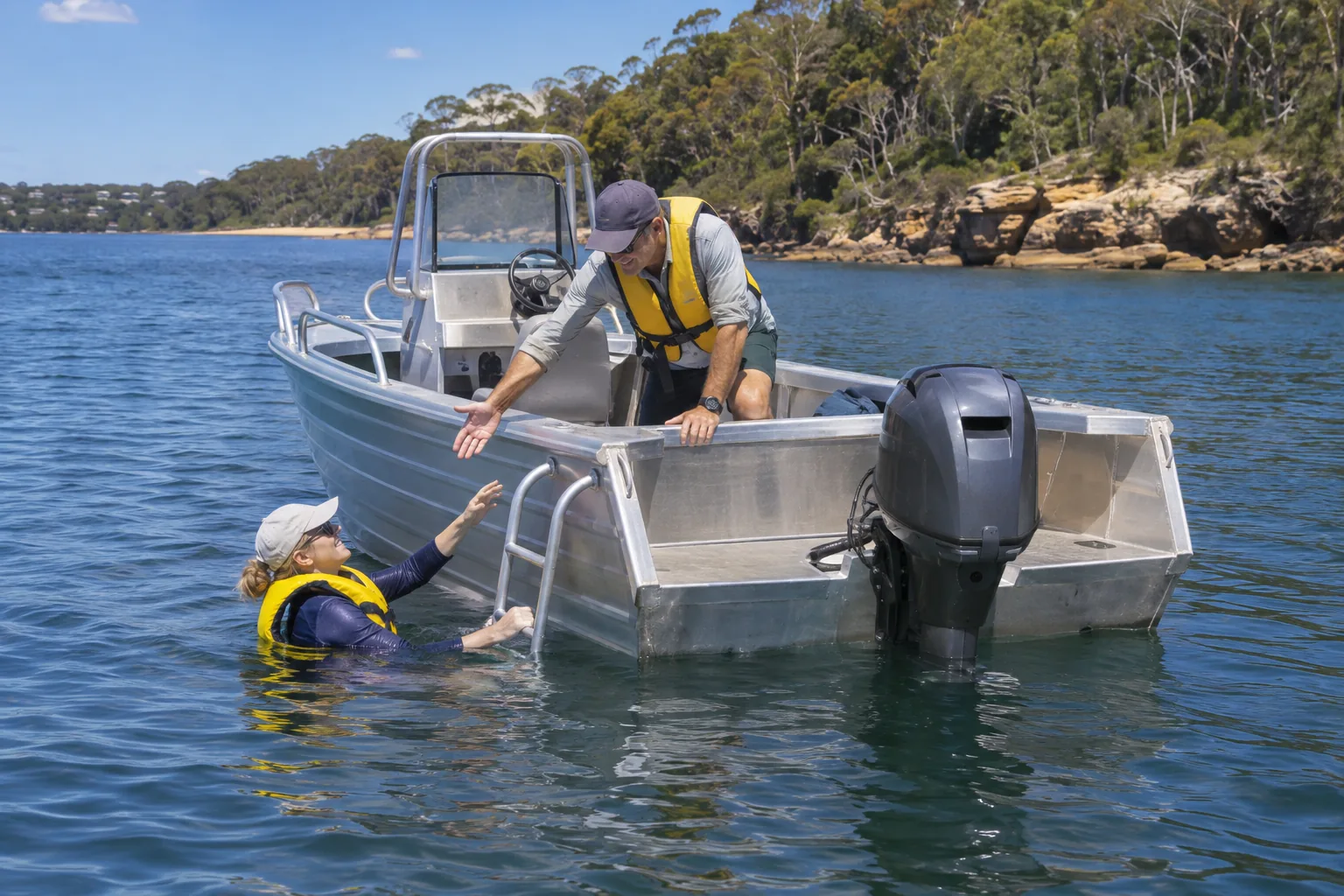
If someone falls overboard, slow down immediately, throw a lifejacket or marker and keep them in sight.
Ask a passenger to keep pointing and warn approaching vessels. Approach from downwind or against the current without striking the person. Stop the engine when near people in the water and before recovery: some propellers can keep spinning in neutral. Balance the boat before bringing the person aboard. Do not jump in after them and create another casualty. Boating Handbook, pp. 157 and 164.
If you fall overboard, get as much of your body out of the water as possible. Climb back aboard if you can; otherwise hold the boat or another floating object and try to stay with the boat. Only swim to shore if it is very close: distances on the water can be deceptive. Boating Handbook, p. 157.
Cold water can be dangerous on a sunny day. Water below 15°C is dangerous. Hypothermia means the body's core temperature has fallen below 35°C. Sudden immersion can cause cold shock: rapid breathing and heart rate, with a risk of inhaling water. Stay calm, stay with the boat and avoid unnecessary swimming, which increases heat loss. With a lifejacket supporting you, use the HELP position when alone: draw your knees towards your chest and wrap your arms around them. With others, huddle close together. Boating Handbook, pp. 159–160.
A person with hypothermia may shiver, become confused or have slurred speech; shivering can stop in later stages. Handle them gently, keep them still, replace wet clothing with dry clothing or blankets and warm them slowly. Do not use a hot bath or place them close to a heater. Call for help and give CPR if necessary. Boating Handbook, pp. 159–161.
If the boat capsizes or is swamped, make sure everyone is wearing a lifejacket, call for help and stay with the boat so rescuers can find you. Bail or pump a swamped boat if possible. Retrieve the EPIRB and flares if safe, and display your V sheet. Abandon only as a last resort. Prevent trouble by keeping within the boat's capacity, keeping safety gear accessible and never anchoring a small boat by the stern. Take extra care in a following sea, where waves travel in the same direction as the boat, and check the boat has appropriate internal buoyancy. Boating Handbook, pp. 162–163.
- Wear the kill switch lanyard when driving.
- Check the propeller area is clear before starting the engine.
- Keep everyone inside the boat while underway; no bow riding or limbs over the side.
Check this lesson
A recovered passenger is cold, confused and shivering. Which treatment suits suspected hypothermia?