
Other marks: danger, safe water and special features
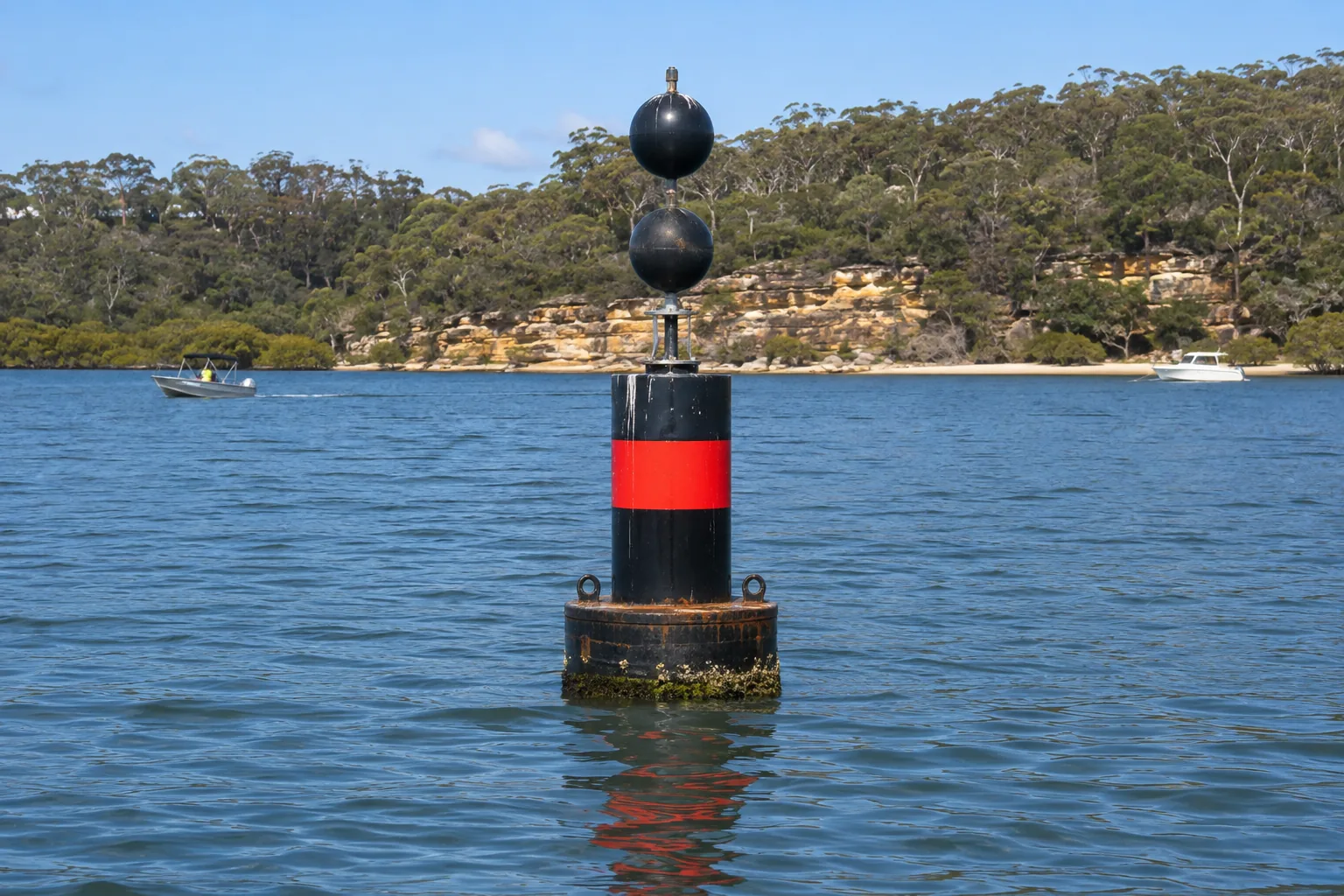
An isolated danger mark is black with a red band in the middle and two round black topmarks.
If lit, it flashes white in pairs. It marks a specific danger, such as a wreck, with generally safe water around it. You can pass on either side, but not too close. Check the chart to understand the danger rather than treating the buoy as the full extent of it. Boating Handbook, p. 113.
A safe water mark has red and white vertical stripes and may have a round red topmark. If lit, it shows a white flashing light. It indicates navigable water all around. There is an important NSW instruction: when it marks the centre line or turning point of a shipping channel, keep it on your port side as you pass. Boating Handbook, p. 114.
Special marks are yellow and may carry a yellow X topmark. If lit, they show a yellow light, which may flash in any pattern. They identify features such as tide poles, spoil grounds or underwater pipes. Check your chart for the feature. A yellow special buoy can also serve as a lateral mark: a can shape is treated as a port mark and a cone shape as a starboard mark. Do not assume every yellow mark can be passed on any side. Aquamark minibuoys are small red, yellow or green buoys used instead of conventional marks in some areas. They may carry messages you must follow. Boating Handbook, p. 114.
- Two black balls and paired white flashes: isolated danger, keep a safe distance.
- Red and white vertical stripes: safe water, with the shipping-channel passing instruction above.
- Yellow: a special feature or area; shape and any instructions still matter.
Check this lesson
A black mark with a red band and two black balls is shown on your chart beside a wreck. What does it mean?