
Bridges: check the gap and respect the aids
Follow signs showing maximum vessel height under an overhead crossing.
Know your boat's full height, including its mast, fittings and fishing poles. Bridge heights on maps are measured at the mean high-water mark. Actual clearance changes with water level: higher tides and floods can reduce it. A lightly loaded boat may need more height than a fully loaded one. Do not rely on a remembered gap. Boating Handbook, p. 81.
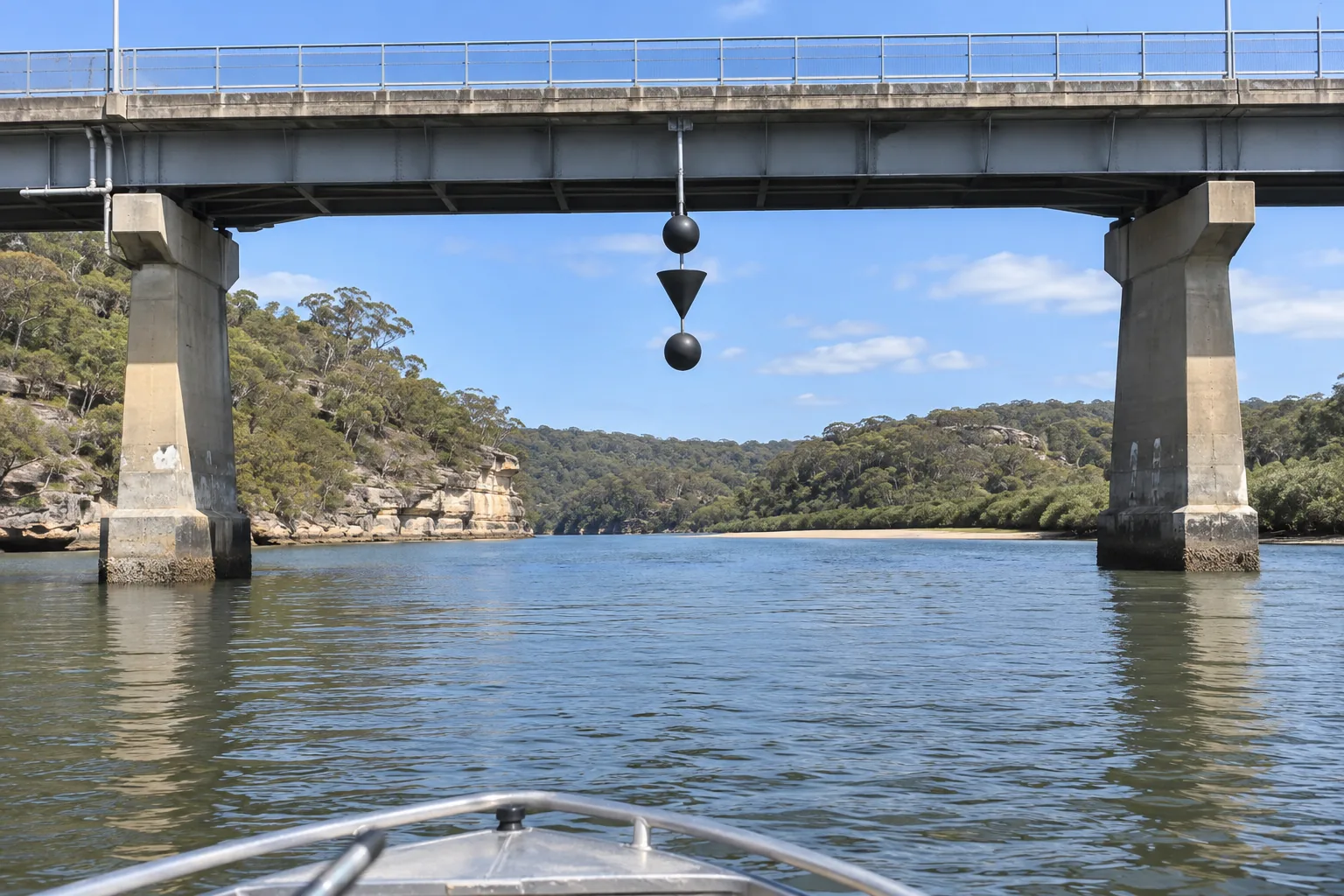
A blocked bridge span, blocked channel or closed port can be signalled by three shapes in a vertical line: ball, cone, ball. At night the lights are red, green, red from top to bottom. Avoid travelling in that part of the channel. A green light within that three-light signal does not mean you can go through. Boating Handbook, p. 115.
It is illegal to secure your vessel to a bridge or any navigation aid without lawful authority. A navigation mark is there to guide vessels, not to provide a handy mooring. Boating Handbook, p. 99.
- Read the clearance signs and allow for the actual water level and your boat's full height.
- Ball-cone-ball by day or red-green-red at night: avoid that part of the channel.
- Do not tie to a bridge or navigation aid without lawful authority.
Check this lesson
At night, a bridge span displays three lights vertically: red, green, red. What does the complete signal mean?