
Know which waters you are entering
Open waters include coastal and ocean waters.
Their official boundaries can start well inside a harbour or river entrance, so check the TfNSW boating map before choosing your safety equipment. A sheltered-looking stretch is not proof that you are still on enclosed waters. Check that your boat is suitable and watertight before heading out. Boating Handbook, pp. 129–130.
Enclosed waters include rivers, lakes, dams and enclosed bays and harbours. Calm water can hide snags, rocks and shifting shallows. Keep a proper lookout, slow down in unfamiliar areas and watch above you for powerlines and low bridges. Strong river currents after heavy rain can reduce your ability to manoeuvre. Boating Handbook, pp. 133–134.
On dams, avoid spillways and other water-release areas: fast, turbulent water is dangerous. Wind can produce short, steep waves even on a shallow dam. Tell someone your plans for remote waterways; phone reception may be unreliable, and the handbook recommends at least two means of communication, such as a marine radio and mobile phone. Boating Handbook, pp. 130, 134.
Alpine waters are a type of enclosed water. NSW examples include Lake Jindabyne, Lake Eucumbene and all navigable waters within Kosciuszko National Park. Cold water, fast weather changes and submerged hazards are risks even in summer. Avoid overloading, distribute weight evenly and stow heavy items low. In small boats, stay close to shore and shelter, and monitor the weather continuously. Boating Handbook, pp. 138–139.
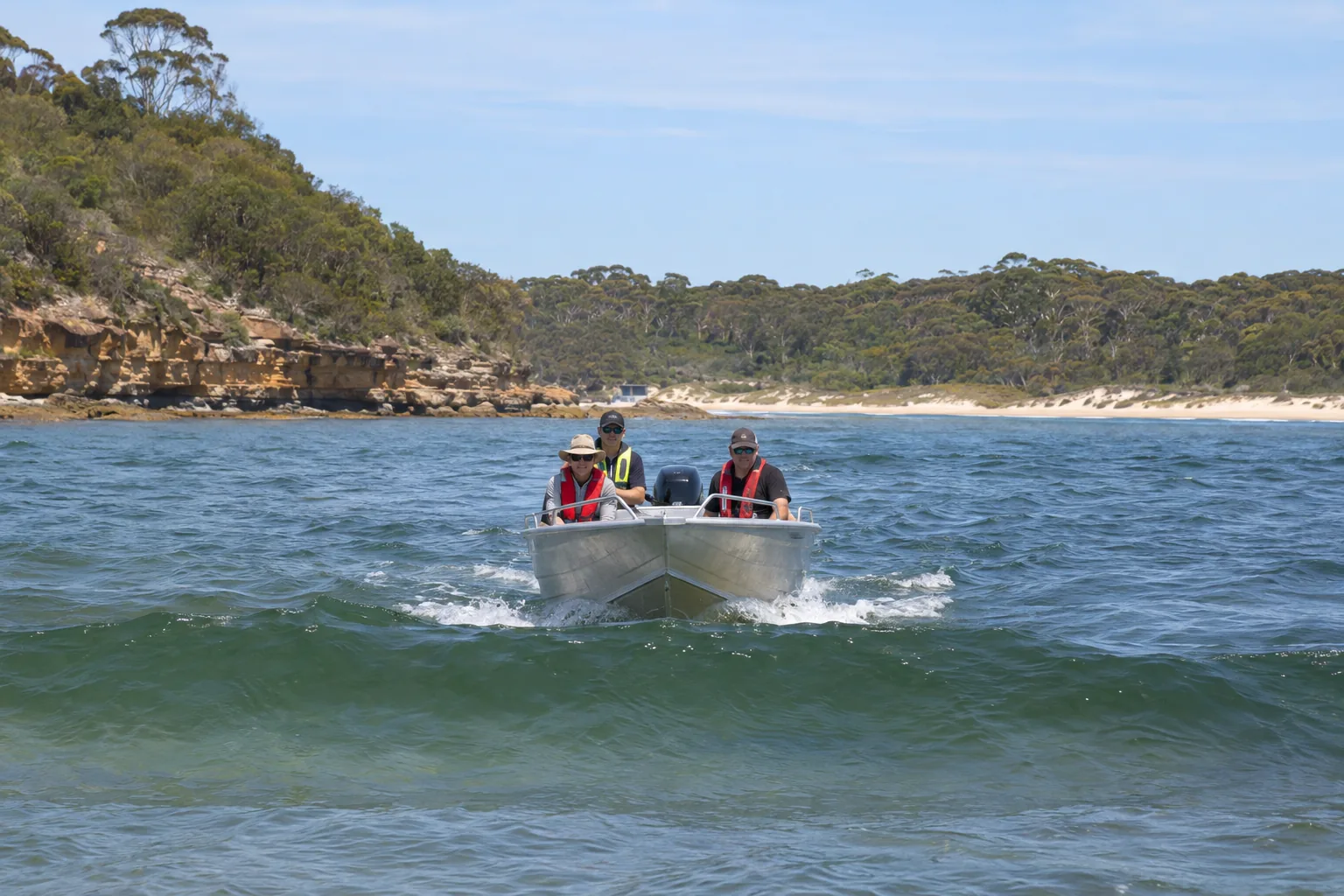
The handbook recommends everyone always wear a lifejacket on alpine waters. Wearing one is compulsory for everyone on small powerboats and sailing boats: use Level 50S or above. At exactly 4.8 metres the sources disagree: the handbook says under 4.8 metres, while the webpage includes 4.8 metres. Follow the stricter reading and wear one on boats up to and including 4.8 metres; check the current TfNSW page. Other vessel, child and skipper-directed wear rules also apply. Boating Handbook, pp. 33–34, 138.
- Keep as far to starboard as practical in a narrow channel and do not obstruct it.
- On open waters, look out for bomboras: shallow rocks or reefs where waves may break only between long calm spells.
- In head seas, control speed and direction: take big waves bow-on or up to about 30 degrees off the bow. Keep enough power to steer, without leaping off crests. Altering your angle to a beam sea can reduce rolling.
- In following seas, the risk of broaching sideways increases. Control your speed and aim to stay on the back of a wave rather than running down its face.
- If rough weather arrives, seek shore or safe shelter if you can reach it. If you doubt you can, keep the bow into the wind and waves and have everyone hold on firmly. Watch for squalls, put lifejackets on and head for shore when safe.
Check this lesson
Three adults take a 4.5-metre powerboat onto Lake Jindabyne on a summer afternoon. Which lifejacket arrangement is required?