
Sydney Harbour and areas you must keep clear of
Sydney Harbour mixes large ships, ferries, small boats, swimmers and seaplanes.
Keep right and maintain a proper lookout. In shipping channels, sailing boats, powerboats, paddlecraft and rowing boats must keep well clear of big ships, keep to starboard and give way. A ship cannot simply stop or turn out of your path. Boating Handbook, pp. 139–141.
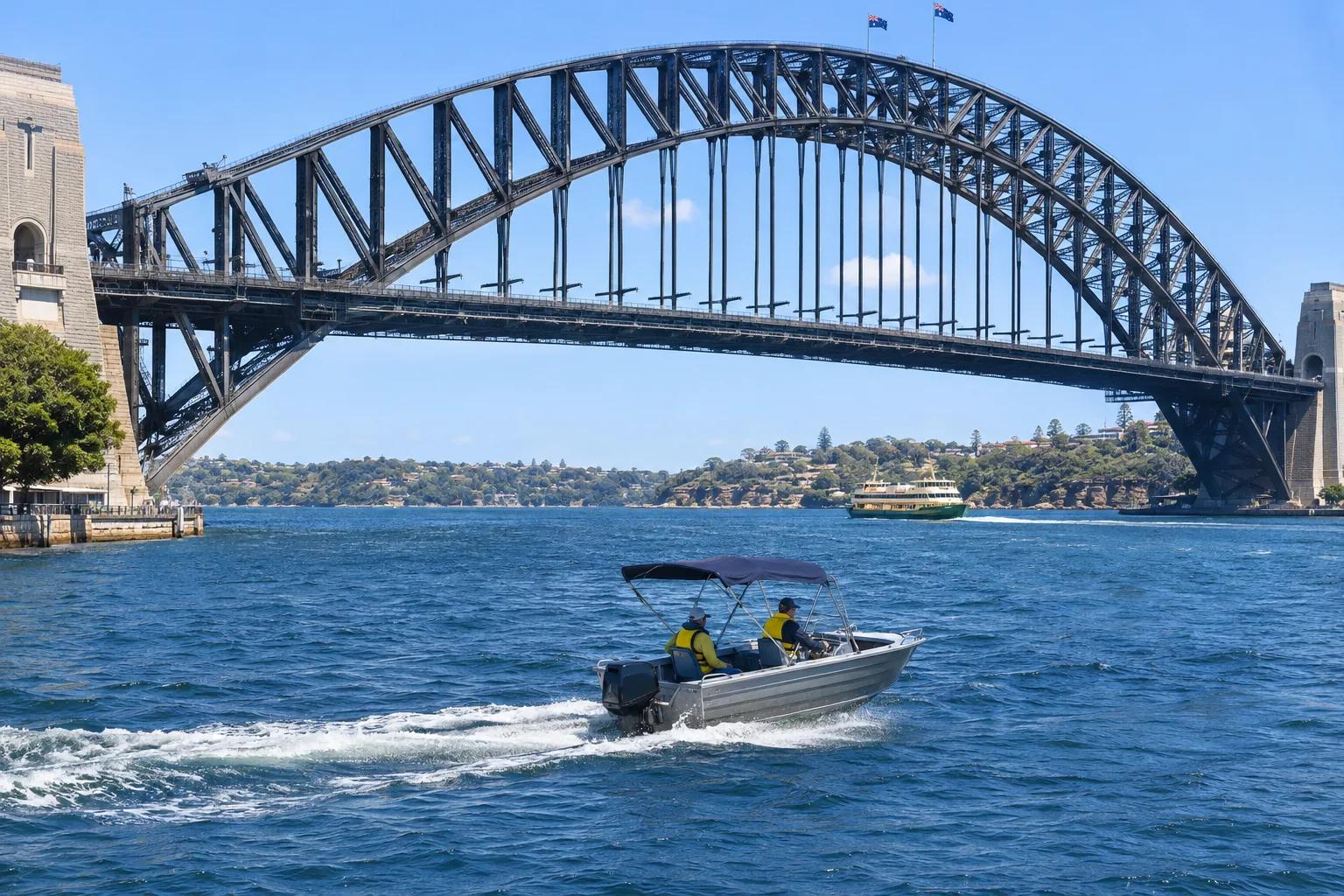
The Sydney Harbour Bridge Transit Zone has a maximum speed of 15 knots. Travel through it to reach an area alongside or outside it. Do not stop, anchor or drift there except in an emergency. PWC are prohibited throughout Sydney Harbour, including its tidal bays, rivers and tributaries. Kiteboards are also prohibited; sailboards have local restrictions. Boating Handbook, pp. 140–142.
During the day, a ferry displaying an orange diamond has priority over sail: sailing vessels must keep at least 200 metres from its bow and 30 metres from its sides or stern. This special signal does not apply at night or when the ferry is overtaking a sailing vessel. High-speed ferries display an all-round flashing yellow light when travelling at speed. Boating Handbook, p. 141.
Marked shore swimming areas extend 60 metres into the water. Designated surf swimming areas extend 500 metres from shore between surf patrol flags or signs. Powered vessels, including sailing boats over 5.5 metres, must keep at least 60 metres from their boundaries; if that is not possible, keep a safe distance and travel at a safe speed. The Sydney basin PWC restriction zone lies between Port Hacking, Wamberal and the Blue Mountains, excluding open waters. Within it, irregular riding is prohibited within 200 metres of shore. Boating Handbook, pp. 89, 142–143.
Check maps, charts, Marine Notices and signs for restricted areas, swimming areas and organised events. Keep well clear of seaplane take-off areas such as Rose Bay and Station Beach, Pittwater. You must not go within 100 metres of wharves or installations used to ship or store oil, inflammable liquids, dangerous goods or explosives. Naval vessels have exclusion distances too: at least 200 metres from the bow and 60 metres from the side when underway, and at least 60 metres when at anchor. Boating Handbook, pp. 91, 142–143.
Seaplanes must give way to vessels when taking off and landing, but have limited manoeuvrability on the water. Where possible, keep at least 60 metres from their front and 30 metres from their back. Boating Handbook, p. 143.
- Do not assume a sailing boat always has priority on the Harbour.
- Keep a safe distance from organised aquatic events and obey any exclusion signs.
- A speed limit is a maximum; traffic and conditions may require a slower safe speed.
Check this lesson
In daylight, a ferry displaying an orange diamond approaches your sailing boat and is not overtaking you. What distances must you keep?