
A coastal-bar crossing starts with the decision to go
A coastal bar is a shallow, shifting sandbank at a river or estuary entrance.
The channel and breaking waves can change with the tide and weather. Seek local knowledge and advice from Marine Rescue NSW, and learn with an experienced skipper before trying a bar yourself. Check wind, swell, tide times and the actual entrance. If in doubt, delay or cancel. Boating Handbook, p. 135.
Official webcams help, but they are only one source. Watch the full camera tour, which can take up to 2 minutes, and combine it with forecasts, tides and local knowledge. Check again for your return. Plan an alternative port or safe anchorage in case you cannot get back over the bar. Logging on and off with Marine Rescue NSW, with your trip plan and expected return, is recommended safety practice.
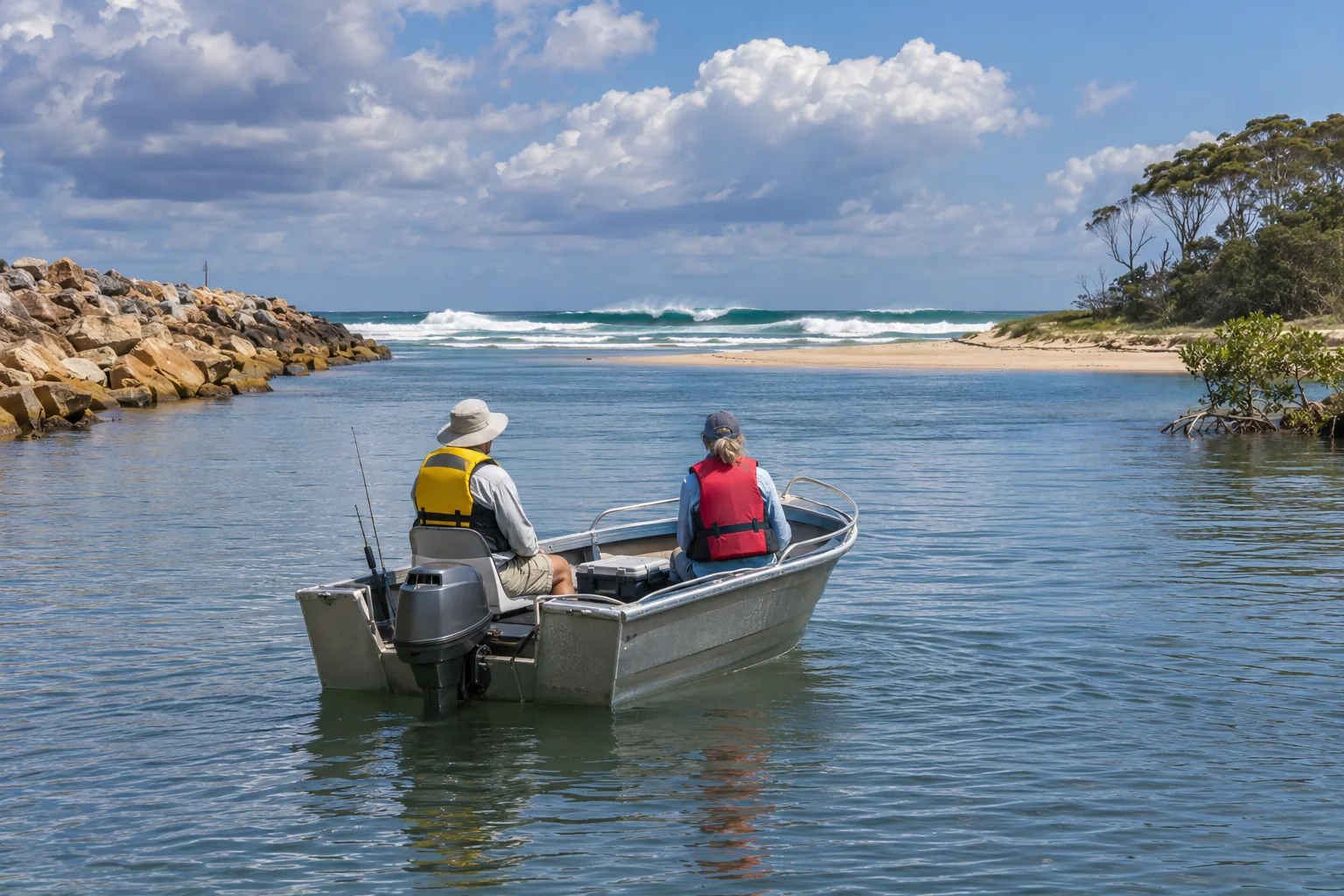
Check steering, throttle controls, hatches and drains. Secure loose gear and brief everyone on emergency equipment. Everyone on board must wear a lifejacket throughout a coastal-bar crossing. For an ordinary powerboat, that means Level 100 or above. Put them on before entering the crossing. Boating Handbook, pp. 34, 136.
- Prefer an incoming tide and avoid an outgoing, or ebb, tide: ebb conditions are more likely to produce dangerous waves.
- An incoming tide does not guarantee a safe crossing. The conditions, your boat and your experience still decide whether you go.
- Make the go/no-go decision before committing. Turning around in the middle of the bar increases the risk of swamping.
Check this lesson
A 6-metre ordinary powerboat is crossing a coastal bar in daylight. Which lifejacket arrangement is required?