
Going out and coming back in
Going out, take waves as close to head-on as possible.
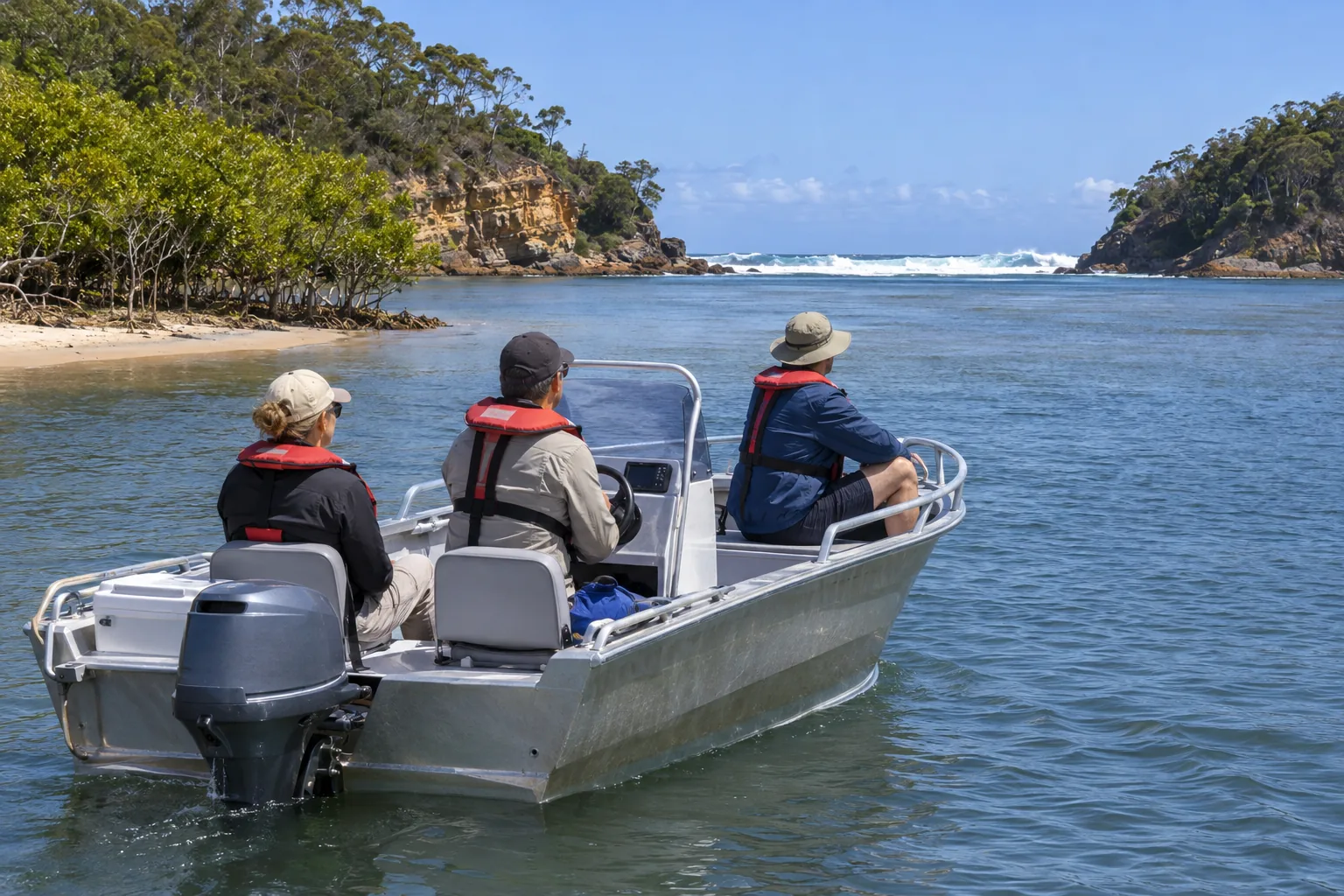
Approach at idle and watch for a lull. If it is safe, use a flat spot to move through. If you must meet waves, ease over broken water, accelerate between waves and reduce power just before meeting the next one. Aim for the lowest part of a wave where possible. Do not hit waves at high speed or launch the boat into the air. Boating Handbook, pp. 136–137.
Coming in, reassess the bar from outside. If it is safe, choose a suitable set and keep any lead marks in transit. Stay on the back of a swell: do not overtake it and run down its face, and stay ahead of the wave behind you. Once the wave ahead has broken, carefully accelerate through its white water. Watch for waves reflected from the entrance or shore and for outgoing current. Boating Handbook, p. 137.
- Conditions on the way home may be worse than when you left.
- If entry is too dangerous, wait for conditions or the tide to improve, or use a safe harbour elsewhere.
- These steps support practical training with an experienced skipper; reading them alone does not give you bar-crossing experience.
Check this lesson
Conditions are suitable to cross outwards. How should you handle successive waves?