

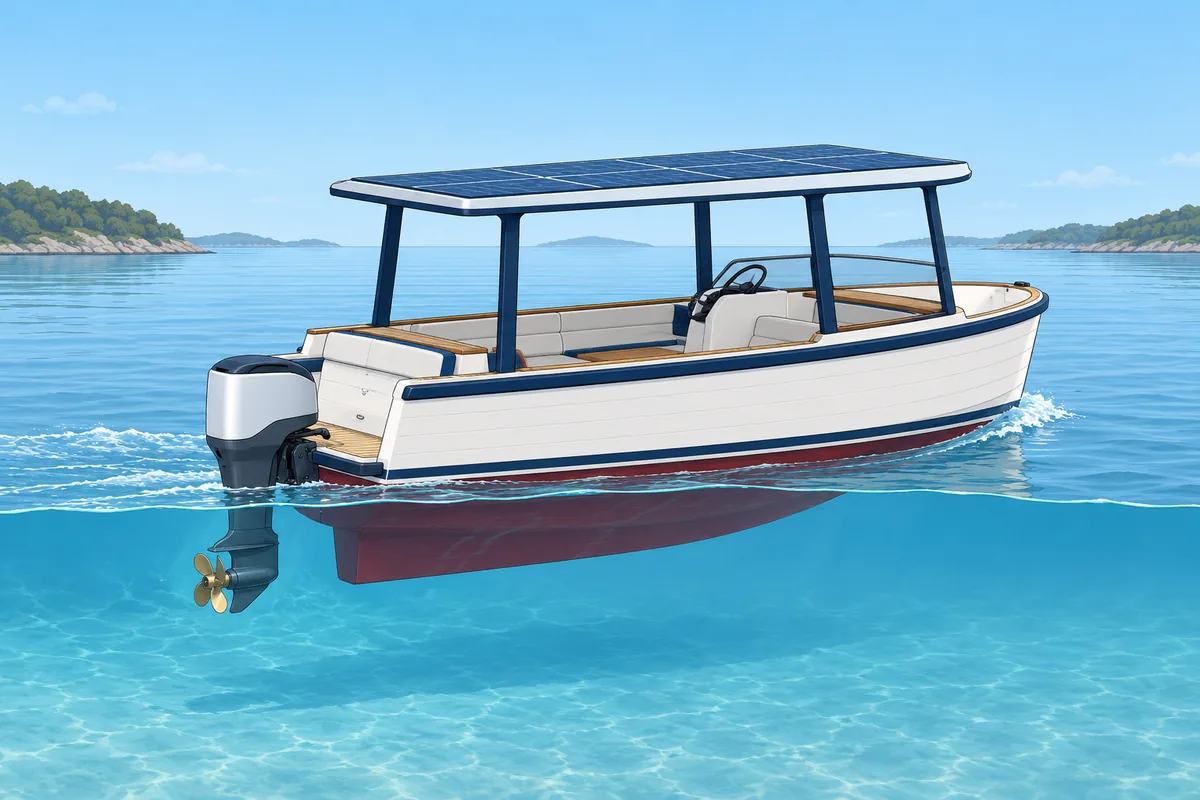
Electric, hybrid and diesel-electric propulsion
See it in 3D
Drag to rotate, scroll or pinch to zoom. Try the controls to see how thrust changes. Double-click to reset the view.
1The lesson in plain words
Electric propulsion is quiet and responsive, but battery range is limited. Diesel-electric ships also depend on their electrical network.
Electric motors
An electric motor can give high torque, the turning force on its shaft, from a standstill. This gives responsive low-speed drive. It is quiet and needs relatively little motor maintenance. The motor may drive a shaft, outboard or pod; that layout decides how you steer. Quiet operation means other people may not hear you coming.
Range
Range is the distance you can travel with the available energy. Batteries usually store much less usable energy than a fuel tank. Range falls sharply as speed and power demand rise. Use the maker’s data for the boat, conditions and battery state, and retain a reserve. Know the battery isolator and approved charging arrangements.
Hybrids and regeneration
A hybrid combines a fuel engine, electric drive and batteries. It can use battery power for quiet harbour running and the engine for longer passages. Some sailing installations permit regeneration: water turns the propeller under sail to drive the motor as a generator and recharge the battery. It adds drag and is allowed only on a compatible installation.
Diesel-electric ships
Diesels drive generators, which supply electric propulsion motors through the ship’s electrical network. The diesels do not directly turn the propeller shafts. Several generator sets let the crew match supply to demand. Redundancy means spare capacity or alternative equipment: after one set fails, healthy sets may keep the ship moving if enough capacity remains.
Blackout
A blackout is a loss of electrical supply. It can stop propulsion and disable powered steering or controls, depending on the system. Several generators do not prevent every common electrical fault. Crews practise recovery and test standby supplies. An emergency generator normally supplies essential services; do not assume it can run the main propulsion motors. Learn the recovery arrangements for your vessel.
2Key points
- 1
Electric motors give high torque at low speed and run quietly.
- 2
Battery range falls as speed rises; use real data and keep a reserve.
- 3
Hybrids combine engine and electric drive; compatible systems can regenerate under sail.
- 4
Diesel-electric means generators supply propulsion motors.
- 5
Redundancy helps with individual faults; a blackout can still stop propulsion.
3Frequent mistakes
Wrong: An electric boat has the same range at every speed.
Right: Higher speed needs much more power. Check the range data at your planned speed.
Wrong: Several generators guarantee continuous propulsion.
Right: Spare sets help with individual failures. A shared-network fault can still cause a blackout.
Wrong: The emergency generator automatically restores full propulsion.
Right: It usually supplies essential services. Main propulsion recovery depends on the ship’s design.
4Practice case & exam keys
One generator trips. The healthy sets can support reduced propulsion, but not your present propulsion demand plus other loads. Can you keep the same demand because the ship has redundancy?
Show the answer
No. Reduce demand within the remaining capacity under the ship’s procedure. Redundancy provides alternatives within their limits, not unlimited replacement power. A common-network fault could still stop propulsion; emergency power is not a promise of main propulsion.
Exam keys
- Electric: high starting torque, quiet running, battery range limits.
- Hybrid: fuel engine plus electric drive; regeneration only where designed for it.
- Diesel-electric: generators supply motors; redundancy has capacity and system limits.
- Blackout can remove propulsion and powered controls; emergency supply has a defined load.
Finish this unit
When you've read it, answer three questions. Get all three right to finish the unit; opening the page alone doesn't count.
My notes for this unit
No notes