

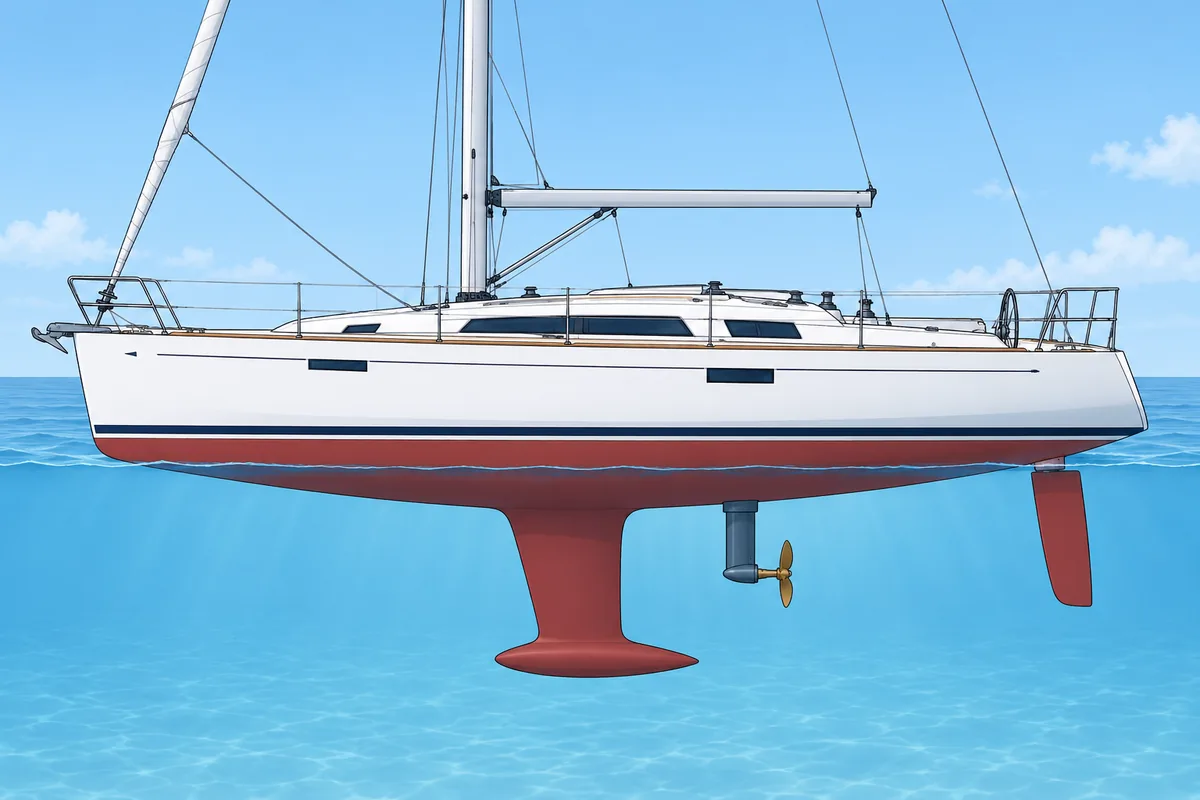
Saildrive
See it in 3D
Drag to rotate, scroll or pinch to zoom. Try the controls to see how thrust changes. Double-click to reset the view.
1The lesson in plain words
A saildrive has a leg through the hull and a horizontal propeller shaft. Its rubber hull seal and aluminium leg need special care.
Layout
The engine is inside the boat. A short leg, the underwater drive housing, goes down through the hull. Gears turn the drive through 90°, putting the propeller on a horizontal shaft. A separate rudder steers. This compact layout is common on cruising sailing yachts and catamarans.
Handling
The horizontal shaft gives more even blade loading than an inclined shaft. You usually get less propeller walk, the sideways push on the stern, but not none. A saildrive avoids a long shaft needing alignment and often runs smoothly. It still needs water flowing over its rudder to steer; it does not point its thrust like an outboard.
Diaphragm
A rubber diaphragm seals the large opening where the leg passes through the hull. Failure can flood the boat. Inspect it whenever the boat is lifted out, and replace it at the maker’s interval. Some designs have two layers with a water sensor between them. Know what its alarm means.
Aluminium protection
A sacrificial anode is a more reactive metal that corrodes instead of the aluminium leg. Replace it before it is used up, and never paint it. Antifouling is paint that limits weed and barnacle growth. Use a product approved for aluminium drives; ordinary copper antifouling can accelerate corrosion.
2Key points
- 1
Vertical leg through the hull; horizontal propeller shaft and separate rudder.
- 2
Expect less propeller walk, rather than no walk.
- 3
The diaphragm keeps the sea out: inspect and renew on schedule.
- 4
Protect the aluminium with a bare, serviceable anode and suitable antifouling.
3Frequent mistakes
Wrong: A saildrive has no sideways kick astern.
Right: It usually has less walk than an inclined shaft. Check your own boat’s response.
Wrong: Any antifouling will protect the aluminium leg.
Right: Use a coating approved for aluminium drives. Copper antifouling can promote corrosion; leave the anode bare.
4Practice case & exam keys
At a haul-out, someone offers to coat your saildrive leg and its anode with ordinary copper antifouling.
Show the answer
Decline. Use antifouling approved for aluminium drives and leave the anode unpainted. Check its remaining metal. Also inspect the diaphragm and confirm its replacement date before launching.
Exam keys
- Saildrive: vertical leg, horizontal shaft, separate rudder.
- Diaphragm failure can flood the hull; follow the maker’s replacement interval.
- Aluminium leg: sacrificial anode and approved antifouling, no copper coating.
Finish this unit
When you've read it, answer three questions. Get all three right to finish the unit; opening the page alone doesn't count.
My notes for this unit
No notes