
Decide
Four situations at sea. Decide first, then read why.
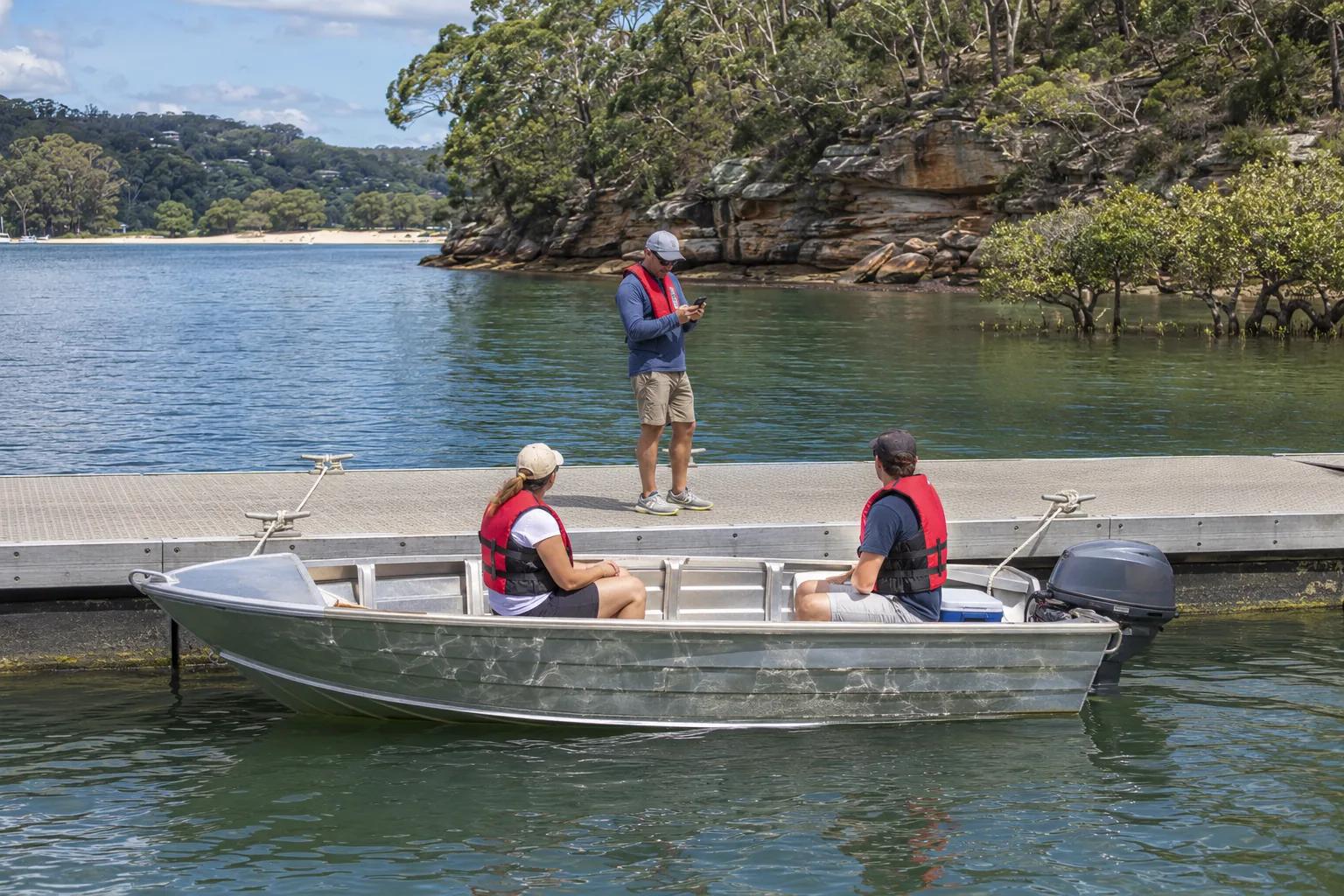
You are about to leave a Pittwater pontoon. Nobody ashore knows your route or return time. What should you do first?
Key points
- Leave a trip planSomeone ashore should know where you are going and when you expect to be back.
- Give the route, expected return, vessel details and number aboard.
- Log on and off with Marine Rescue NSW as recommended by TfNSW.
- Report a changed or extended trip; identify shelter options before leaving.
- Know the waterway rules and emergency actions; take extra care in cold water, especially alpine waters.
- Ready boat, ready crewCheck the boat and show everyone the safety equipment before departure.
- Match the boat and the driver's skills to the waterway.
- Check lifejackets and the correct equipment for the vessel and waters; keep them accessible.
- Prepare children for emergencies, lifejacket use and safe boarding; keep their bodies inside while underway.
- Check hatches open both ways and remain unlocked underway.
- Forecast, updates, eyes outsideCheck BoM before leaving and regularly while out, including the return conditions.
- Check warnings, wind changes, waves and swell, tides, visibility and local bar conditions.
- Gusts may be up to 40% stronger than the forecast average; maximum waves may be up to twice the forecast significant wave height.
- Threatening clouds or whitecaps: lifejackets on and head for shore.
- Choose a calmer trip or postpone if doubtful.
- Limits and balance both matterStay within the people and weight limits, with heavy gear low and secured.
- Follow the powerboat's ABP or safety-label limits. Recreational powered boats other than sailing boats and PWC need a safety label visible to everyone aboard.
- Spread passengers and equipment evenly to keep the boat level and balanced.
- Too much weight aft lowers the stern and increases swamping risk.
- Reduce the load in poor conditions or on open water, as the handbook recommends.
- Fuel in thirdsPlan one third out, one third home and one third in reserve.
- Check that the planned legs fit those fuel allowances.
- Keep the reserve for unexpected events; changing conditions can alter fuel needs.
- Check fuel lines and filters, and check for leaks or petrol and LPG odours before switches or engine use.
- The handbook generally advises against ethanol-blended petrol for boats; biodiesel also has fuel-system risks. Ask about the blend before filling.
- Fix it before you goA recent service does not replace today's checks.
- Check the engine, cooling water, steering, battery and lights.
- Check the bung is fitted, drains are clear and unusual bilge water is investigated.
- Carry a basic toolkit and suitable spares; use the correct charger for lithium batteries.
- Check LPG equipment, ropes and ready-to-use anchors. Professional servicing every year is recommended for powered vessels.
Lessons
Short lessons, each ending with 2 questions.
- 4.1Make a plan someone ashore can followAs skipper, you are responsible for the boat and everyone on board.Estimated time: about 2 minutes
- 4.2Check the boat and brief the peopleCheck the engine, lights and equipment before leaving home or launching.Estimated time: about 2 minutes
- 4.3Read the marine forecast, then keep watchingUse the Bureau of Meteorology (BoM), the official weather source, before departure and regularly on the water.Estimated time: about 3 minutes
- 4.4Stay within the limits and keep the load balancedCapacity is the maximum number of people; load is the maximum weight, including people and equipment.Estimated time: about 3 minutes
- 4.5Leave with fuel in reserve and a boat that worksPlan fuel in thirds: one third to get there, one third to get home and one third in reserve for unexpected events.Estimated time: about 3 minutes
Check what you have read
Question 1/3
You leave a trip message for a relative before launching at Brooklyn. Which set of details best follows the handbook?